The Story of Gyeongbokgung Palace
Gyeongbokgung Palace
The Heart and Soul of Korea’s Royal History
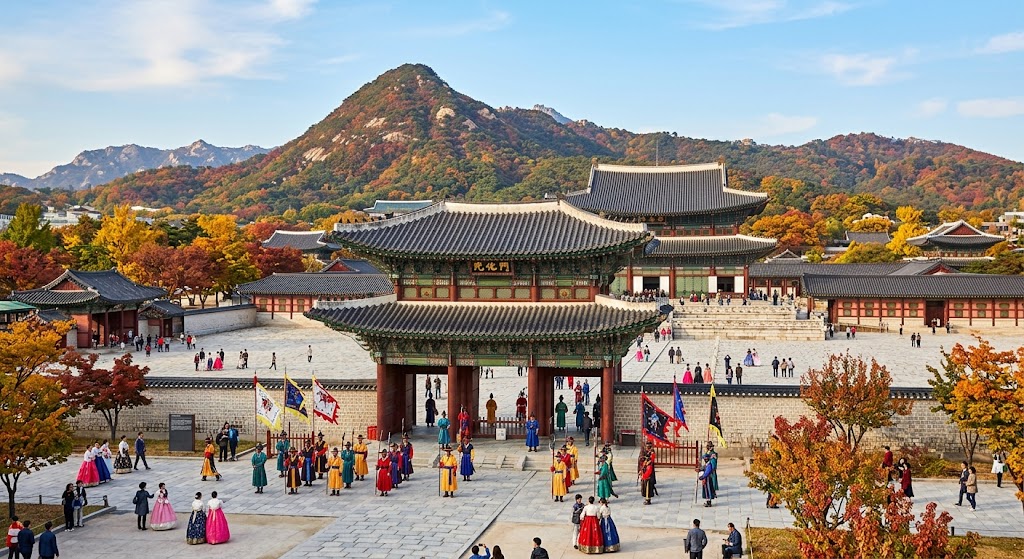
Gyeongbokgung Palace is not just a collection of old buildings; it is the silent witness to the rise, fall, and spectacular rebirth of the Korean spirit. If the stones of this palace could talk, they would tell a story of royal grandeur, tragic fires, colonial scars, and a modern nation’s relentless pursuit of its own identity.
1. The Birth: A Dream of "Great Blessing"
The story begins in 1395, just three years after the founding of the Joseon Dynasty. King Taejo, the first monarch, decided to move the capital to Hanyang (modern-day Seoul). He sought a place with perfect Feng Shui—nestled between the majestic Bugaksan Mountain to the north and the Han River to the south.
The name "Gyeongbokgung" was chosen by the scholar-official Jeong Do-jeon. It translates to "Palace Greatly Blessed by Heaven." It wasn't just a home for the king; it was a physical manifestation of Neo-Confucian ideals: order, harmony, and a deep respect for nature.
2. Architectural Grandeur: Power and Poetics
The layout of Gyeongbokgung is a masterpiece of symmetry and symbolism, designed to reflect the authority of the throne and the beauty of the Korean landscape.
- Geunjeongjeon (The Throne Hall): This is the heart of the palace. It is where the king held official audiences and greeted foreign envoys. In the courtyard, "rank stones" mark where officials stood according to their status.
- Gyeonghoeru Pavilion: A massive wooden hall that appears to float on a man-made lake. Supported by 48 stone pillars, it was the site of grand royal banquets and remains one of the most photographed spots in Korea.
- Hyangwonjeong Pavilion: The king’s private sanctuary—a small, hexagonal pavilion on a lotus pond, representing the "quiet" and introspective side of royal life.
3. The Great Fire and the Long Silence
Gyeongbokgung’s glory was tragically interrupted. In 1592, during the Imjin War (the Japanese invasions), the palace was burned to the ground. For the next 273 years, the palace sat in ruins. The royal family moved to Changdeokgung Palace, and Gyeongbokgung became a ghost of its former self.
It wasn't until the 1860s that the Prince Regent, Heungseon Daewongun, rebuilt it to restore the prestige of the monarchy. Though it nearly bankrupted the government, it restored Gyeongbokgung to its original 7,700-room splendor.
4. The Darkest Hour: The Colonial Era
The late 19th century brought further tragedy. In 1895, Empress Myeongseong was assassinated by foreign agents within the palace walls. When Japan colonized Korea in 1910, they systematically began to dismantle the palace, tearing down over 90% of the buildings.
In an act of symbolic dominance, the Japanese built a massive stone Government-General Building directly in front of the Throne Hall, intentionally blocking the view and disrupting the spiritual flow of the palace grounds.
5. The Modern Renaissance: Rising from the Ashes
The 21st-century story of Gyeongbokgung is one of restoration and pride. In 1995, marking the 50th anniversary of liberation, the government demolished the colonial government building to restore the palace's original profile. Today, a multi-decade project continues to rebuild the corridors and gates using traditional craftsmanship.
"Gyeongbokgung stands as a symbol of resilience. It proves that while buildings can be destroyed, the cultural soul of a people cannot be erased."
Gyeongbokgung Today
Today, the palace is a vibrant cultural hub. Visitors wearing Hanbok (traditional clothing) enjoy free entry, creating a living bridge between the past and the present. From the Changing of the Guard ceremony to breathtaking night openings, Gyeongbokgung remains the definitive symbol of Korea's royal heritage.
```