The Tripitaka Koreana: 800 Years of Goryeo Wisdom
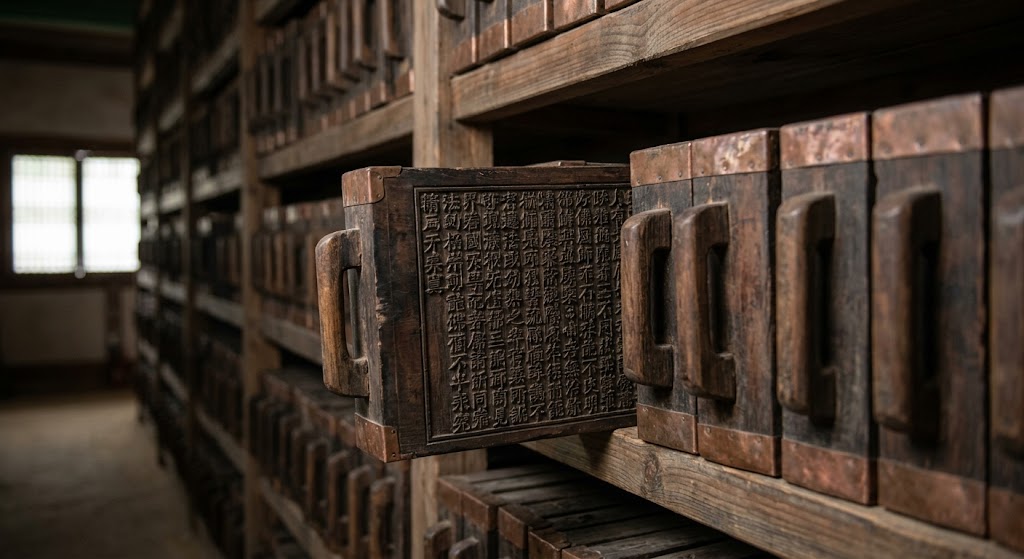
The Tripitaka Koreana
800 Years of Goryeo Wisdom and Resilience
The Tripitaka Koreana (Palman Daejanggyeong), housed in the serene Haeinsa Temple, is far more than a collection of ancient religious texts. It is a masterpiece of medieval engineering, a testament to spiritual endurance, and a pinnacle of pre-modern scientific achievement that has survived for over eight centuries.
1. A Fortress of Faith: Historical Significance
Created during the 13th century (1236–1251), the Tripitaka was a "spiritual weapon" forged during a time of national crisis. As the Mongol Empire launched a brutal invasion of the Goryeo Dynasty, the Korean people turned to their faith.
- Motivation: They believed that by carving the Buddha's entire canon into wood with perfect devotion, they could invoke divine protection to repel the invaders.
- The Scale: It consists of 81,258 wooden blocks, featuring over 52 million Chinese characters. Remarkably, there is not a single known typo or error in the entire collection.
2. The Miracle of Preservation Science
How did wood—a material prone to rot, warping, and pests—survive 800 years? The secret lies in a sophisticated marriage of nature and engineering.
The Secret of the Wood
Artisans utilized a rigorous preparation process to ensure the wood's immortality:
- The Brine Treatment: Logs were soaked in seawater for three years, then cut and boiled in salt water. This process removed resins, prevented cracking, and made the wood naturally resistant to insects.
- Lacquer Coating: Each block was coated with a natural lacquer that acted as a waterproof seal and preservative.
The "Living" Architecture: Janggyeong Panjeon
The storage buildings themselves are a scientific marvel, designed to regulate the environment without any modern technology:
- Natural Ventilation: The windows are designed with asymmetrical sizes (larger at the bottom on the front, larger at the top on the back). This creates a natural "chimney effect" that maximizes airflow and prevents stagnant humidity.
- The Intelligent Floor: The ground is layered with charcoal, salt, lime, and sand. This combination acts as a natural humidifier, absorbing moisture during the wet monsoon season and releasing it during dry winters.
3. A Global Legacy
"The Tripitaka Koreana is the world's most comprehensive and oldest intact version of the Buddhist canon in Hanja (Chinese script)."
Recognizing its immense cultural and scientific value, UNESCO designated the Janggyeong Panjeon as a World Heritage site in 1995, and the woodblocks themselves were added to the Memory of the World Register in 2007.