The Story of Wang Geon: Founder of Goryeo
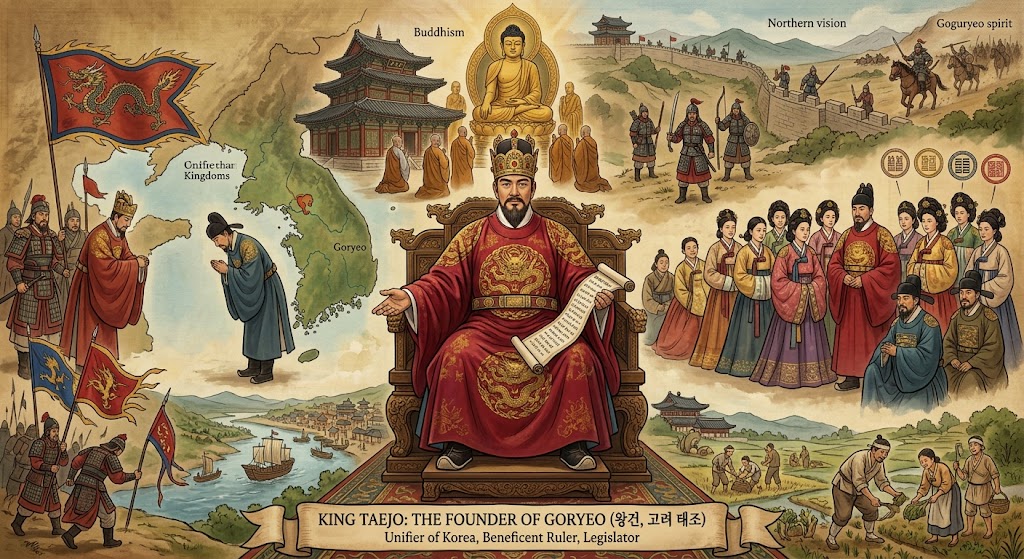
Wang Geon: King Taejo
The Visionary Founder of the Goryeo Dynasty
1. The Rise in a Time of Chaos
In the late 9th century, the Unified Silla Dynasty was crumbling. Corruption among the nobility and heavy taxation led to widespread peasant revolts. This period, known as the Later Three Kingdoms, saw the emergence of regional leaders: Gyeon Hwon of Later Baekje and Gung Ye of Later Goguryeo (Taebong).
Wang Geon was born in 877 AD into a powerful merchant family in Songak (modern-day Kaesong). His family was famous for their naval prowess and maritime trade, which gave Wang Geon a strategic advantage that would eventually help him unite a divided nation.
2. From General to Sovereign
Wang Geon initially served as a general under the eccentric monk-king, Gung Ye. He quickly became a hero by winning vital naval battles and expanding the kingdom's territory. However, Gung Ye’s mental state deteriorated; he claimed to be a living Buddha and executed anyone he suspected of betrayal, including his own wife and children.
In 918 AD, four top generals approached Wang Geon, urging him to take the throne. Following a successful coup, Wang Geon was proclaimed King. He renamed the kingdom Goryeo, a shortened version of "Goguryeo," signaling his intent to reclaim the glory of the ancient northern empire.
3. The Art of Diplomacy and Unification
Unlike many founders who relied solely on military might, Wang Geon was a master of inclusion and reconciliation. His path to unification followed two distinct strategies:
- Embracing Silla: Instead of destroying the dying Silla Dynasty, he treated them with respect. When King Gyeongsun of Silla surrendered in 935, Wang Geon welcomed him warmly and integrated the Silla aristocracy into his own government.
- Defeating Later Baekje: After a long and fierce conflict, Wang Geon finally defeated the forces of Later Baekje in 936, officially ending the civil war and reunifying the Korean Peninsula.
4. Maintaining Stability: 29 Marriages
The biggest threat to the new dynasty was the power of local lords (Ho-jok). To prevent civil war and ensure loyalty, Wang Geon utilized a unique political strategy: arranged marriages. He married 29 women from the most influential families across the country. By becoming the "son-in-law" of these powerful clans, he effectively turned potential enemies into family members.
5. The Ten Injunctions (Hunyo Sipjo)
Before his death in 943 AD, King Taejo left behind the Ten Injunctions for his descendants. These rules served as a political compass for the dynasty, emphasizing the protection of Buddhism, the importance of the northern border, and the need for wise governance based on traditional values.
"The key to governing a country lies in winning the hearts of the people."
— A philosophy attributed to King Taejo’s legacy.