Strategic Significance: NATO Ambassadors' Visit to South Korea
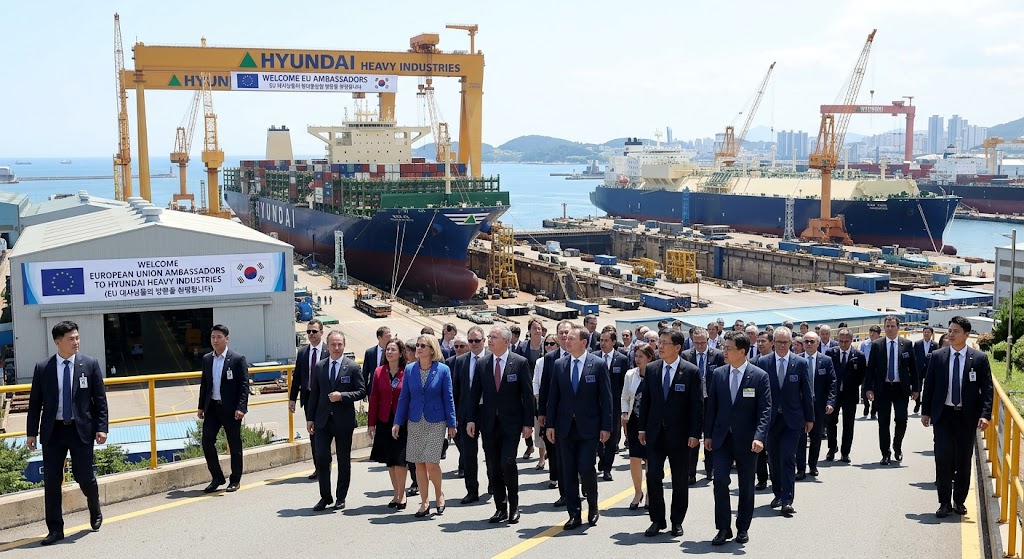
The Strategic Significance of NATO's 30-Ambassador Delegation to South Korea
In April 2026, the visit of the North Atlantic Council (NAC)—comprising ambassadors from all 30 NATO member nations—to South Korea represents a tectonic shift in the global security architecture. This mission transcends traditional diplomacy, signaling the birth of a deeply integrated security partnership between the Euro-Atlantic and the Indo-Pacific regions.
1. Core Strategic Implications
I. Connectivity of Regional Security
The visit underscores the reality that security in Europe and Asia is no longer divisible. In the face of the Russia-North Korea military nexus, NATO’s presence in Seoul serves as a definitive statement: "Any threat to the stability of the Indo-Pacific is a direct concern for the Atlantic Alliance."
II. Validation of the 'K-Defense' Powerhouse
With European defense stockpiles under pressure, South Korea’s industrial capacity has become a strategic asset for NATO. The delegation’s tour of facilities like Hanwha Aerospace was a practical assessment of South Korea's ability to provide K2 Black Panther tanks, K9 Howitzers, and KF-21 fighters that meet NATO’s rigorous interoperability standards with unmatched delivery speed.
III. Strengthening Collective Deterrence
The unified presence of 30 ambassadors acts as a high-level psychological deterrent against North Korean provocations, demonstrating that South Korea’s support network now extends formally to the world's most powerful military alliance.
2. Future Outlook: Areas of Institutionalized Cooperation
| Sector | Strategic Objective | Anticipated Outcome |
|---|---|---|
| Defense Industry | Joint production and MRO (Maintenance, Repair, Overhaul) hubs in Europe. | Strategic supply chain resilience and dominant market share in EU. |
| Cyber Defense | Active participation in the NATO CCDCOE and real-time threat intelligence. | Immunity against state-sponsored hacking and hybrid warfare. |
| Space & AI | Collaborative satellite surveillance and AI-driven ethical military standards. | Technological superiority in multi-domain operations. |
| Maritime Security | Joint naval exercises and freedom of navigation advocacy. | Stable global trade routes and Indo-Pacific stability. |
3. Key Platforms Driving the Partnership
- K2 Black Panther: Poised to become a standard main battle tank for several NATO members due to its immediate availability and performance against modern threats.
- KF-21 Boramae: Viewed as a critical 4.5/5th-generation solution that offers an optimal balance of cost and capability for European air forces looking to diversify from F-35 dependencies.
- Bio-Defense & Medical Tech: Leveraging South Korea's advanced medical infrastructure to cooperate on military medicine and pandemic-scale security threats.
Ultimately, the visit of 30 NATO ambassadors to South Korea in 2026 marks the moment when Seoul became a "de facto" security pillar for the Western world. This partnership will continue to evolve into a comprehensive alliance covering technology, industry, and shared democratic values.