U.S.–Iran Strait of Hormuz Conflict Scenarios and Impact
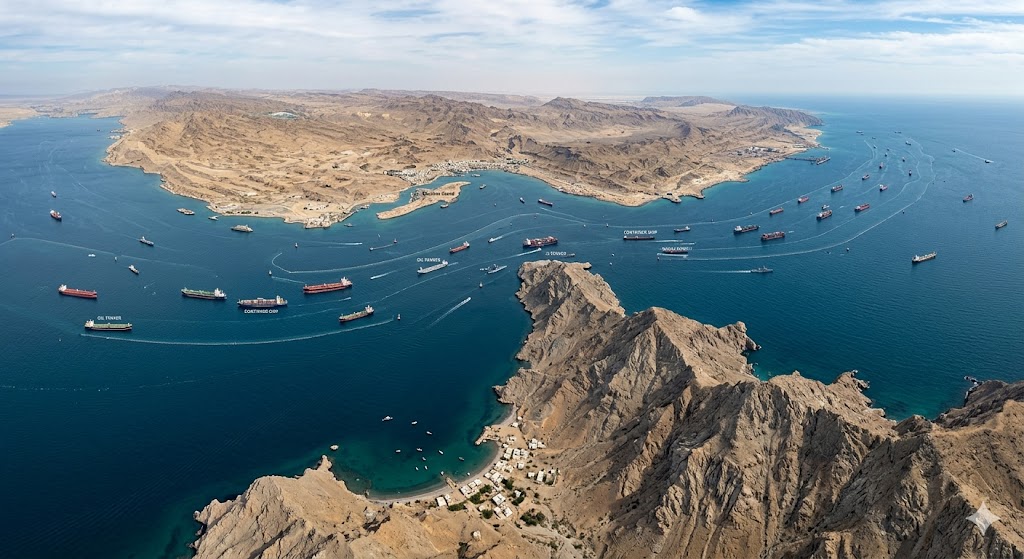
U.S. vs. Iran: Strait of Hormuz Conflict Scenarios
The Strait of Hormuz, which sees approximately 20% to 27% of the world's maritime oil transit, remains one of the most critical geopolitical choke points. A renewed conflict or blockade in this region represents a severe threat to global security and economic supply chains. Based on military and energy analyses, here is an overview of potential conflict scenarios and their global impacts.
1. Conflict Outbreak and Military Scenarios
🚨 Scenario A: De Facto 'Informal Blockade' via Asymmetric Warfare
In this scenario, Iran avoids the international backlash of an official blockade by subtly disrupting maritime transit through asymmetric means.
- Tactics: The Islamic Revolutionary Guard Corps (IRGC) deploys fast attack crafts, loitering munitions (suicide drones), naval mines, and anti-ship missiles. They selectively seize or target merchant vessels and oil tankers linked to the U.S. or Western allies.
- U.S. Response: The United States deploys naval destroyers and carrier strike groups to conduct extensive "Freedom of Navigation" operations, escorting commercial vessels through the strait.
- Outcome: Even without a formal declaration of war, war-risk insurance is withdrawn, causing commercial shipping lines to voluntarily halt operations. This places the strait into a state of de facto blockade.
💥 Scenario B: Preemptive Strike and Full-Scale Escalation
A breakdown in nuclear negotiations or a breach of red lines in regional proxy conflicts triggers a direct military campaign against the Iranian mainland by U.S. and Israeli forces.
- Tactics: Following precision strikes on its nuclear facilities and command centers, Iran retaliates by launching massive salvos of ballistic missiles into the strait and deploying extensive minefields to physically close the waterway. Concurrently, Iran launches drone and missile strikes against energy infrastructure in pro-Western regional states (such as Saudi Arabia and the UAE) and regional U.S. military bases.
- U.S. Response: To reopen the strait, the U.S. and its allies launch a comprehensive campaign involving intensive airstrikes and amphibious operations aimed at neutralizing Iran’s coastal defenses, missile bases, and naval assets.
- Outcome: The confrontation escalates into a major regional war, drawing in multiple nations across the Middle East.
💰 Scenario C: Iranian Leverage and a 'New Transit Regime'
Instead of pursuing an open military confrontation, Iran successfully secures operational control over the strait and weaponizes it for diplomatic and economic leverage.
- Tactics: Iran completely bans vessels from hostile nations (such as the U.S. and Israel) while allowing tankers from friendly nations or those willing to pay a heavy "security transit fee" to pass through.
- Outcome: The U.S.-led global maritime order of open transit is undermined, cementing Iran's military and political leverage over regional trade.
2. Global Energy and Economic Supply Chain Impacts
A prolonged disruption or closure of the Strait of Hormuz (lasting six months or more) would trigger a massive macroeconomic shockwave.
- Surge in Oil Prices (Exceeding $200/barrel): A total blockade removes over 14 million barrels of oil per day from the global market. Because bypass pipelines through Saudi Arabia or the UAE have highly limited capacity, acute supply shortages could drive crude oil prices well past $200 per barrel.
- Global Stagflation: This severe energy shock would reignite hyper-inflation, forcing central banks to maintain high interest rates. The resulting supply chain gridlock and diminished purchasing power could lead to a severe global recession.
- Liquefied Natural Gas (LNG) Crisis: The strait is vital not only for oil but also for LNG, accounting for roughly 20% of global supply (primarily from Qatar). A shutdown would immediately halt these shipments, precipitating an acute power and heating crisis in Europe and Asia.
🚨 Impact on Highly Dependent Economies (e.g., South Korea)
Industrialized nations reliant on Middle Eastern energy imports face disproportionate vulnerability during a Strait of Hormuz crisis.
- Manufacturing Cost Shock: Spiraling crude prices directly increase production costs across heavy industries—including refining, petrochemicals, steel, and automotive manufacturing—severely damaging export competitiveness.
- Semiconductor Supply Chain Risks: Middle Eastern gas fields are primary sources for refined helium, a critical specialty gas used in semiconductor wafer etching and cooling. A supply freeze could disrupt high-tech manufacturing lines globally.
- Logistical Diversification Burdens: Nations reliant on oil from nations like Iraq or Kuwait, which lack alternative overland pipeline routes, face an immediate supply cutoff. Shifting procurement rapidly to suppliers in West Africa, the U.S., or South America introduces massive, unsustainable logistical and shipping premiums.