Analysis of Starbucks Korea's Owner-Induced Far-Right Bias and May 18 Gwangju Uprising Defamation Controversy
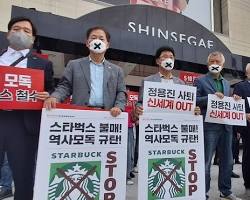
Analysis of Starbucks Korea's Far-Right Bias and May 18 Defamation Controversy
Recently, Starbucks Korea faced fierce public backlash and nationwide boycotts due to an inappropriate marketing promotion launched on the anniversary of the May 18 Gwangju Democratization Movement. This incident is analyzed not merely as a simple marketing oversight, but as a structural issue intertwined with the accumulated political controversies and historical awareness of the owner, Shinsegae Group Chairman Chung Yong-jin. The background, development, and major points of contention surrounding this controversy are outlined below.
1. The Root of the Incident: 'Tank Day' and Historical Taboos
On the morning of May 18, 2026, Starbucks Korea launched a new product promotion prominently displaying the phrase "Tank Day" alongside the names 'Dante, Tank, Nasu Day.'
- Defamation and Association with May 18: The choice to use the word "Tank" on the exact anniversary of the May 18 Democratization Movement sparked immediate public outrage, as tanks are the primary historical symbol of the military dictatorship's brutal suppression of innocent citizens in Gwangju in 1980.
- Alleged Mockery of Park Jong-chol's Torture-Death: It was further revealed that the promotional page included the phrase "Thump on the desk!" This explicitly mirrors the notorious cover-up statement made by the Chun Doo-hwan regime's police force following the torture-death of student activist Park Jong-chol in 1987 ("When the officer thumped the desk, the boy dropped dead with a 'thud'"), escalating suspicions that the company intentionally mocked democratic martyrs and victims.
2. Connection to the Owner's (Chairman Chung Yong-jin) 'Far-Right Bias'
Consumers and civic groups refuse to view this incident as an accidental marketing blunder due to the long history of politically charged rhetoric from Shinsegae Group Chairman Chung Yong-jin.
- Continuation of the 'Myeol-Gong' (Annihilate Communism) Controversy: Chairman Chung has previously triggered extensive political controversies on social media by posting slogans like "Myeol-gong" and "I hate communists." Consequently, Starbucks has long been a battleground for boycotts from liberals and "buycotts" (support purchases) from conservative factions.
- Alleged Support for Far-Right Movements: The controversy reignited scrutiny over the chairman's past actions, including sending congratulatory video messages and sponsoring Starbucks products for events hosted by far-right organizations modeling themselves after the American MAGA movement. Critics argue that the owner's distorted historical perspective has ultimately permeated the corporate culture.
3. Social Impact and Public Reactions
① Strong Condemnation from Political Circles
President Lee Jae-myung strongly criticized the promotion, publicly denouncing it as "the inhumane, disgraceful behavior of low-class merchants." Politicians across both ruling and opposition parties united in slamming the exploitation and mockery of a tragic national history for commercial gain.
② Legal Action and Official Complaints
The May 18 merit recipients and the National Coalition of Victims of State Violence filed formal criminal complaints with the police against Chairman Chung Yong-jin and former Starbucks Korea CEO Son Jung-hyun for violating the Special Act on the May 18 Democratization Movement (spreading false rumors and defamation) and insult. They are demanding that Chairman Chung completely step down from corporate management.
③ Spreading of Online and Offline Boycotts
Public anger reached its peak particularly in Gwangju, the city with the highest density of Starbucks stores per capita in the country. Verification photos showing consumers refunding and canceling Starbucks mobile gift certificates and balances flooded social media, and the boycott quickly expanded to other Shinsegae Group affiliates, including Shinsegae Department Store. Conversely, some far-right online communities launched a counter-purchasing campaign, dubbing Starbucks "Myeol-Gong Coffee," which further deepened social polarization.
4. Shinsegae Group's Damage Control and Its Limitations
As the situation spiraled out of control, Shinsegae Group took immediate and drastic measures to contain the damage.
- Dismissal of Executives: The promotion was halted immediately on the day of the launch, and Starbucks Korea CEO Son Jung-hyun along with the responsible marketing executives were summarily dismissed.
- Official Apology from the Owner: An official public apology was issued under the name of Chairman Chung Yong-jin, promising to overhaul internal review mechanisms to prevent a recurrence.
Underlying Context and Limitations: Industry analysts note that Shinsegae's unprecedentedly rapid response was fueled by fears that the backlash would derail the group's multi-trillion won mega-investment projects in Gwangju—specifically the 'Gwangcheon Terminal Complex Project' and the 'Eodungsan Starfield Development.' Despite these efforts, critics maintain that the measures lack sincerity because the core issue, "owner risk," remains unaddressed.
5. Conclusion and Strategic Implications
This incident serves as a textbook example of how devastating the combination of poor Corporate Social Responsibility (CSR) and unmitigated "owner risk" can be to a brand's core equity.
Marketing that mocks constitutional values and national tragedies directly alienates the public's collective consciousness. It suggests that the owner's far-right political identity may have paralyzed internal filtering systems and corporate governance. For Starbucks Korea to restore its global brand reputation, it must move beyond superficial personnel changes and implement rigorous internal historical education alongside genuine social contribution initiatives.