Significance and Future Outlook of South Korea's Nuclear-Powered Submarine Construction
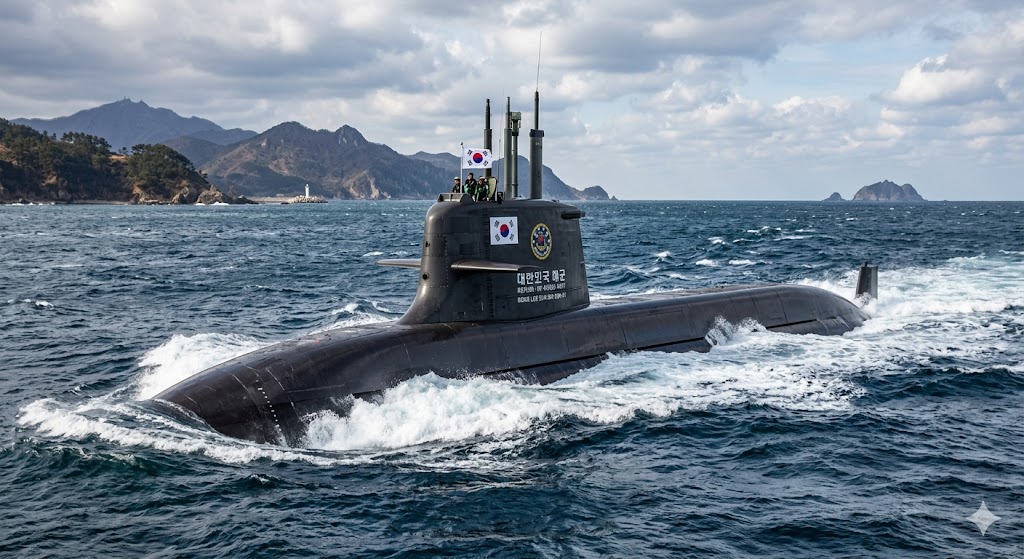
Significance and Future Outlook of South Korea's Nuclear-Powered Submarine Construction
The South Korean government has officially announced the "Basic Plan for the Development of Nuclear-Powered Submarines," launching the initiative widely known as the 'Jangbogo-N' project. Targeting the launch of the first vessel by the mid-2030s, this plan is evaluated as a massive strategic turning point for the nation, extending far beyond a routine naval buildup. Below is a breakdown of the key significance and future prospects of South Korea's domestic nuclear-powered submarine program.
1. Core Strategic Significance
① Completion of the 'Underwater Kill Chain' (A Strategic Game-Changer)
Conventional diesel-electric submarines (relying on batteries and Air-Independent Propulsion) must periodically surface or use a snorkel to draw in air every few days or weeks, heavily increasing their risk of detection. In contrast, nuclear-powered submarines utilize atomic energy for propulsion, enabling indefinite underwater submergence limited only by food supplies and crew endurance.
- Neutralizing North Korean SLBM Threats: It stands as the only viable countermeasure to track new North Korean submarines from the moment they leave their ports, maintaining 24/7 close-range underwater surveillance to neutralize threats instantly if necessary.
- Overwhelming Mobility: Capable of traveling underwater at high speeds exceeding 35 km/h, these submarines grant a definitive strategic edge in tracking, outmaneuvering, and denying access to adversary vessels.
② Deepening the ROK-U.S. Alliance & Securing Technological Sovereignty
South Korea has masterfully navigated the constraints of the ROK-U.S. Nuclear Cooperation Agreement and secured vital backing from Washington. Building on agreements with the U.S. Trump administration, South Korea will "utilize low-enriched uranium under 20% enrichment" and adhere strictly to International Atomic Energy Agency (IAEA) safeguards. This fulfills international non-proliferation obligations while firmly establishing technological sovereignty by independently building the vessels with domestic reactors and shipbuilding expertise.
③ Industrial Spillover Effects (Synergy in Shipbuilding, Nuclear, and Defense)
The construction of a nuclear-powered submarine is a culmination of advanced science and technology. The high-density miniature reactor designs, radiation safety control systems, and specialized high-tensile steel welding techniques developed for this project will directly cycle back into the civilian nuclear sector and high-value shipbuilding industries. This promises to fuel the next wave of large-scale defense exports, triggering a massive re-rating of the 'K-Shipbuilding' sector.
2. Future Outlook and Facing Challenges
Through a Joint Chiefs of Staff meeting, the government revised requirements upward to design an 8,000-ton class submarine, aiming to construct at least three units. The realistic outlook and challenges that lie ahead include:
| Category | Key Aspects & Outlook |
|---|---|
| Construction Timeline | This is a long-term project requiring at least 10 years or more from initial development to operational deployment. To successfully launch the first vessel by the mid-2030s as planned, national capabilities must be aggressively consolidated into hull design and small modular reactor development starting this year. |
| Securing Nuclear Fuel | While the U.S. has agreed to support uranium enrichment and spent fuel reprocessing, the subsequent ROK-U.S. negotiations regarding specific legal and technical protocols remain a critical variable. Given that Washington may demand leveraging American infrastructure—such as the Philly Shipyard—shrewd and precise diplomatic maneuvering is essential. |
| Enormous Fiscal Burden | The construction cost of a single nuclear-powered submarine is multiple times that of a conventional diesel variant. Factoring in the initial infrastructure setup (nuclear fuel handling, storage, and disposal facilities), astronomical defense spending will be required. Securing steady funding and public consensus is paramount. |
| Geopolitical Backlash | Strong diplomatic and military pushback is highly expected from China and Russia, both of which are wary of South Korea maximizing its strategic autonomy in Northeast Asian waters. A sophisticated multilateral diplomatic strategy must be deployed in tandem. |
In Summary South Korea's nuclear-powered submarine program (Jangbogo-N) is the 'final puzzle piece' of national security, designed to neutralize North Korea's nuclear and missile threats right from the deep. It is a critical key to elevating South Korea into the ranks of global maritime powers. Having just taken its first steps, the nation must meticulously prepare for the 2030s through technological self-reliance and tight strategic coordination with the United States.