Mounjaro: A Game Changer Beyond Diabetes to Obesity
Mounjaro (generic name: Tirzepatide) is an innovative chronic disease treatment developed by the global pharmaceutical company Eli Lilly. Although initially approved as a treatment for type 2 diabetes, it has gained immense global attention due to its highly effective weight loss results.
1. Mechanism of Action: The World's First 'Dual GIP/GLP-1' Receptor Agonist
While previous treatments like Saxenda or Wegovy mimic only a single hormone called GLP-1, Mounjaro is the first dual combination agent that acts simultaneously on both GIP and GLP-1 incretin hormone receptors.
GLP-1 Receptor Action: Stimulates insulin secretion, signals the brain that you are full to suppress appetite, and slows down gastric emptying to prolong the feeling of satiety.
GIP Receptor Action: Improves fat metabolism and alleviates side effects like nausea commonly caused by GLP-1, while drastically enhancing blood sugar control and weight loss through a powerful synergistic effect.
2. Key Benefits and Effects
Powerful Blood Sugar Control: Shows outstanding efficacy in lowering glycated hemoglobin (HbA1c) levels in type 2 diabetes patients.
Unprecedented Weight Loss: According to clinical trial (SURMOUNT) results, high-dose administration led to an average weight loss of around 20%, achieving figures comparable to bariatric surgery. (Consequently, the formulation specifically for weight management has been launched in places like the U.S. under the brand name 'Zepbound'.)
Cardiovascular and Metabolic Improvements: Enhances overall metabolic syndrome indicators by reducing triglycerides, lowering blood pressure, and improving fatty liver conditions.
3. Administration and Dosage
Dosing Schedule: Administered once a week via subcutaneous injection (abdomen, thigh, or upper arm) on the same day each week.
Dosage Escalation: Starts at a dose of 2.5mg. Depending on how well the body adapts, the dose is gradually increased at 4-week intervals to 5mg, 7.5mg, 10mg, 12.5mg, up to a maximum of 15mg.
4. Side Effects and Precautions
Gastrointestinal Side Effects: Nausea, vomiting, diarrhea, constipation, and indigestion can commonly occur during the initial phase of treatment or when increasing the dose. Most symptoms tend to improve over time.
Risk of Pancreatitis: Although rare, there is a potential risk of acute pancreatitis. If severe, persistent abdominal pain occurs, treatment should be discontinued immediately.
Contraindications: It should not be used by patients with a personal or family history of Medullary Thyroid Carcinoma (MTC) or Multiple Endocrine Neoplasia syndrome type 2 (MEN 2).
* Mounjaro is a prescription-only medication that requires a proper diagnosis and consultation from a healthcare professional.
마운자로(Mounjaro, 성분명: 터제파타이드 / Tirzepatide)는 글로벌 제약사 일라이 릴리(Eli Lilly)가 개발한 혁신적인 만성 질환 치료제입니다. 당뇨병 치료제로 처음 승인받았으나, 체중 감량 효과가 매우 뛰어나 전 세계적으로 엄청난 주목을 받고 있습니다.
1. 작용 기전: 세계 최초의 'Dual GIP/GLP-1' 수용체 작용제
기존의 삭센다나 위고비가 GLP-1이라는 하나의 호르몬 유사체만 모방했다면, 마운자로는 GIP와 GLP-1이라는 두 가지 인크레틴 호르몬 수용체에 동시에 작용하는 최초의 복합 제제입니다.
GLP-1 수용체 작용: 인슐린 분비를 촉진하고 뇌에 '배가 부르다'는 신호를 보내 식욕을 억제하며, 위 배출 속도를 늦춰 포만감을 오래 유지시킵니다.
GIP 수용체 작용: 지방 대사를 개선하고 GLP-1의 메스꺼움 같은 부작용을 완화하면서, 혈당 조절과 체중 감량 효과를 시너지 효과로 대폭 끌어올립니다.
2. 주요 효능 및 효과
강력한 혈당 조절: 제2형 당뇨병 환자의 당화혈색소(HbA1c)를 낮추는 데 탁월한 효과를 보입니다.
압도적인 체중 감량: 임상시험(SURMOUNT) 결과에 따르면, 고용량 투여 시 평균 약 20% 안팎의 체중 감량 효과를 보이며 비만 대사 수술에 버금가는 수치를 기록했습니다. (이에 따라 미국 등에서는 비만 치료제 제형이 '젭바운드(Zepbound)'라는 제품명으로 따로 출시되었습니다.)
심혈관 및 대사 개선: 중성지방 감소, 혈압 하강, 지방간 개선 등 전반적인 대사 증후군 지표를 호전시킵니다.
3. 투여 방법 및 용량
투여 주기: 주 1회, 일정한 요일에 피하 주사(배, 허벅지, 팔뚝 등)합니다.
용량 단계: 2.5mg으로 시작하여 몸의 적응 상태를 보며 4주 간격으로 5mg, 7.5mg, 10mg, 12.5mg, 최대 15mg까지 점진적으로 증량합니다.
4. 주의사항 및 주요 부작용
소화기계 부작용: 투여 초기나 용량을 늘릴 때 메스꺼움, 구토, 설사, 변비, 소화불량 등이 흔하게 나타날 수 있습니다. 대부분 시간이 지나면서 점차 완화됩니다.
췌장염 위험: 드물지만 급성 췌장염의 위험이 있으므로, 심한 상복부 통증이 지속되면 즉시 투여를 중단해야 합니다.
금기 대상: 갑상선 수질암 가족력이 있거나 다발성 내분비선종증(MEN 2) 환자는 투여할 수 없습니다.
An in-depth medical reference on mechanism of action, clinical indications, pharmacokinetics, and adverse effect management.
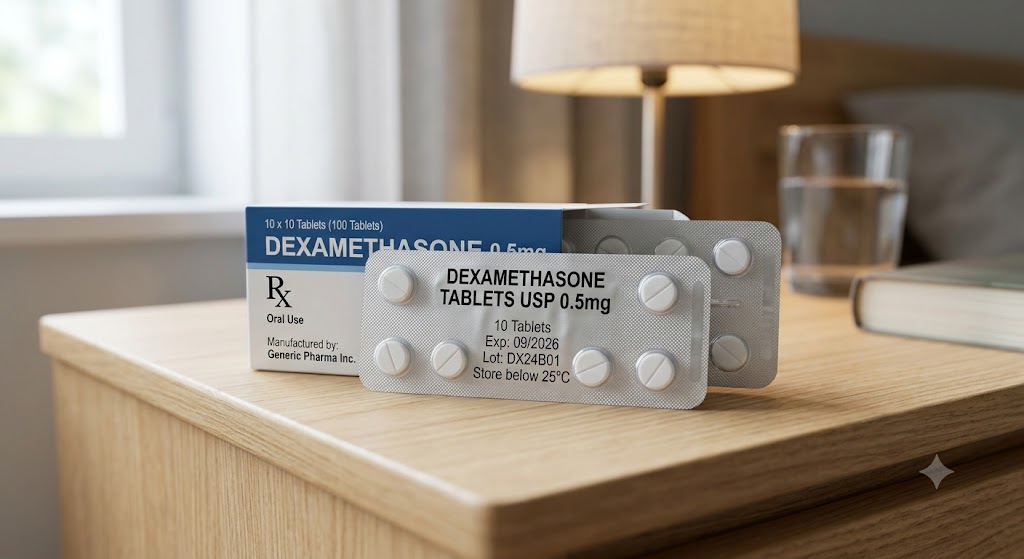
Dexamethasone is a highly potent synthetic glucocorticoid class of steroid hormone first synthesized in 1958. Lacking mineralocorticoid activity, it has become a cornerstone therapy in modern medicine for suppressing severe inflammatory responses, managing autoimmune diseases, and acting as an adjuvant in oncology regimens.
1. Pharmacological Mechanism and Characteristics
Dexamethasone acts primarily as an agonist of the glucocorticoid receptor (GR). Upon binding, the receptor-ligand complex translocates to the cell nucleus, where it alters gene transcription through two primary pathways.
1.1 Molecular Pathways
Transrepression: The activated GR physically interacts with and neutralizes pro-inflammatory transcription factors, such as nuclear factor-kappa B (NF-κB) and activator protein-1 (AP-1). This blocks the transcription of genes encoding inflammatory cytokines including IL-1, IL-6, TNF-α, and inducible nitric oxide synthase (iNOS).
Transactivation: GR homodimers bind to specific glucocorticoid response elements (GREs) on DNA, upregulating anti-inflammatory proteins such as Lipocortin-1 (Annexin A1). Lipocortin-1 directly inhibits phospholipase A2, thereby shutting down the production of arachidonic acid derivatives like prostaglandins and leukotrienes.
1.2 Relative Glucocorticoid Potency
Compared to endogenous cortisol (hydrocortisone) and other synthetic analogues, Dexamethasone exhibits exceptionally high glucocorticoid potency with virtually zero mineralocorticoid (sodium and fluid retention) activity.
Compound Name
Anti-inflammatory Potency
Mineralocorticoid Potency
Plasma Half-life (Biological)
Equivalent Dose
Hydrocortisone (Reference)
1
1
Short (8–12 hours)
20 mg
Prednisolone
4
0.8
Intermediate (12–36 hours)
5 mg
Methylprednisolone
5
0.5
Intermediate (12–36 hours)
4 mg
Dexamethasone
25–30
0
Long (36–72 hours)
0.75 mg
2. Clinical Indications
Dexamethasone is deployed across a broad array of clinical specialties, particularly in situations requiring rapid and aggressive anti-inflammatory or immunosuppressive action.
2.1 Severe Allergic Reactions and Anaphylaxis
It is used as an adjunctive treatment alongside epinephrine in emergency management of anaphylactic shock, status asthmaticus, acute angioedema, and severe drug hypersensitivity reactions to prevent late-phase inflammatory recurrence.
2.2 Autoimmune and Rheumatologic Conditions
During acute exacerbations of systemic lupus erythematosus (SLE), rheumatoid arthritis, severe vasculitis, and dermatomyositis, short-term high-dose dexamethasone pulse therapy is highly effective in curbing destructive tissue inflammation.
2.3 Oncology and Hematology
CINV Prophylaxis: Administered as a core component of antiemetic regimens alongside 5-HT3 antagonists and NK1 receptor antagonists to prevent delayed chemotherapy-induced nausea and vomiting.
Management of Vasogenic Edema: Dexamethasone is the preferred glucocorticoid to reduce life-threatening cerebral edema associated with primary or metastatic brain tumors, neurosurgery, or radiation therapy, due to its low mineralocorticoid activity.
Hematologic Malignancies: It is used directly as a cytolytic agent in protocols for multiple myeloma, acute lymphoblastic leukemia (ALL), and non-Hodgkin lymphomas, often in combination with novel immunomodulatory drugs.
2.4 Respiratory and Infectious Diseases (COVID-19)
In hospitalized patients with severe COVID-19 requiring supplemental oxygen or mechanical ventilation, clinical trials (e.g., the RECOVERY trial) demonstrated that a daily dose of 6 mg dexamethasone significantly reduces 28-day mortality by mitigating hyper-inflammatory lung injury (cytokine storm).
3. Dosage Forms and Administration
Oral Tablets: Commonly available in 0.5 mg, 1.5 mg, and 4 mg strengths. Used for chronic inflammatory management and gradual dose tapering. Instructing patients to take the dose with food can minimize gastrointestinal irritation.
Injectable Formulations (Dexamethasone Sodium Phosphate): Administered intravenously (IV) or intramuscularly (IM) for rapid systemic effect in emergency settings. Intra-articular injections can be used to treat localized joint inflammation, though frequency is typically restricted to 3–4 times per year to prevent cartilage damage.
WARNING: HPA Axis Suppression and Adrenal Crisis
If dexamethasone is administered for more than two weeks, the hypothalamic-pituitary-adrenal (HPA) axis becomes suppressed due to negative feedback. Abrupt cessation of the drug can lead to acute adrenal insufficiency (adrenal crisis), characterized by severe hypotension, vascular collapse, and electrolyte imbalances. Gradual dose tapering is mandatory.
4. Adverse Effects and Management
While highly effective, chronic or high-dose dexamethasone therapy carries a substantial risk of multi-systemic metabolic and endocrine toxicities.
4.1 Endocrine and Metabolic Disturbances
Prolonged therapy leads to iatrogenic Cushing's syndrome, marked by truncal obesity, "moon face", and buffalo hump. It stimulates hepatic gluconeogenesis and decreases peripheral insulin sensitivity, necessitating close blood glucose monitoring in diabetic patients.
4.2 Musculoskeletal and Dermatologic Systems
It inhibits calcium absorption and promotes osteoclast activity, leading to osteopenia and osteoporosis. Concurrent calcium and Vitamin D supplementation, along with bone mineral density tracking, is recommended. Skin thinning, easy bruising, and impaired wound healing are also common due to collagen synthesis inhibition.
4.3 Immunological and Gastrointestinal Risks
Suppression of cell-mediated immunity increases susceptibility to opportunistic infections (e.g., oral candidiasis, reactivation of latent tuberculosis). When co-administered with NSAIDs, the risk of peptic ulcer disease and gastrointestinal hemorrhage increases exponentially; mucosal protective agents (like proton pump inhibitors) should be considered.
5. Clinical Pearls
1. Diurnal Mimicry: Administering oral doses once daily in the early morning (before 8:00 AM) mimics the natural circadian peak of endogenous cortisol, minimizing both sleep disruption and the degree of HPA axis suppression. 2. Drug Interactions: Co-administration with strong CYP3A4 inducers (such as rifampin, phenytoin, or carbamazepine) accelerates dexamethasone clearance, potentially rendering the steroid dose sub-therapeutic. Conversely, CYP3A4 inhibitors (such as ketoconazole or clarithromycin) may elevate steroid levels and worsen adverse effects.
덱사메타손은 1958년에 처음 개발된 이후, 강력한 항염증 및 면역억제 효과를 바탕으로 현대 의학의 다양한 분야에서 중추적인 역할을 해온 합성 글루코코르티코이드(Glucocorticoid)입니다. 본 문서에서는 임상적 관점에서 덱사메타손의 약리학적 메커니즘, 적응증, 제형별 특성, 부작용 및 주의사항을 심층적으로 다룹니다.
1. 약리학적 메커니즘 및 특성
덱사메타손은 시상하부-하수체-부신축(HPA axis)을 매개로 작용하는 내인성 코르티솔(Cortisol)의 합성 유도체입니다. 세포막을 통과하여 세포질 내의 글루코코르티코이드 수용체(GR)와 결합한 뒤, 핵 내로 이동하여 염증 관련 유전자의 전사를 조절합니다.
1.1 분자생물학적 작용 기전
경전사 억제 (Transrepression): 염증 반응의 핵심 전사 인자인 NF-kB 및 AP-1의 활성을 차단하여 Interleukin(IL-1, IL-6), TNF-alpha, 옥시토신, 유도성 산화질소 합성효소(iNOS) 등 전염증성 사이토카인의 생성을 유전자 수준에서 억제합니다.
전사 활성화 (Transactivation): 항염증 단백질인 Lipocortin-1(Annexin A1)의 합성을 촉진합니다. 이는 Phospholipase A2를 억제하여 염증 매개 물질인 아라키돈산 대사체(Prostaglandins, Leukotrienes)의 전구 물질 차단으로 이어집니다.
1.2 역가(Potency) 비교
덱사메타손은 다른 스테로이드 제제에 비해 미네랄로코르티코이드(나트륨 및 수분 저류) 작용이 거의 없으며, 글루코코르티코이드 역가가 매우 높은 것이 특징입니다.
성분명
항염증 역가 (상대 비교)
염류코르티코이드 역가
반감기 분류
등가량 (Equivalent Dose)
Hydrocortisone (대조군)
1
1
단기 (8~12시간)
20 mg
Prednisolone
4
0.8
중기 (12~36시간)
5 mg
Methylprednisolone
5
0.5
중기 (12~36시간)
4 mg
Dexamethasone
25~30
0
장기 (36~72시간)
0.75 mg
2. 임상적 적응증 (Indications)
덱사메타손은 전신의 광범위한 염증성 및 면역성 질환에 사용되며, 특히 급성 악화기나 응급 상황에서 고역가의 이점을 살려 투여됩니다.
2.1 알레르기성 및 피부 질환
아나필락시스 쇼크(Epilepsy 병용), 천식 중증 악화, 중증 약물 과민반응, 중증 다형홍반(스티븐스-존슨 증후군), 박탈성 피부염 등 급성 알레르기성 응급 질환의 전신 염증 반응을 억제하기 위해 정맥 또는 근육 주사로 투여됩니다.
2.2 자가면역 질환 및 류마티스 질환
Systemic Lupus Erythematosus(SLE), 류마티스 관절염의 급성 악화기, 다발성 근염, 전신성 혈관염 등 면역계의 비정상적 활성화로 인한 조직 손상을 방지하기 위해 단기 고용량 충격요법(Pulse therapy) 또는 유지요법으로 사용됩니다.
2.3 종양학 및 혈액학적 활용
항암 화학요법 유발 구역·구토(CINV) 예방: 5-HT3 수용체 길항제(Ondansetron 등), NK1 수용체 길항제(Aprepitant)와 병용하여 지연형 구토를 예방하는 데 탁월한 효과를 보입니다.
뇌부종 완화: 뇌종양(원발성 또는 전이성)이나 두부 외상, 방사선 치료로 인해 발생하는 두개내압 상승 및 주변 조직의 혈관인성 뇌부종(Vasogenic edema)을 감소시키는 데 1선 선택 약제로 쓰입니다.
혈액 암 치료: 다발성 골수종(Multiple Myeloma) 치료 시 Lenalidomide, Bortezomib 등과 병용(예: DVd 요법)하여 종양 세포의 아포토시스(Apoptosis)를 유도합니다.
2.4 호흡기 및 신종 감염병 (COVID-19 등)
RECOVERY 임상 시험 등을 통해 산소 치료나 인공호흡기 치료가 필요한 중증 및 위중증 COVID-19 환자에게 투여 시 사망률을 유의미하게 감소시키는 것으로 입증되었습니다. 이는 과도한 면역 반응인 '사이토카인 폭풍'을 억제하기 때문입니다. 단, 산소 치료가 필요 없는 경증 환자에게는 오히려 바이러스 증식을 촉진할 수 있어 권장되지 않습니다.
3. 제형별 특성 및 투여 경로
덱사메타손은 전신 작용을 위한 경구 및 주사제부터 국소 작용을 위한 외용제까지 다양하게 존재합니다.
정제 (경구): 주로 0.5mg, 0.75mg 제형이 있으며, 만성 질환의 유지요법이나 점진적 감량(Tapering) 시 복용 효율성을 높입니다. 식사 직후 복용하여 위장관 부작용을 최소화합니다.
주사제 (정맥/근육/관절내): Dexamethasone sodium phosphate 제형이 주로 사용되며, 급성기 응급 처치 시 정맥 투여합니다. 관절강 내 직접 주사는 국소 염증을 완화하나 연골 손상 위험으로 연간 3~4회 이내로 제한됩니다.
4. 부작용 (Adverse Effects) 및 대처 방안
덱사메타손은 강력한 효과만큼, 장기 또는 고용량 투여 시 전신적인 내분비 및 대사 이상을 유발하므로 정밀한 모니터링이 필수적입니다.
※ 주의: HPA 축 억제와 급성 부신부전 (Adrenal Crisis) 덱사메타손을 2주 이상 장기 투여할 경우, 외인성 스테로이드에 의해 부신피질 기능이 저하됩니다. 이때 약물을 갑자기 중단하면 체내 Cortisol 고갈로 인해 저혈압, 쇼크, 의식 저하를 동반하는 부신위기(Adrenal crisis)가 발생할 수 있습니다. 반드시 점진적 감량(Tapering) 프로토콜을 준수해야 합니다.
4.1 대사 및 내분비계 부작용
쿠싱 증후군 양 증상: 지방 재분포로 인해 중심성 비만, 문페이스(Moon face), 들소 양 육봉(Buffalo hump)이 나타날 수 있습니다.
고혈당 및 당뇨병 악화: 간의 당 신생을 촉진하고 말초 조직의 인슐린 저항성을 높이므로, 당뇨 환자는 투여 기간 중 혈당 집중 모니터링 및 인슐린 용량 조절이 필요합니다.
4.2 근골격계 및 피부계
골다공증 및 무혈성 괴사: 칼슘 흡수를 억제하고 파골세포를 활성화하여 골밀도를 저하시킵니다. 장기 투여 시 칼슘 및 비타민 D 보충이 권장되며, 대퇴골두 무혈성 괴사 여부를 관찰해야 합니다.
피부 위축 및 상처 회복 지연: 콜라겐 합성을 억제하여 피부가 얇아지고 쉽게 멍이 들며, 수술 후 상처 치유가 지연될 수 있습니다.
4.3 면역계 및 소화기계
기회감염 위험 증가: T세포 기능을 억제하므로 잠복 결핵의 재활성화, 진균 감염(구강 칸디다증 등)의 위험이 높아집니다. 외출 후 위생 관리와 감염 징후(발열 등) 관찰이 중요합니다.
5. 임상 사용 시 주요 고려사항 (Clinical Pearls)
1. 투여 시간의 최적화: 내인성 코르티솔의 일주기 리듬(Diurnal rhythm)에 맞추어, 가급적 오전 8시 이전 아침 일찍 전량 또는 주 용량을 복용하는 것이 HPA 축 억제를 최소화하고 불면증을 예방하는 방법입니다. 2. 약물 상호작용: NSAIDs(비스테로이드성 소염진통제)와 병용 시 위장관 궤양 및 출혈 위험이 극대화되므로, PPI(양성자 펌프 억제제) 등 위점막 보호제 병용을 적극 고려해야 합니다. 또한, CYP3A4 유도제(Rifampin, Phenytoin 등)와 병용 시 덱사메타손의 대사가 촉진되어 효과가 감소할 수 있습니다.
6. 결론
덱사메타손은 강력한 항염증력과 미네랄로코르티코이드 활성 부재라는 독보적인 약리학적 장점을 지닌 명약입니다. 그러나 '양날의 검'과 같아서 치료 이득을 극대화하고 부작용을 최소화하기 위해서는 환자 개개인의 위험 인자를 평가한 맞춤형 용량 설정, 정확한 Tapering 전략, 그리고 면밀한 다학제적 모니터링이 뒷받침되어야 합니다.
항생제(Antibiotics)는 세균의 증식을 억제하거나 세균을 직접 사멸시키는 약물이다. 항생제는 사람의 세포에는 거의 영향을 주지 않으면서 세균에만 존재하는 구조나 대사과정을 선택적으로 공격하는 '선택독성(Selective Toxicity)'을 기본 원리로 한다. 세균은 세포벽, 리보솜, DNA 복제효소, 엽산 합성효소 등 인체 세포와 다른 여러 구조를 가지고 있기 때문에 항생제는 이러한 차이를 이용하여 치료 효과를 나타낸다.
선택독성(Selective Toxicity) 사람의 정상세포 손상은 최소화하면서 세균만 선택적으로 공격하는 것이 항생제 치료의 가장 중요한 원칙이다.
1. 세포벽(Cell Wall) 합성 억제
세균은 펩티도글리칸(Peptidoglycan)이라는 강한 세포벽을 가지고 있으며, 이는 세균의 형태를 유지하고 삼투압으로부터 세균을 보호한다. 사람의 세포는 세포벽이 없기 때문에 세포벽을 표적으로 하는 항생제는 선택적으로 세균만 공격할 수 있다.
β-lactam계 항생제는 Penicillin Binding Protein(PBP)에 결합하여 펩티도글리칸 교차결합(cross-linking)을 억제한다. 그 결과 세포벽이 약해지고 세균은 삼투압을 견디지 못하여 용균(lysis)된다. Vancomycin은 펩티도글리칸 전구체에 직접 결합하여 세포벽 형성을 억제한다.
2. 세포막(Cell Membrane) 기능 파괴
세균의 세포막은 물질의 이동과 에너지 생성에 중요한 역할을 한다. Polymyxin은 세균의 세포막 인지질과 결합하여 막의 투과성을 증가시키며, 세포 내 내용물이 빠져나오면서 세균이 사멸한다. Daptomycin은 세포막에 삽입되어 막 전위를 소실시키고 ATP 생성을 차단하여 세균을 죽인다.
3. 단백질 합성 억제
세균의 리보솜은 70S(30S + 50S)이며, 사람은 80S 리보솜을 가지고 있기 때문에 항생제가 선택적으로 작용할 수 있다.
Aminoglycoside : 30S 리보솜에 결합하여 mRNA를 잘못 읽게 만들어 비정상 단백질을 생성한다.
Tetracycline : tRNA의 결합을 차단하여 단백질 합성을 억제한다.
Macrolide : 50S 리보솜에 결합하여 단백질 연장을 억제한다.
Clindamycin : 50S 리보솜에서 peptide transfer를 억제한다.
Linezolid : 단백질 합성 개시(initiation complex)를 차단한다.
Chloramphenicol : Peptidyl transferase를 억제한다.
4. 핵산(DNA·RNA) 합성 억제
DNA와 RNA는 세균의 생존에 필수적인 유전정보를 저장하고 전달한다. Fluoroquinolone은 DNA gyrase와 Topoisomerase IV를 억제하여 DNA 복제를 차단한다. Rifampin은 RNA polymerase를 억제하여 RNA 합성을 막는다. Metronidazole은 혐기성 세균 내에서 활성화되어 DNA를 절단하여 세균을 사멸시킨다.
5. 엽산(Folate) 합성 억제
세균은 스스로 엽산을 합성하지만 사람은 음식으로 섭취한다. Sulfonamide는 Dihydropteroate synthase를 억제하고, Trimethoprim은 Dihydrofolate reductase를 억제한다. 두 약물을 함께 사용하면 연속적인 엽산 합성 경로가 차단되어 강력한 항균 효과를 얻을 수 있다.
항생제를 반복적으로 사용하거나 부적절하게 사용할 경우 세균은 다양한 방법으로 내성을 획득한다. 대표적인 기전은 다음과 같다.
β-lactamase 생성으로 항생제를 분해
PBP 구조 변화(MRSA)
DNA gyrase 변이(Quinolone 내성)
리보솜 구조 변화(Macrolide 내성)
Efflux pump를 이용한 약물 배출
세포막 투과성 감소
생체막(Biofilm) 형성
최근에는 다제내성균(Multidrug Resistant Organism, MDRO)의 증가가 세계적인 문제로 대두되고 있으며, MRSA, VRE, ESBL 생성균, CRE 등이 대표적인 예이다. 이러한 내성균의 증가는 치료 실패, 입원기간 연장, 의료비 증가 및 사망률 상승과 밀접하게 관련되어 있다.
8. 항생제 사용의 원칙(Antibiotic Stewardship)
항생제는 반드시 적절한 적응증에서 사용해야 하며, 감염 부위와 원인균을 고려하여 가능한 좁은 범위의 항생제를 선택하는 것이 중요하다. 배양검사와 항생제 감수성 검사를 시행한 후 결과에 따라 약제를 조정(de-escalation)해야 한다. 또한 적절한 용량과 투여 간격, 충분한 치료 기간을 유지해야 하며, 불필요한 광범위 항생제의 사용은 내성균 발생 위험을 증가시키므로 피해야 한다. 의료기관에서는 항생제 관리 프로그램(Antimicrobial Stewardship Program, ASP)을 운영하여 항생제의 적정 사용을 관리하고 있다.
결론
항생제는 세균의 세포벽 합성 억제, 세포막 손상, 단백질 합성 억제, 핵산 합성 억제, 그리고 엽산 합성 억제와 같은 다양한 기전을 통해 항균 효과를 나타낸다. 각 항생제는 서로 다른 표적을 공격하므로 감염의 종류와 원인균에 따라 적절한 약제를 선택하는 것이 중요하다. 또한 항생제의 오남용은 내성균 발생을 촉진하므로 정확한 진단과 적절한 처방, 충분한 복약 순응도 및 항생제 관리 프로그램의 실천이 현대 감염 치료에서 매우 중요한 요소이다.
중국 역사상 수많은 명의가 존재했으나, 그중에서도 후대의 의사들이 범접할 수 없는 '신의(神醫)'의 반열에 오른 인물은 극히 드뭅니다. 후한 말기, 삼국시대의 초입이라는 거대한 혼란기 속에서 도탄에 빠진 백성들을 구제하고 동양 의학의 패러다임을 바꾼 인물이 바로 화타(華佗)입니다. 본 전기는 정사(正史) 《삼국지》 방기전과 《후한서》 방술전의 기록을 바탕으로 소설 《삼국지연의》의 극적인 묘사를 조화롭게 엮어, 그의 삶과 지혜, 그리고 비극적인 최후를 심층적으로 조명합니다.
1. 출생과 성장: 시대의 혼란 속에서 의학의 길을 택하다
화타는 서기 145년경, 패국(沛國) 초현(譙縣, 현재의 안후이성 보저우시)에서 태어났습니다. 자(字)는 원화(元化)입니다. 그가 태어난 시기는 후한 왕조가 급격히 몰락해가던 시기로, 환관들의 발호와 황족의 무능함으로 인해 조정은 부패했고, 천재지변과 역병이 끊이지 않아 백성들의 삶은 처참하기 이를 데 없었습니다.
어린 시절부터 총명했던 화타는 유학(儒學)을 공부하여 고전 문헌에 통달했습니다. 그의 뛰어난 학식과 재능을 알아본 조정의 고관들이 그를 관리로 등용하고자 여러 번 천거(薦举)했으나, 화타는 부귀영화와 권력의 덧없음을 간파하고 이를 모두 거절했습니다. 그는 정치적 영달 대신, 전란과 질병으로 고통받는 민초들의 삶을 직접적으로 구제할 수 있는 '의학(醫學)'의 길을 걷기로 결심합니다.
그는 특정한 스승 한 명에게만 의지하지 않고, 중국 전역을 유랑하며 수많은 약초를 직접 채취하고 민간에 전해 내려오는 다양한 치료법을 수집했습니다. 예주, 안후이, 산둥, 제나라 일대를 발로 뛰며 임상 경험을 쌓은 화타는 점차 침구술, 내과, 외과, 부인과, 소아과 등 의학의 전 분야에 걸쳐 신기(神技)에 가까운 경지에 이르게 되었습니다.
2. 시대를 앞서간 의학적 업적
화타가 오늘날까지 전설적인 명의로 추앙받는 이유는 단순히 병을 잘 고쳤기 때문이 아닙니다. 그는 당대의 고정관념을 깨부순 혁신적인 치료법들을 창시하고 발전시켰습니다.
첫째, 외과 수술의 효시와 마취제 '마비산(麻沸散)'의 발명
화타의 가장 위대한 업적은 세계 최초로 전신마취를 이용한 외과 수술을 성공시켰다는 점입니다. 서양 의학사에서 전신마취 수술이 대중화된 것이 19세기 중반임을 감안할 때, 화타의 시도는 시대를 무려 1600년 이상 앞선 것이었습니다.
그는 만성적인 복통이나 장기의 괴사로 죽어가는 환자들을 살리기 위해 고민하던 중, 특정 약초들을 정밀하게 조합하여 '마비산(麻沸散)'이라는 마취제를 발명했습니다. 이를 술에 타서 환자에게 마시게 하면 환자는 이내 깊은 잠에 빠져 통증을 느끼지 못했습니다. 화타는 환자의 복부를 절개하여 병든 장기를 잘라내거나 고름을 씻어낸 후, 특수한 실로 상처를 봉합하고 고약(膏藥)을 발랐습니다. 환자들은 한 달 정도 지나면 흉터가 아물고 완전히 회복되었다고 전해집니다.
둘째, 예방 의학의 선구자: 오금희(五禽戲)의 창시
화타는 병이 생긴 후에 고치는 것보다, 병이 생기기 전에 몸을 단련하여 예방하는 것이 진정한 의학의 본질이라고 믿었습니다. 그는 자연계의 동물들이 가진 강인한 생명력에 주목했습니다.
호랑이의 용맹함, 사슴의 유연함, 곰의 중후함, 원숭이의 민첩함, 새의 균형감각 등 다섯 가지 동물의 독특한 움직임과 호흡법을 유기적으로 결합하여 '오금희(五禽戲)'라는 도인술(기공 체조)을 창시했습니다. 화타는 제자들에게 이를 전수하며 다음과 같이 말했습니다.
"인체는 끊임없이 움직여야 한다. 다만 과도하게 피로하지 않게 해야 할 뿐이다. 몸을 움직이면 곡식의 기운이 잘 소화되고, 혈맥이 사방으로 통하여 병이 생기지 않으니, 이는 문돌쩌귀가 썩지 않는 것과 같다."
실제로 그의 애제자였던 오프(吳普)는 스승의 가르침에 따라 매일 오금희를 수련한 결과, 90세가 넘은 나이에도 귀와 눈이 밝고 치아가 모두 튼튼하여 청년 같은 건강을 유지했다고 전해집니다.
3. 정사와 야사 속의 신비로운 임상 일화
정사 《삼국지》에는 현대 의학의 관점에서도 혀를 내두를 만한 화타의 정밀한 진단과 치료 사례들이 상세히 기록되어 있습니다.
정확한 병인(病因) 진단: 현령인 이연(李延)이 머리가 아파 화타를 부르자, 화타는 그의 맥을 짚은 후 두통의 원인이 뇌가 아니라 내장에 있다고 진단했습니다. 화타가 준 약을 먹은 이연은 곧 엄청난 양의 기생충을 토해냈고, 그 즉시 두통이 사라졌습니다.
심리 치료를 통한 종양 제거: 한 태수(太守)가 오랜 병으로 몸 안에 종양이 생겨 고통받고 있었습니다. 화타는 그의 맥을 본 후, 이 병은 극도의 분노를 일으켜야만 나을 수 있다고 판단했습니다. 화타는 태수에게 막대한 치료비를 요구한 뒤, 치료도 하지 않고 태수의 온갖 비리를 조롱하는 편지만 남긴 채 도망쳤습니다. 격분한 태수는 화타를 잡아 죽이려다 너무 화가 난 나머지 시커먼 피를 몇 되나 토해냈습니다. 그런데 신기하게도 피를 토한 직후 몸 안의 종양이 사라지고 병이 완전히 완치되었습니다. 화타의 철저히 계산된 심리 요법이었던 것입니다.
관우의 괄골요독(刮骨療毒): 《삼국지연의》에서 가장 유명한 장면 중 하나로, 촉한의 명장 관우가 독화살을 맞아 팔이 썩어 들어갈 때의 일화입니다. 화타는 관우의 팔을 기둥에 묶지도 않고, 마취제도 쓰지 않은 상태에서 살을 째고 뼈에 스며든 독을 칼로 긁어냈습니다. 관우는 마주 앉은 마량과 바둑을 두며 태연히 고기를 먹었고, 화타는 그의 담력에 감탄하며 치료를 마쳤습니다. 비록 정사에서는 이 수술을 집도한 의사가 화타가 아닌 다른 군의관으로 추정되나, 당대 최고의 외과 기술을 가진 의사의 대명사가 화타였음을 보여주는 상징적인 야사입니다.
4. 조조와의 악연, 그리고 비극적인 최후
명성이 천하를 진동하자, 당대 중원의 최고 권력자였던 위왕(魏王) 조조(曹操)의 귀에도 그의 소문이 들어갔습니다. 조조는 극심한 편두통인 '두풍증(頭風症)'을 앓고 있었는데, 발작이 일어날 때마다 눈앞이 캄캄해지고 정신을 못 차릴 정도로 고통스러워했습니다.
화타가 조조에게 침을 놓자 고통이 즉시 멈추었습니다. 이에 감탄한 조조는 화타를 자신의 곁에 묶어두고 전속 시의(侍醫)로 삼으려 했습니다. 그러나 평생을 자연 속에서 백성들과 호흡하며 자유롭게 의술을 펼치던 화타에게, 삼엄하고 권모술수가 판치는 조조의 궁궐은 감옥과 다름없었습니다. 더욱이 화타는 권력자들의 시녀 노릇을 하는 것을 몹시 수치스럽게 여겼습니다.
화타는 고향에 두고 온 아내가 병들었다는 핑계를 대고 궁을 빠져나왔습니다. 조조가 여러 번 편지를 보내고 사신을 보내 복귀를 명령했으나, 화타는 아내의 간호를 핑계로 끝내 돌아가지 않았습니다. 분노한 조조는 지역 관리를 보내 실상을 조사하게 했습니다. 만약 화타의 아내가 진짜 아프면 휴가를 더 주고 선물을 내리되, 만약 거짓말이라면 즉시 체포하라는 명을 내렸습니다.
결국 화타의 아내가 꾀병이었음이 드러났고, 화타는 허창의 감옥에 투옥되었습니다. 조조의 핵심 참모였던 순욱(荀彧)이 "화타는 진정 사람의 목숨을 살리는 신의이니, 그의 죄를 용서하고 살려두어야 합니다"라고 간곡히 만류했으나, 의심 많고 자존심이 강했던 조조는 "이런 쥐새끼 같은 의원 놈들은 내 고질병을 인질로 잡고 몸값을 높이려는 수작을 부리는 것이다. 천하에 이 자 말고 의사가 없겠느냐"라며 묵살했습니다.
감옥에서 모진 고문을 당한 화타는 자신의 죽음이 임박했음을 직감했습니다. 그는 평생의 의술과 마비산 제조법, 수술 기술을 집대성한 의학서 《청낭서(青囊書)》를 품 속에서 꺼내어, 자신을 동정해주던 간수(옥졸)에게 건넸습니다. "이 책이 있으면 천하의 죽어가는 사람들을 살릴 수 있을 것이네"라며 눈물로 부탁했습니다. 그러나 간수는 조조의 불호령과 보복이 두려워 책을 받지 못했거나, 혹은 책을 집으로 가져갔으나 그의 아내가 "화타 같은 명의도 결국 감옥에서 죽었는데 의술을 배워 무엇하겠느냐"라며 책을 불태워버렸다고 전해집니다. 화타는 깊은 탄식을 내뱉으며 결국 서기 208년경, 차가운 옥사에서 숨을 거두었습니다.
5. 역사의 평가와 현대적 의의
조조는 화타를 죽인 후 얼마 지나지 않아, 자신이 가장 아끼던 천재 아들 조충(曹沖)이 역병에 걸려 죽어가자 "내가 화타를 죽인 것을 후회한다. 결국 내 아들을 죽게 만들었구나"라며 뼈저리게 후회했다고 합니다. 또한 조조 본인 역시 말년에 두통이 재발하여 고통 속에서 생을 마감해야 했습니다.
화타의 죽음과 함께 《청낭서》가 소실된 것은 동양 의학사뿐만 아니라 인류 전체의 의학 발전 역사에서 가장 뼈아픈 손실 중 하나로 꼽힙니다. 만약 그의 외과 수술법과 마취법이 온전히 후대에 전승되었다면, 동양 의학은 침구학과 약학 중심의 내과적 영역에만 머물지 않고 외과 영역에서도 비약적인 발전을 이루었을 것입니다.
그럼에도 불구하고 화타가 남긴 '오금희'는 오늘날까지 중국의 국가 무형문화재이자 헬스케어 기공으로 계승되어 전 세계인들의 건강 증진에 기여하고 있습니다. 또한 환자의 마음을 치려 하려 했던 그의 인간 중심적 치료 철학은 현대 의학이 추구하는 '환자 중심의 전인적 치료'와 맥을 같이 합니다.
💡 2천 년을 이어온 명의의 이름
오늘날 동양 문화권에서는 의술이 기적에 가까울 정도로 뛰어난 의사나, 현대 의학으로 고치기 힘든 난치병을 극적으로 고쳐낸 명의를 만났을 때 "화타가 환생했다(화타재세, 華佗再世)" 혹은 "신의(神醫) 화타의 손길이다"라는 찬사를 보냅니다. 이는 화타라는 이름이 단순한 역사 속 인물을 넘어, 인류를 질병의 고통으로부터 해방시키고자 했던 의학자의 고결한 헌신과 최고 경지의 기술을 상징하는 영원한 대명사로 자리 잡았음을 증명합니다.
The Blue-Eyed Princess Who Opened the Gates of Gaya
The Legendary Journey of Queen Heo Hwang-ok
A Divine Vision and a Perilous Voyage
In the year 48 AD, a grand vessel bearing bright red sails arrived at the shores of the Nakdong River basin in ancient Korea. Aboard this ship was a young woman named Heo Hwang-ok. According to the Samguk Yusa (Memorabilia of the Three Kingdoms), she was a princess from the distant kingdom of Ayodhya, located in modern-day India.
Her journey was guided by fate. Her parents, the king and queen of Ayodhya, had a divine dream where the Heavenly Emperor instructed them to send their daughter to the Korean peninsula. She was destined to marry King Suro, the founding monarch of Geumgwan Gaya, who was eagerly awaiting his true queen.
Calming the Sea: The Pasa Stone Pagoda
The voyage across the ocean was treacherous. Legends say that fierce storms repeatedly blocked the princess's fleet. To calm the wrath of the sea gods, her father placed a sacred stone tower on her ship. Miraculously, the waters fell still, allowing her safely to reach the shores of Gaya.
Today, this monument is known as the Pasa Stone Pagoda. Made of a unique reddish stone not natively found on the Korean peninsula, it still stands near her tomb in Gimhae, serving as enduring material evidence of Gaya's ancient maritime connection to the outside world.
Did You Know?
Because of her foreign origin and the exotic allure of her legendary story, Queen Heo is often poetically referred to in modern Korean culture as the "Blue-Eyed Princess" (푸른 눈의 공주), symbolizing the striking and mysterious international heritage she brought to the kingdom.
The Mother of Gaya and Her Legacy
Upon her arrival, King Suro welcomed her with grand honors. They were wed, and Queen Heo brought with her advanced technologies, sophisticated iron-working insights, and new agricultural practices, including the legendary introduction of tea plants to the region. Together, they laid the cultural and political foundations of the Gaya Confederacy, turning it into a thriving, prosperous maritime trade hub.
The royal couple had 12 children. In a remarkably progressive move for ancient times, King Suro allowed two of their sons to take their mother's surname, "Heo." Today, millions of modern Koreans from the Gimhae Kim clan and the Gimhae Heo clan trace their direct lineage back to this international union.
A Symbol of Global Ancient Korea
The story of Queen Heo Hwang-ok is more than just a romantic legend; it reflects the vibrant, open, and global nature of ancient Gaya. It proves that thousands of years ago, the Korean peninsula was not an isolated land, but a dynamic culture actively interacting with the world across vast oceans.
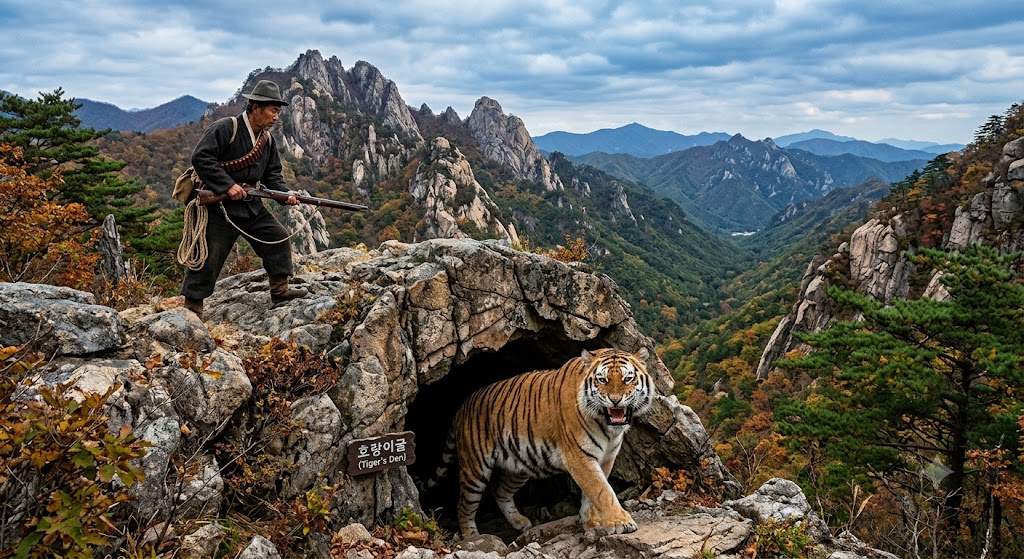
Korean Proverb: "To Catch a Tiger, You Must Enter the Tiger's Den"
Among the traditional Korean proverbs embedded with the wisdom of ancestors, many carry sharp insights that pierce through the core of life. Of these, "To catch a tiger, you must enter the tiger's den" (호랑이를 잡으려면 호랑이 굴로 들어가야 한다) is a representative maxim that transcends generations, offering a powerful message even to modern individuals. This document explores the literal definition of this proverb, its deep symbolic meanings, its modern reinterpretation, and the essential attitudes we should adopt in life, structured in a comprehensive analysis exceeding 2,000 words.
1. Basic Definition and Origins
Etymology and Literal Meaning
This proverb shares its roots with the classic Chinese idiom 'Bu ru hu xue, bu de hu zi' (不入虎穴 不得虎子), which translates to "Unless you enter the tiger's lair, you cannot capture the tiger's cub," recorded in the Book of the Later Han (後漢書) in the biography of Ban Chao. Taken literally, it means that in order to hunt or capture the most powerful and dangerous predator in the ecosystem—the tiger—one must willingly step directly into its deepest and most hazardous stronghold: its den.
Extension of Symbolic Meaning
In this context, the 'tiger' symbolizes a great achievement, success, high-value goal, or a monumental challenge that we deeply desire but cannot easily attain. Conversely, the 'tiger's den' represents the risk, fear, adversity, uncertainty, or the very core of the problem that must be confronted to achieve that goal. Therefore, the proverb encapsulates a profound truth of life: to attain something of true value, one must accept the accompanying risks and confront the challenge head-on.
2. Core Messages Embedded in the Proverb
First: Risk-Taking and Courage
Human beings possess an inherent biological instinct to seek safety and avoid danger. However, looking back through history, monumental discoveries, breakthroughs, and rapid personal growth have occurred exclusively outside the comfort zone. This proverb cautions against a 'lottery mentality'—wishing for great rewards without risking anything. It underscores that decisiveness and courage to face fears and step into danger are absolute prerequisites for capturing something worthwhile.
Second: Confronting the Essence of the Problem
When faced with a crisis, circling around the edges or applying temporary, superficial fixes will never yield a fundamental solution. Entering the tiger's den means penetrating directly into the core of the issue. If there is a deep conflict, one must confront the other party face-to-face. If there is a technical failure, one must dissect the innermost layer of the system. True resolution and substantial growth happen only when we directly confront the very source of discomfort we want to avoid.
Third: Thorough Preparation and a Fortitudinous Spirit
It is crucial to note that this proverb does not advocate for thoughtless recklessness. Marching into a tiger's den empty-handed is not courage; it is foolish bravado or hubris. If the objective is to capture the tiger, a thorough preparation process must be assumed: refining one's weapons, analyzing the tiger's behavioral patterns, and steeling one's mental resolve before taking a single step inside. In short, it commands us to recognize the risk, but build the internal capability and preparation necessary to overpower it.
Fourth: Embracing Uncertainty
The interior of a tiger's den is pitch-black and unpredictable. When embarking on a new venture, predicting the future with absolute certainty is impossible. This proverb emphasizes the "sheer power of execution—taking the first step" despite not knowing the outcome. If you do not act, the probability of success remains exactly 0%. The moment you step into uncertainty, the door of infinite possibility swings wide open.
3. Reinterpretation and Application in Modern Society
Though formulated during historical eras marked by agrarian lifestyles and wilderness hunting, this proverb applies seamlessly to the highly advanced, hyper-competitive landscape of the 21st century.
Domain
Modern Concept of the 'Tiger's Den'
The Reward of 'Catching the Tiger'
Business & Entrepreneurship
Entering a highly saturated red ocean market; investing massive capital; embracing the high risk of bankruptcy.
Market disruption; pioneering a new sector; achieving exponential corporate growth and monopolistic value.
Self-Development & Career
Relocating abroad in an unfamiliar language environment; volunteering for notoriously difficult projects; changing industry tracks.
Quantum leaps in personal capability; transforming into an irreplaceable, elite specialist in the field.
Relationships & Psychology
Initiating vulnerable, brutally honest conversations to resolve deep friction; confronting long-repressed psychological trauma.
Restoration of unshakeable trust; emotional healing, profound self-awareness, and psychological maturity.
Global Enterprise Case Study: The phenomenon of modern tech giants pouring trillions of dollars into unexplored territories like advanced Artificial Intelligence (AI) or deep-space exploration is a perfect example of entering the tiger's den. Failure risks financial devastation, but success guarantees capturing the ultimate 'tiger'—dominance over the next era of human civilization.
4. A Vital Warning: Differentiating True Courage from Blind Recklessness
When applying this proverb to our lives, we must avoid a critical misunderstanding: the distinction between 'prepared courage' and 'blind recklessness (foolish bravado)'.
Blind Recklessness: Rushing into a dark cave without knowing the size of the tiger, the depth of the den, or possessing any weapon or strategy. This does not lead to success; it guarantees absolute destruction.
Calculated Courage: Clearly identifying that a tiger resides inside, calculating the absolute worst-case scenario, constructing a robust strategy to mitigate risks, and then deliberately stepping inside with execution power.
Masters of any craft always secure a 'Plan B' and verify their resources before entering the tiger's den. The true wisdom of this proverb lies not in becoming blind to danger, but in cultivating the sophisticated boldness required to manage, navigate, and overcome danger.
5. Conclusion: Where is Your Tiger's Den?
Throughout our journey in life, we constantly stand at critical crossroads. We are forced to choose: Will we walk down the smooth, secure, and entirely predictable path that offers absolute safety but yields no transformation? Or will we brave the dark, intimidating, yet rewarding path into the tiger's den?
If your dreams currently feel too monumental to attempt, or if the problems you face are so daunting that you are tempted to flee, anchor yourself with this timeless wisdom: "To catch a tiger, you must enter the tiger's den."
When you willingly accept the price of your aspirations and walk directly into the heart of your fears, you transition from a passive bystander to the absolute master of your destiny, fully equipped to seize the tiger. This short phrase left behind by ancestors serves as an enduring, powerful catalyst pushing us out of stagnation and into transformative action.