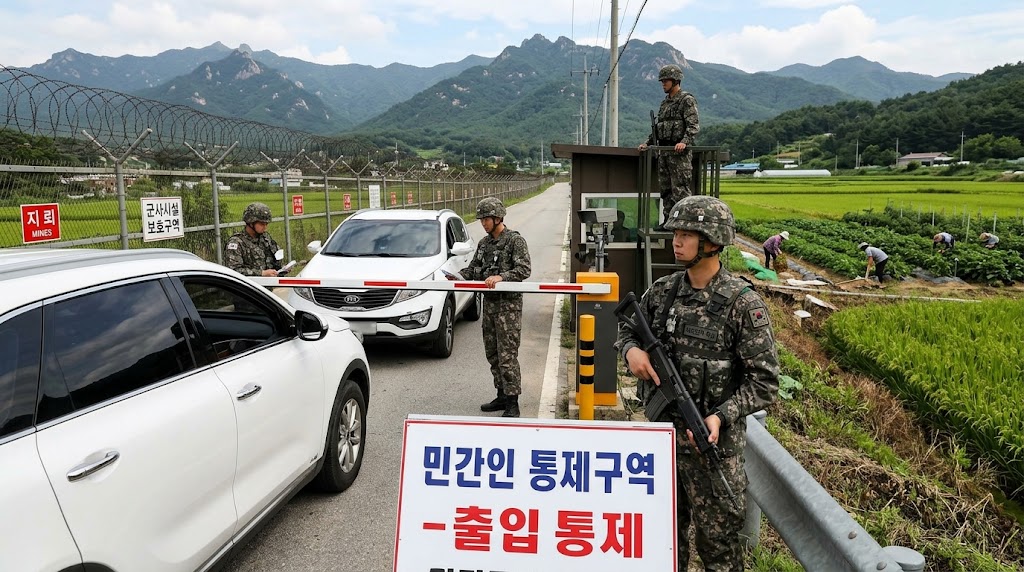
The Necessity and Significance of the Transfer of Wartime Operational Control (OPCON)
Wartime Operational Control (OPCON) refers to the authority to command military forces and control operations in the event of war on the Korean Peninsula. While the Republic of Korea (ROK) reclaimed Peacetime Operational Control in 1994, the wartime authority remains under the Commander of the ROK-U.S. Combined Forces Command (who is also the Commander of U.S. Forces Korea). The transfer of OPCON is a historic task that goes beyond a mere change in the subject of command; it represents the completion of national sovereignty and a fundamental shift in the nation's security paradigm.
1. Historical Background and the Necessity of the Transfer
Symbolic Completion of National Sovereignty
The right to command one's own military is a core element of a sovereign state. Since President Syngman Rhee transferred operational control to the UN Commander during the Korean War in 1950, the ROK military has undergone remarkable development. Now ranked as the 6th strongest military power in the world, it is an essential process for the ROK to directly command its own forces to restore constitutional spirit and national pride.
Active Response to Changing Security Environments
The security landscape of the Korean Peninsula has changed drastically since the Cold War. We face complex security crises, including not only North Korean nuclear threats but also cyber-terrorism and maritime territorial disputes with neighboring countries. Only when our military can independently establish and implement operational plans can we clearly reflect our government's will regarding issues directly related to the survival of our people.
2. Key Significance of the OPCON Transfer
Strengthening the Prestige of the ROK Military and the Leap of 'K-Defense'
To exercise OPCON, essential military capabilities such as intelligence gathering (surveillance/reconnaissance), precision strike capabilities, and Command, Control, Communications, Computers, and Intelligence (C4I) systems are required. In the process of securing these, our defense industry has grown exponentially. The K2 Black Panther tank, K9 Thunder self-propelled howitzer, and the KF-21 Boramae fighter jet are the culmination of the technological prowess built while preparing for the OPCON transfer. In other words, the effort to reclaim OPCON has become the driving force behind our global defense exports.
Mutually Beneficial Development of the ROK-U.S. Alliance
If the past ROK-U.S. alliance was a form of unilateral dependence on the United States, the alliance after the OPCON transfer will see the ROK military playing the leading role with the U.S. military providing support. This is a 'Win-Win' strategy that reduces the security burden on the U.S. while increasing the ROK's influence. The United States also positively evaluates the strengthened capabilities of the ROK military in terms of regional stability and global strategy.
'Koreanization' of Operational Plans and Securing Autonomy
Current operational plans are significantly based on U.S. doctrines and strategies. After the transfer, 'Korean-style Operational Plans' that maximize the geographical characteristics of the Korean Peninsula and the strengths of our military can be proactively operated. This provides the flexibility to minimize unnecessary casualties in an emergency and resolve situations early.
3. Future Outlook and Practical Tasks
Conditions-based Operational Control Transfer (COT)
Currently, both the ROK and the U.S. have agreed on the principle of transferring control when 'conditions' are met, rather than fixing a specific date. The primary conditions include:
- Securing Core Military Capabilities: Completion of surveillance, reconnaissance, and strike capabilities for the ROK military to lead combined defense.
- North Korean Nuclear Response Capability: Securing the ability to initially respond to North Korea's nuclear and missile threats.
- Creating a Security Environment: Stability of the security environment on the Korean Peninsula and surrounding areas compatible with the OPCON transfer.
Expansion of Global Security Cooperation
An ROK military that exercises OPCON will exert even greater influence in the international community, linked with its activities as a non-permanent member of the UN Security Council. As a proactive actor managing military tensions in Northeast Asia, the ROK is expected to emerge as a key partner in the Indo-Pacific strategy. This will also become a powerful diplomatic asset for our companies' overseas expansion and energy security.
Conclusion: Toward an Era of Self-Reliant Defense
Thanks to the dedication of the generation born in 1960, who led the industrialization while overcoming the 'barley hump' (poverty), South Korea has risen beyond an economic powerhouse to the ranks of a military power. The country we dreamed of back then—'a nation that protects its own land with its own strength'—is now becoming a reality before our eyes.
The OPCON transfer is not just an administrative procedure to bring back authority. It is the completion of the ROK's national prestige and the foundation for a 'strong and dignified homeland' to be passed on to future generations. The combined defense system led by our military will further strengthen the ROK-U.S. alliance and serve as an opportunity for the Republic of Korea to leap forward as a true global leader contributing to world peace.