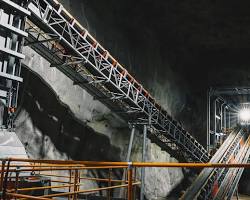
The Resurgence of 'White Gold'
South Korea's Tungsten Reserves and Strategic Resource Diplomacy for the 21st Century
Introduction: The Strategic Importance of Tungsten
Tungsten ($W$), often referred to as "White Gold" or the "Industrial Vitamin," is a critical mineral characterized by its extreme hardness and the highest melting point of all metals. In the modern era, it is indispensable for high-tech industries including semiconductors, aerospace, defense (kinetic energy penetrators), and electric vehicle batteries. For South Korea, a global leader in high-tech manufacturing, securing a stable supply of tungsten is no longer just an economic issue—it is a matter of national security.
1. The Sleeping Giant: South Korea's Tungsten Reserves
Historically, South Korea was a major tungsten exporter. The Sangdong Mine in Gangwon Province was once the pillar of the national economy during the 1950s and 60s, accounting for over 50% of the country's export revenue. Although it closed in 1994 due to a collapse in global prices driven by cheap Chinese supply, the mine is currently undergoing a massive revival.
Key Facts of the Sangdong Mine (As of 2026)
- Estimated Reserves: Approximately 58 million tons of ore.
- Ore Grade: Average 0.45% $WO_3$ (Tungsten Trioxide), which is roughly 3 to 4 times higher than the global average.
- Global Impact: Upon reaching full production capacity, it is expected to produce 10% of the world's tungsten supply, making it the largest single producer outside of China.
The reopening of the Sangdong Mine, led by Almonty Industries, represents a seismic shift in the global supply chain. It provides a non-Chinese source of high-purity tungsten, which is vital for Western allies seeking to reduce their "China risk."
2. The Geopolitical Landscape and Resource Nationalism
Currently, China controls more than 80% of the world's tungsten production and reserves. This monopoly gives China significant leverage in trade disputes. As the U.S.-China rivalry intensifies, the "weaponization of resources" has become a reality. The U.S. and the EU have both labeled tungsten as a Critical Raw Material.
South Korea finds itself in a unique position. While it has traditionally relied on China for tungsten intermediates (such as APT - Ammonium Paratungstate), the revitalization of domestic mines allows Korea to position itself as a "Supply Chain Hub" for the democratic bloc. This domestic production serves as a "physical hedge" against potential export bans or tariffs from other nations.
3. Future Resource Diplomacy Strategies
The Korean government is moving beyond a simple "buying" strategy toward a sophisticated "diplomatic partnership" model. The future of Korean resource diplomacy is built on three pillars:
A. The Mineral Security Partnership (MSP)
South Korea is an active member of the U.S.-led MSP. This multilateral framework aims to ensure that critical minerals are produced, processed, and recycled in a manner that supports the ability of countries to realize the full economic development benefit of their geological endowments. Through MSP, Korea is diversifying its partnerships to include Canada, Australia, and African nations.
B. Technology-for-Resources Swap
Korea possesses world-class smelting and refining technologies. Future diplomacy involves offering these technical capabilities to resource-rich but technologically developing nations (such as Kazakhstan or Vietnam) in exchange for long-term off-take agreements. This creates a Value-Added Partnership rather than a mere transactional relationship.
C. The "K-Resource Trinity" Strategy
| Phase | Strategic Focus | Target Goals |
|---|---|---|
| Upstream | Exploration & Mining | Revitalizing domestic mines (Sangdong) and securing mining rights in Mongolia/SE Asia. |
| Midstream | Refining & Processing | Building domestic APT and tungsten powder plants to end reliance on foreign processing. |
| Downstream | Recycling (Urban Mining) | Establishing a "Circular Economy" where 30% of tungsten is reclaimed from industrial scrap. |
4. Environmental and Social Governance (ESG) in Mining
Modern resource diplomacy also requires meeting high ESG standards. The European Union's Critical Raw Materials Act (CRMA) mandates strict environmental footprints for imported minerals. South Korea is investing in "Green Mining" technologies—using automated electric mining equipment and chemical-free processing—to ensure that its tungsten is "ESG-compliant," making it more attractive to global buyers like Tesla, Apple, and Lockheed Martin.
Conclusion: A New Era of Resource Sovereignty
For decades, South Korea was viewed as a resource-poor nation. However, the combination of rich tungsten deposits in the Gangwon region and strategic diplomatic maneuvering is changing that narrative. By 2030, Korea aims to be not just a consumer, but a strategic guarantor of the global tungsten supply chain.
Resource diplomacy is no longer just about securing the cheapest price; it is about securing the certainty of supply. The grit and determination shown in the tunnels of the Sangdong Mine are a testament to Korea's resolve to remain a global industrial powerhouse in the face of shifting geopolitical tides.