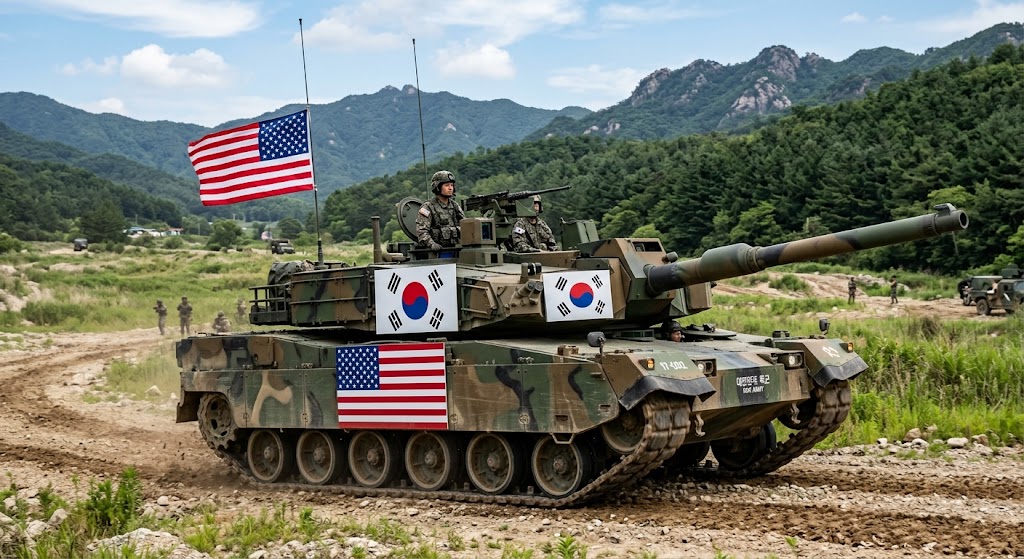
Strategic Sovereignty: The OPCON Transfer and the Future of the ROK-US Alliance
The transfer of Wartime Operational Control (OPCON) represents a historic milestone in the Republic of Korea’s (ROK) modern history. It is more than a mere administrative shift in military command; it is a profound restoration of military sovereignty and a catalyst for redefining the ROK-US partnership into a more mature, symmetrical, and global alliance. In the context of 2026, where regional tensions and technological shifts are accelerating, understanding this transition is crucial for grasping the future of Northeast Asian security.
1. The Philosophical and Sovereign Weight of OPCON Transfer
Restoration of the Constitutional Principle
Since the delegation of command to the UN Command in 1950 during the Korean War, the ROK has entrusted its wartime command to a foreign general. While this was a strategic necessity for survival at the time, the transfer signifies the return to the constitutional norm where the President, as Commander-in-Chief, exercises full authority over the nation's military during both peace and war. It marks the "normalization" of South Korea as a top-tier global power capable of defending its own soil.
Strategic Autonomy and National Identity
The ability to lead combined operations allows South Korea to have a louder voice in determining its fate. This "strategic autonomy" ensures that South Korean interests are prioritized in any contingency on the peninsula. It is a transition from being a security recipient to a security provider, aligning with the national pride of a people who have built a world-class economy and military from the ashes of war.
2. Military Metamorphosis: From Quantity to Quality
Establishing the 'Eyes' and 'Fists'
To fulfill the conditions for OPCON transfer, the ROK military has undergone a massive modernization effort. This includes the development of independent Intelligence, Surveillance, and Reconnaissance (ISR) capabilities, such as military spy satellites and high-altitude UAVs like the Global Hawk.
The 3-Axis System and K-Defense
South Korea's defense strategy now centers on the 3-Axis System: Kill Chain, Korea Missile Defense (KAMD), and Korea Massive Punishment and Retaliation (KMPR). Supported by cutting-edge indigenous platforms like the KF-21 Boramae fighter, K2 Black Panther tanks, and K9 Thunder howitzers, the ROK military has demonstrated that it possesses the technological "fists" to lead a multi-domain theater of war.
3. A New Paradigm: The Global Comprehensive Strategic Alliance
The future of the ROK-US relationship is no longer confined to the Demilitarized Zone (DMZ). It has evolved into a Global Comprehensive Strategic Alliance that addresses the challenges of the 21st century.
① The Tech and Economic Security Nexus
- Semiconductor & Battery Alliance: As global supply chains become weaponized, the synergy between US design/software and South Korean manufacturing excellence in high-tech sectors has become a pillar of mutual security.
- Space and Cyber Cooperation: The alliance is expanding into new frontiers, collaborating on lunar exploration, satellite technology, and defending against state-sponsored cyber threats.
② Regional Stability and the 'Linchpin' Role
South Korea is increasingly acting as a Global Pivotal State (GPS). By taking the lead in its own defense, South Korea allows the US to share the burden of regional stability more effectively. This creates a more sustainable alliance that can address broader Indo-Pacific challenges, from maritime security to humanitarian assistance and disaster relief.
4. Soft Power and the National Brand
The synergy between South Korea's Hard Power (K-Defense) and Soft Power (K-Culture) enhances its standing in the ROK-US alliance. The global influence of K-Pop, Cinema, and Food creates a favorable environment for diplomatic maneuvers. When the world views South Korea as a cultural leader, its sovereign military decisions gain greater international legitimacy and support, further solidifying the alliance as one built on shared values rather than just shared threats.