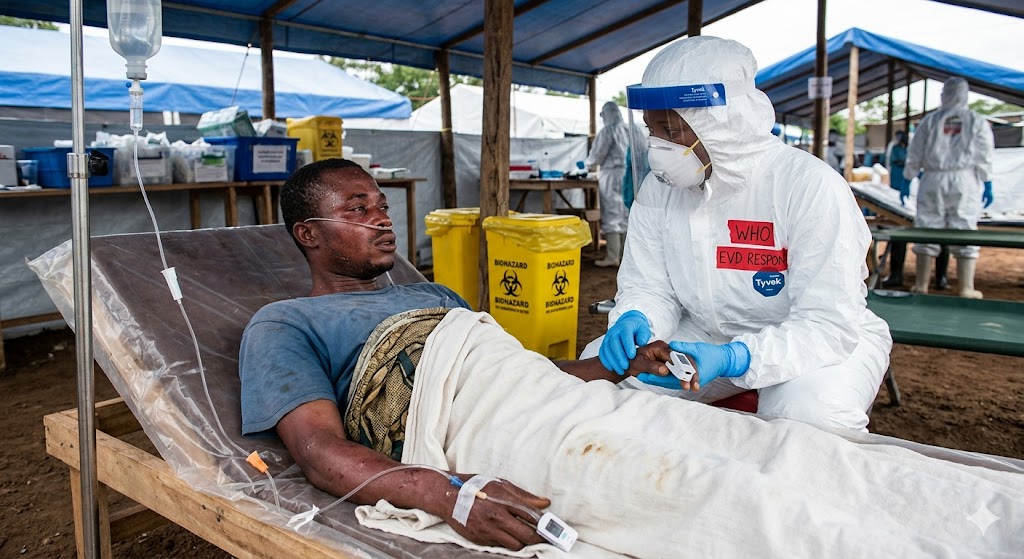
Ebola Virus Disease (EVD)
Ebola Virus Disease is a severe, often fatal illness in humans caused by infection with an Ebola virus, a member of the Filoviridae family. With case fatality rates ranging from 30% to 90%, it is classified as a highly dangerous Group 1 infectious disease.
1. Transmission and Routes of Infection
Ebola virus is not transmitted through the air; rather, it spreads via direct contact with bodily fluids.
- Animal-to-Human (Zoonotic): Infection occurs through close contact with the blood, secretions, organs, or other bodily fluids of infected animals, such as fruit bats (the natural reservoir host), monkeys, chimpanzees, or gorillas.
- Human-to-Human: The virus spreads through direct contact (via broken skin or mucous membranes) with the blood, vomitatious matter, saliva, urine, or feces of an infected person.
- Key Consideration: Individuals are not contagious during the incubation period. Transmission risk peaks during the late stages of the illness. Furthermore, the virus can remain active in the body of a deceased patient, making traditional burial practices a significant route of transmission.
2. Clinical Manifestations and Progression
The incubation period ranges from 2 to 21 days, with an average onset appearing between 8 to 10 days.
- Early Stage (Days 1–3): Characterized by the sudden onset of high fever, severe headache, intense weakness, muscle pain, and a sore throat—symptoms that closely mimic influenza or malaria.
- Mid Stage (Days 4–7): Gastrointestinal symptoms develop, including nausea, vomiting, severe watery diarrhea, and abdominal pain. A maculopapular rash on the trunk may also appear, followed by desquamation.
- Late Stage (Day 7 onwards): Due to severe thrombocytopenia, patients exhibit internal and external bleeding tendencies, including bleeding from the nose, mouth, and gastrointestinal tract. This can progress rapidly to hypotension, multi-organ failure, and fatal shock within two weeks of onset.
3. Diagnosis and Management
- Diagnosis: Confirmed using molecular diagnostics, specifically Reverse Transcription Polymerase Chain Reaction (RT-PCR), to detect specific viral RNA in blood or fluid samples.
- Treatment: While specific monoclonal antibody therapies (such as Inmazeb and Ebanga) are approved for the Zaire ebolavirus species, the cornerstone of management relies on supportive care. This includes aggressive fluid resuscitation, balancing electrolytes, replacing lost blood/clotting factors, and maintaining blood pressure and oxygenation.
💡 Global Update (2026)
The World Health Organization (WHO) has declared a Public Health Emergency of International Concern (PHEIC) following a significant resurgence of the 'Bundibugyo' ebolavirus variant centered in the Democratic Republic of the Congo and Uganda. Although historical data suggests the Bundibugyo variant carries a lower case fatality rate (around 30% to 50%) compared to the Zaire variant, currently approved vaccines do not offer cross-protection against it. Consequently, containment relies heavily on strict isolation, aggressive contact tracing, and rigorous infection control measures.