2026년 현재, 대한민국은 단순한 자원 수입국을 넘어 '자원 안보의 핵심 거점'으로 거듭나고 있습니다. 과거 경제 성장의 초석이었으나 채산성 문제로 문을 닫았던 광산들이 첨단 산업의 발전과 지정학적 위기 속에서 다시금 숨을 쉬기 시작했기 때문입니다. 그 중심에는 '산업의 비타민'이자 '전쟁 금속'이라 불리는 텅스텐($W$)이 있습니다.
1. 한국의 텅스텐 매장량: 잠자던 거인의 부활
대한민국 강원도 영월군에 위치한 상동광산은 세계적으로도 유례를 찾기 힘든 고품질 텅스텐의 보고입니다. 2026년 3월, 상동광산은 약 30여 년간의 긴 잠에서 깨어나 1단계 상업 생산을 본격적으로 시작했습니다.
주요 수치로 보는 상동광산의 가치
추정 매장량: 약 5,800만 톤 (전 세계 매장량의 약 10% 수준)
광석 품위: 평균 0.44%~0.5%의 삼산화텅스텐($WO_{3}$) 함유. 이는 세계 평균(0.18%)의 약 3배에 달하는 수치입니다.
경제적 가치: 정광 기준 약 27조 원, 가공 후 산화텅스텐 생산 시 최대 46조 원 이상의 가치 창출 기대.
글로벌 위상: 풀 가동 시 중국을 제외한 전 세계 텅스텐 수요의 약 40%를 충당할 수 있는 규모입니다.
상동광산의 부활은 단순히 국내 자급률을 높이는 것을 넘어, 텅스텐 공급망의 80% 이상을 장악하고 있는 중국의 독점 체제에 균열을 내는 전략적 의미를 가집니다. 특히 2027년부터 미국이 국방 조달 시 중국산 텅스텐 사용을 배제하기로 함에 따라, 한국의 텅스텐은 서방 동맹국들에게 '대체 불가능한 생명선'이 되었습니다.
2. 글로벌 공급망 전쟁과 자원외교의 패러다임 변화
과거의 자원외교가 석유와 천연가스 등 '에너지원' 확보에 치중했다면, 2026년의 자원외교는 반도체, 이차전지, 방위산업에 필수적인 '핵심광물' 확보전으로 변모했습니다. 한국 정부는 이를 위해 다음과 같은 다각적인 전략을 추진하고 있습니다.
"자원은 이제 시장 논리가 아닌 국가 안보의 논리로 움직입니다. 우리는 '자원 주권'을 확보해야만 첨단 산업의 주도권을 유지할 수 있습니다."
가. 핵심광물 안보 파트너십(MSP)과 다변화
한국은 미국 주도의 핵심광물 안보 파트너십(MSP)에 적극 참여하며, 특정 국가(중국)에 90% 이상 의존하던 수입 구조를 탈피하고 있습니다. 베트남, 호주, 인도네시아, 카자흐스탄 등 광물 부국과의 양자 협력을 강화하여 리튬, 니켈, 희토류 등의 안정적인 공급 통로를 구축하고 있습니다.
나. 'K-자원 Trinity' 전략
단순히 광물을 캐내는 것을 넘어 [채굴 - 정련 - 가공]으로 이어지는 전 주기를 국내화하는 전략입니다. 상동광산의 텅스텐과 인근의 몰리브덴 광맥을 연계하고, 이를 고순도 산화텅스텐으로 가공하는 시설을 국내에 구축함으로써 부가가치를 극대화하고 공급망 리스크를 원천 차단하는 것입니다.
3. 미래 자원외교의 핵심 동력: 재자원화와 기술 혁신
미래의 자원외교는 땅속의 광물뿐만 아니라 '도시 광산'이라 불리는 재자원화(Recycling) 분야에서도 치열하게 전개될 것입니다.
구분
주요 전략 내용 (2026-2030)
재자원화율 목표
2030년까지 10대 핵심광물 재자원화율 20% 달성
도시 광산 활성화
폐배터리, 폐반도체에서 희귀 금속 추출 기술 고도화 및 법적 기반 마련
순환경제 외교
EU 핵심원자재법(CRMA) 등 글로벌 환경 규제에 맞춘 친환경 채굴 및 재생 기술 수출
또한, 대한민국은 세계 최고 수준의 제련 기술을 바탕으로 '기술 기반 자원외교'를 펼치고 있습니다. 자원이 부족한 대신 기술력이 뛰어난 한국이 광물 보유국에 추출·가공 기술을 제공하고, 그 대가로 광물 구매 우선권을 확보하는 방식입니다. 이는 자원 보유국의 산업 발전 요구와 우리의 자원 확보 요구를 동시에 충족시키는 윈-윈(Win-Win) 전략으로 평가받습니다.
4. 결론: 자원 안보는 국가의 생존이다
텅스텐은 아주 단단하고 열에 강한 금속입니다. 마치 온갖 지정학적 풍파 속에서도 굳건히 버텨내야 할 대한민국의 산업 경쟁력과도 닮아 있습니다. 상동광산의 재가동은 우리가 자원 빈국이라는 숙명에서 벗어나, 전략적 자원을 무기로 국제 무대에서 목소리를 낼 수 있는 '자원 강국'으로 가는 첫걸음입니다.
앞으로의 자원외교는 단순히 '돈을 주고 사는 것'이 아니라, 신뢰 기반의 동맹, 기술력의 공유, 그리고 지속 가능한 순환경제의 구축이라는 세 가지 축으로 움직여야 합니다. 2026년, 우리는 이미 그 미래를 향한 견고한 토대를 쌓아 올리고 있습니다.
South Korea’s NPT Withdrawal: Crossing the Rubicon and the Future of a Nation
As of 2026, the security landscape of Northeast Asia is more volatile than ever. The advancement of North Korea's nuclear capabilities and the intensifying hegemony transition between the United States and China have forced South Korea to confront the heavy task of "Self-Reliant Defense." At the heart of this debate lies the ultimate, most controversial option: withdrawing from the Treaty on the Non-Proliferation of Nuclear Weapons (NPT). This move would represent more than just the termination of a treaty; it would signify a total transformation of South Korea’s national identity and long-term survival strategy.
1. Strategic Significance: Seeking a 'Balance of Terror'
Article X, Paragraph 1 of the NPT grants members the right to withdraw if "extraordinary events... have jeopardized the supreme interests of its country." For South Korea to invoke this clause, it would signal a profound shift in geopolitical intent.
A. Declaration of Nuclear Sovereignty
Withdrawing from the NPT is a declaration of independence from total reliance on the U.S. "Extended Deterrence" (the Nuclear Umbrella). It addresses the haunting "Gaullist" question: "Would Washington sacrifice San Francisco for Seoul?" By choosing this path, South Korea seeks strategic autonomy, aiming to counter North Korean threats with its own physical capabilities rather than the promises of an ally.
B. A Direct Challenge to the Global Liberal Order
South Korea has long been the "poster child" of the NPT regime, utilizing the peaceful use of nuclear energy to become a global leader in nuclear power plant exports. Thus, a withdrawal would be perceived as a direct challenge to the rules-based international order. It risks dismantling the "model citizen" brand that South Korea has carefully cultivated over decades.
Strategic Insight: NPT withdrawal is not merely a technical step toward building a bomb; it is an attempt to transition from a "rule-follower" to a "rule-shaper" in the international arena.
2. Practical Hurdles: Economic Isolation and Diplomatic Rupture
The immediate aftermath of an NPT withdrawal would not be a victory lap, but a struggle for survival. Nuclear armament is fundamentally an economic and diplomatic problem, not just a scientific one.
Sanctions from the Nuclear Suppliers Group (NSG): South Korea depends entirely on imported enriched uranium for its nuclear reactors. Withdrawal would likely trigger NSG sanctions, cutting off fuel supplies and potentially paralyzing the domestic power grid, which relies on nuclear energy for roughly 30% of its electricity.
Collapse of the Export-Led Economy: For a nation deeply integrated into the global supply chain, comprehensive economic sanctions would be devastating. Unlike North Korea, South Korea’s prosperity is tied to global markets (Samsung, Hyundai, SK); a disruption in trade could trigger an economic depression.
Strains on the ROK-U.S. Alliance: As the primary guardian of the NPT regime, the United States may view a nuclear South Korea as a threat to global stability. This could lead to a fundamental fracture in the Mutual Defense Treaty and potentially the withdrawal of U.S. Forces Korea (USFK).
3. Future Scenarios: Three Possible Paths
The future of a post-NPT South Korea depends on its diplomatic agility and the reaction of the global community.
Scenario A: The 'Israel Model' – Tacit Acceptance
In this scenario, South Korea achieves a nuclear deterrent while maintaining a functional relationship with the U.S. through intense diplomatic bargaining. By positioning its nuclear status as a necessary bulwark against Chinese expansionism, Seoul might gain "silent approval" from Washington. South Korea would then emerge as a powerful middle power, acting as a regional stabilizer.
Scenario B: The 'North Korea Model' – Isolation and Decay
If South Korea pursues nuclear weapons against the will of the international community, it faces severe isolation. Export routes close, the won collapses, and the nation is forced to pivot into a garrison state, pouring all remaining resources into defense at the cost of civil liberties and economic prosperity.
Scenario C: The 'Japan Model' – Nuclear Latency
This is a "smart" alternative to a hard withdrawal. Instead of building the bomb, South Korea renegotiates the ROK-U.S. Nuclear Cooperation Agreement to secure the rights for uranium enrichment and spent fuel reprocessing. This achieves nuclear latency—the ability to go nuclear within months if necessary—providing a powerful deterrent without the immediate costs of treaty withdrawal.
Warning: Nuclear advocacy based purely on emotional nationalism risks destroying the economic foundations of the country. A cold, calculated cost-benefit analysis is a prerequisite for any such decision.
4. Conclusion: A Time for Strategic Patience
Withdrawing from the NPT is not just a change in security policy; it is a "crossing of the Rubicon" that threatens the very framework of prosperity South Korea has built over the last 70 years. While nuclear weapons may offer a sense of security, they could simultaneously demand the sacrifice of the nation's economic vitality.
The future of South Korea lies in its ability to secure the legitimacy of its survival. Whether through "nuclear latency" or a restructured alliance, Seoul must find a third way that preserves its security without forfeiting its place in the global community. Navigating this labyrinth requires more than just technology—it requires the highest level of creative diplomacy.
2026년 현재, 동북아시아의 안보 지형은 그 어느 때보다 역동적이고 위태롭습니다. 북한의 핵 능력 고도화와 미·중 패권 경쟁의 심화는 대한민국에게 '자강(自强)'이라는 무거운 숙제를 던졌습니다. 그 중심에는 늘 NPT(핵확산금지조약) 탈퇴라는 극단적이고도 치명적인 선택지가 자리하고 있습니다. 이는 단순한 국제 조약의 파기를 넘어, 대한민국의 국가적 정체성과 미래 생존 전략을 완전히 뒤바꾸는 사건이 될 것입니다.
1. NPT 탈퇴의 전략적 의미: '공포의 균형'을 향한 결단
NPT 제10조 1항은 "자국의 지상 이익을 위태롭게 하고 있는 비상사태가 발생했다고 결정하는 경우" 탈퇴할 권리를 명시하고 있습니다. 대한민국이 이 카드를 꺼내 든다는 것은 다음과 같은 의미를 내포합니다.
가. 핵 주권의 선포와 '독자적 억제력' 확보
NPT 탈퇴는 미국의 '확장 억제(핵우산)'에 대한 전적인 의존에서 벗어나겠다는 선언입니다. "서울을 지키기 위해 뉴욕을 포기할 수 있는가?"라는 고전적인 질문에 대해, 더 이상 타국의 선의에 기대지 않고 스스로의 힘으로 북핵 위협에 대응하겠다는 전략적 자율성의 확보를 의미합니다.
나. 국제 질서에 대한 정면 도전
대한민국은 NPT 체제의 최대 수혜국 중 하나입니다. 원자력의 평화적 이용을 통해 세계적인 원전 강국이 되었기 때문입니다. 따라서 탈퇴는 현존하는 국제 규범 체제(Liberal International Order)에 대한 도전으로 간주되며, 이는 한국이 쌓아온 '모범적 국가'라는 브랜드 이미지를 단숨에 무너뜨릴 수 있는 양날의 검입니다.
생각해볼 점: NPT 탈퇴는 단순히 무기를 만드는 과정이 아니라, 국제 사회에서 '규칙 준수자'에서 '규칙 변경자'로 체급을 바꾸려는 시도입니다.
2. 현실적인 난관: 경제적 고립과 기술적 제약
탈퇴 선언 직후 대한민국이 마주할 현실은 결코 장밋빛이 아닙니다. 핵무장은 단순히 기술의 문제가 아니라 경제와 외교의 문제이기 때문입니다.
원자력 공급그룹(NSG)의 제재: 한국은 원전 연료인 농축 우라늄을 전량 수입에 의존합니다. NPT 탈퇴 시 NSG의 제재로 원전 연료 공급이 끊기면, 국내 전력 생산의 약 30%를 담당하는 원전이 멈춰 서는 '에너지 대란'이 발생할 수 있습니다.
수출 주도형 경제의 타격: 국제 사회의 포괄적 경제 제재가 가해질 경우, 삼성전자나 현대차 같은 글로벌 기업들의 공급망이 붕괴될 위험이 있습니다. 대한민국은 북한과 달리 세계 경제와 긴밀히 연결되어 있어 제재의 고통이 수십 배 더 크게 다가옵니다.
한미 동맹의 균열: 미국은 NPT 체제의 수호자입니다. 한국의 독자 핵무장은 한미 상호방위조약의 근간을 흔들 수 있으며, 최악의 경우 주한미군 철수 논의로 이어질 가능성도 배제할 수 없습니다.
3. 대한민국의 미래: 세 가지 시나리오
NPT를 탈퇴한 대한민국의 미래는 우리가 어떤 외교적 역량을 발휘하느냐에 따라 극명하게 갈릴 것입니다.
시나리오 A: '이스라엘 모델' – 묵인과 공조
미국과의 극적인 합의를 통해 이스라엘처럼 핵 보유를 암묵적으로 승인받는 시나리오입니다. 이를 위해서는 중국 견제를 위한 한국의 역할이 미국의 핵심 이익과 맞닿아 있음을 설득해야 합니다. 이 경우 한국은 '강력한 중견국(Middle Power)'으로서 동북아의 균형자 역할을 수행하게 됩니다.
시나리오 B: '북한식 고립' – 제재와 쇠퇴
국제 사회의 강력한 제재 속에 핵무장을 강행하지만, 경제가 파탄에 이르는 경로입니다. 수출 길은 막히고 환율은 폭등하며, '동양의 작은 거인'이었던 한국은 생존을 위해 모든 자원을 국방에 쏟아붓는 병영국가로 전락할 위험이 있습니다.
시나리오 C: '일본식 잠재력' – 스마트한 우회
직접적인 탈퇴 대신, 한미 원자력 협정 개정을 통해 농축 및 재처리 권한을 확보하는 방식입니다. 실제 핵무기를 만들지는 않지만, 마음만 먹으면 언제든 만들 수 있는 '핵 잠재력(Latent Capability)'을 보유함으로써 억제력을 극대화하는 현실적인 대안입니다.
경고: 감정적인 민족주의에 기반한 핵무장론은 자칫 국가의 경제적 토대를 파괴할 수 있습니다. 냉철한 손익 계산이 선행되어야 합니다.
4. 결론: 전략적 인내와 창의적 외교의 시간
대한민국의 NPT 탈퇴는 단순한 안보 정책의 변화가 아닙니다. 그것은 우리가 지난 70년간 일궈온 번영의 틀을 깰 각오를 해야 하는 '루비콘강을 건너는 일'입니다. 핵무기가 우리에게 평화를 가져다줄 수도 있지만, 그 대가로 우리의 풍요를 앗아갈 수도 있다는 점을 명심해야 합니다.
미래의 대한민국은 핵무기 자체보다 '핵을 가질 수 있는 국력과 외교적 정당성'을 확보하는 데 집중해야 합니다. 강대국 사이에서 고립되지 않으면서도 우리의 생존권을 지킬 수 있는 '제3의 길'을 찾는 것, 그것이 2026년 이후 대한민국이 걸어가야 할 진정한 미래입니다.
대한민국의 전시작전통제권(이하 전작권) 환원은 단순히 군사적 지휘권의 이동을 넘어, 국력 신장에 부응하는 주권의 상징이자 한미동맹을 더욱 미래지향적이고 상호보완적인 관계로 발전시키려는 국가적 과제입니다. 이는 우리 군 주도의 연합방위체제로 전환함으로써 강한 국방력을 바탕으로 스스로 안보를 책임지겠다는 의지의 표현이기도 합니다.
1. 전작권 전환의 기반: '조건에 기초한 전환계획(COTP)'
한미 양국은 전작권의 안정적인 전환을 위해 특정한 시점을 정하기보다, 객관적인 군사적 능력이 갖추어졌을 때 전환하는 '조건에 기초한 전작권 전환(COTP)' 원칙을 고수하고 있습니다. 이를 위한 핵심 3대 조건은 다음과 같습니다.
첫째, 연합방위 주도를 위해 필요한 군사적 능력: 우리 군이 한미 연합군을 실질적으로 지휘하고 작전을 주도할 수 있는 핵심 역량을 갖추었는지를 평가합니다.
둘째, 동맹의 포괄적인 북한 핵·미사일 위협 대응 능력: 킬체인(Kill-Chain), 한국형 미사일 방어체계(KAMD), 대량응징보복(KMPR) 등 우리 군의 대응 역량과 미국의 확장억제 능력을 포함합니다.
셋째, 안정적인 전환에 부합하는 한반도 및 역내 안보 환경: 북한의 위협 정도와 주변국의 정세 등 외부 안보 환경이 전작권 전환에 적합한지를 정기적으로 평가합니다.
2. 추진 현황: 3단계 검증 프로세스
전작권 전환을 위해 미래연합군사령부의 임무 수행 능력을 평가하는 3단계 검증 과정이 진행되고 있습니다. 각 단계는 이전 단계의 성과를 바탕으로 더욱 엄격한 기준을 적용합니다.
1단계 - 기본운용능력(IOC) 검증: 미래연합사의 최소한의 임무 수행 능력을 확인하는 단계로, 2019년 8월에 성공적으로 완료되었습니다.
2단계 - 완전운용능력(FOC) 검증: 미래연합사의 충분한 작전 수행 능력을 검증하는 핵심 단계입니다. 2022년 8월에 이 단계의 평가가 이루어졌으며, 현재는 평가 결과를 바탕으로 부족한 부분을 보완하는 노력이 전개 중입니다.
3단계 - 완전임무수행능력(FMC) 검증: 마지막 단계로, 모든 주요 과제를 수행할 수 있는 완전한 군사 능력을 갖추었는지 최종적으로 확인합니다. 2026년 현재, 이 단계의 구체적인 일정을 확정하기 위한 협의가 진행되고 있습니다.
3. 2026년 현재 상황: 전환 시계의 가속화
2026년 현재, 전작권 전환 논의는 새로운 국면을 맞이하고 있습니다. 한미 양국은 전작권 전환을 위한 구체적인 로드맵을 구체화하며 실행력을 높이고 있습니다.
주요 현황 요약
2029년 목표 로드맵: 최근 주한미군사령관(사비에르 브런슨 대장)은 전작권 전환 조건을 2029년 1분기까지 충족하는 것을 목표로 한 로드맵을 미 국방부에 제출했다고 밝혔습니다.
정부의 추진 의지: 현 이재명 정부는 임기 내(2030년 이전) 전작권 전환을 완료하겠다는 목표를 가지고 한미 간 협력을 강화하고 있습니다.
미국의 전략적 변화: 미국의 2026년 국가방위전략(NDS)은 동맹국들이 자신의 방어에 대해 1차적인 책임을 지도록 독려하고 있으며, 이는 전작권 전환 논의가 속도를 내는 배경이 되고 있습니다.
4. 군사적 역량 확보: 자주국방의 토대
우리 군은 연합방위를 주도할 수 있는 독자적인 군사 역량을 조기에 확보하기 위해 첨단 전력을 지속적으로 확충하고 있습니다.
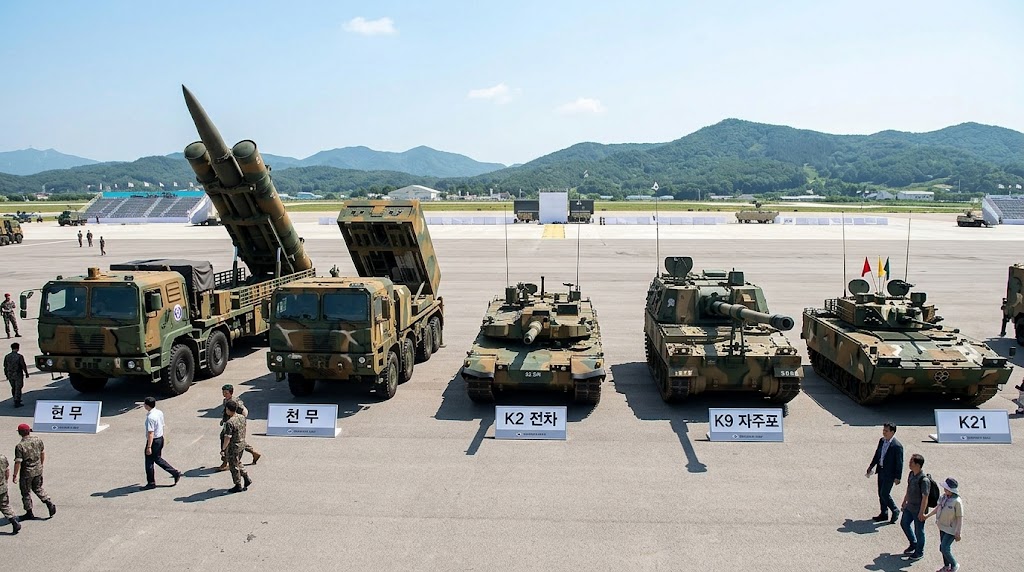
지상 및 해상 전력: 세계 최고 수준의 K2 전차와 K9 자주포, 천무 다연장로켓을 실전 배치하였으며, 이지스 구축함과 3,000톤급 잠수함 등을 통해 해상 작전 능력을 강화했습니다.
공중 및 정찰 전력: F-35A 스텔스 전투기, 글로벌호크 무인정찰기, 조기경보기 등 첨단 항공 전력을 보유하여 독자적인 정보 수집 및 타격 능력을 높였습니다.
미사일 방어체계: 천궁 및 패트리어트 체계, 현무 미사일 시리즈를 통해 북한의 핵·미사일 위협에 대응하는 다층적 방어망을 구축 중입니다.
5. 미래 전망 및 주요 쟁점
전작권 전환 이후에도 한미동맹은 약화되는 것이 아니라, 더욱 견고한 구조로 재편될 전망입니다. 하지만 이를 실현하기 위해 해결해야 할 과제들도 남아 있습니다.
미래연합군사령부의 지휘 구조
전환 후에는 한국군 4성 장군이 연합군사령관을 맡고, 미군 4성 장군이 부사령관을 맡는 구조가 됩니다. 이는 미군이 타국 장군의 지휘를 받는 최초의 사례가 될 수 있어, 실질적인 지휘권 행사를 위한 연합 지휘 체계의 정교화가 필요합니다.
미국의 전략적 유연성과 역내 안보
미국은 중국 견제를 위해 주한미군의 '전략적 유연성'을 강조하고 있습니다. 이는 전작권 전환이 한반도 내 방위에 국한되지 않고 역내 안보 상황과 긴밀히 연동될 것임을 시사하며, 우리 군의 역할 또한 인도-태평양 지역으로 확대될 가능성을 내포하고 있습니다.
북핵 대응 및 확장억제의 신뢰성
북한의 핵 능력이 고도화됨에 따라, 전작권 전환 후에도 미국의 확장억제 공약이 실효적으로 작동할 수 있도록 제도적 장치를 마련하는 것이 최우선 과제입니다.
6. 결론
전작권 환원은 대한민국 군이 명실상부한 '자기 방어의 주인'이 되는 과정입니다. 2026년 현재, 한미 양국은 2020년대 후반을 목표로 한 구체적인 이행 단계에 진입해 있습니다. 성공적인 전환을 위해서는 첨단 군사 능력의 확보뿐만 아니라, 한미 간의 흔들림 없는 신뢰와 급변하는 국제 정세에 대응하는 전략적 유연성이 요구됩니다. 전작권 전환은 단순히 지휘권의 환수가 아니라, 더욱 강력하고 대등한 한미동맹으로 나아가는 '진화'의 과정이 될 것입니다.
The Necessity and Significance of the Transfer of Wartime Operational Control (OPCON)
Deep Analysis on the Completion of Self-Reliant Defense and the Establishment of Global Security Sovereignty
Wartime Operational Control (OPCON) refers to the authority to command military forces and control operations in the event of war on the Korean Peninsula. While the Republic of Korea (ROK) reclaimed Peacetime Operational Control in 1994, the wartime authority remains under the Commander of the ROK-U.S. Combined Forces Command (who is also the Commander of U.S. Forces Korea). The transfer of OPCON is a historic task that goes beyond a mere change in the subject of command; it represents the completion of national sovereignty and a fundamental shift in the nation's security paradigm.
1. Historical Background and the Necessity of the Transfer
Symbolic Completion of National Sovereignty
The right to command one's own military is a core element of a sovereign state. Since President Syngman Rhee transferred operational control to the UN Commander during the Korean War in 1950, the ROK military has undergone remarkable development. Now ranked as the 6th strongest military power in the world, it is an essential process for the ROK to directly command its own forces to restore constitutional spirit and national pride.
Active Response to Changing Security Environments
The security landscape of the Korean Peninsula has changed drastically since the Cold War. We face complex security crises, including not only North Korean nuclear threats but also cyber-terrorism and maritime territorial disputes with neighboring countries. Only when our military can independently establish and implement operational plans can we clearly reflect our government's will regarding issues directly related to the survival of our people.
"The OPCON transfer does not mean the dissolution of the ROK-U.S. Alliance; rather, it signifies a qualitative evolution into a 'Future-oriented Combined Defense System' where the ROK military leads and the U.S. military supports."
2. Key Significance of the OPCON Transfer
Strengthening the Prestige of the ROK Military and the Leap of 'K-Defense'
To exercise OPCON, essential military capabilities such as intelligence gathering (surveillance/reconnaissance), precision strike capabilities, and Command, Control, Communications, Computers, and Intelligence (C4I) systems are required. In the process of securing these, our defense industry has grown exponentially. The K2 Black Panther tank, K9 Thunder self-propelled howitzer, and the KF-21 Boramae fighter jet are the culmination of the technological prowess built while preparing for the OPCON transfer. In other words, the effort to reclaim OPCON has become the driving force behind our global defense exports.
Mutually Beneficial Development of the ROK-U.S. Alliance
If the past ROK-U.S. alliance was a form of unilateral dependence on the United States, the alliance after the OPCON transfer will see the ROK military playing the leading role with the U.S. military providing support. This is a 'Win-Win' strategy that reduces the security burden on the U.S. while increasing the ROK's influence. The United States also positively evaluates the strengthened capabilities of the ROK military in terms of regional stability and global strategy.
'Koreanization' of Operational Plans and Securing Autonomy
Current operational plans are significantly based on U.S. doctrines and strategies. After the transfer, 'Korean-style Operational Plans' that maximize the geographical characteristics of the Korean Peninsula and the strengths of our military can be proactively operated. This provides the flexibility to minimize unnecessary casualties in an emergency and resolve situations early.
3. Future Outlook and Practical Tasks
Conditions-based Operational Control Transfer (COT)
Currently, both the ROK and the U.S. have agreed on the principle of transferring control when 'conditions' are met, rather than fixing a specific date. The primary conditions include:
Securing Core Military Capabilities: Completion of surveillance, reconnaissance, and strike capabilities for the ROK military to lead combined defense.
North Korean Nuclear Response Capability: Securing the ability to initially respond to North Korea's nuclear and missile threats.
Creating a Security Environment: Stability of the security environment on the Korean Peninsula and surrounding areas compatible with the OPCON transfer.
Expansion of Global Security Cooperation
An ROK military that exercises OPCON will exert even greater influence in the international community, linked with its activities as a non-permanent member of the UN Security Council. As a proactive actor managing military tensions in Northeast Asia, the ROK is expected to emerge as a key partner in the Indo-Pacific strategy. This will also become a powerful diplomatic asset for our companies' overseas expansion and energy security.
Conclusion: Toward an Era of Self-Reliant Defense
Thanks to the dedication of the generation born in 1960, who led the industrialization while overcoming the 'barley hump' (poverty), South Korea has risen beyond an economic powerhouse to the ranks of a military power. The country we dreamed of back then—'a nation that protects its own land with its own strength'—is now becoming a reality before our eyes.
The OPCON transfer is not just an administrative procedure to bring back authority. It is the completion of the ROK's national prestige and the foundation for a 'strong and dignified homeland' to be passed on to future generations. The combined defense system led by our military will further strengthen the ROK-U.S. alliance and serve as an opportunity for the Republic of Korea to leap forward as a true global leader contributing to world peace.
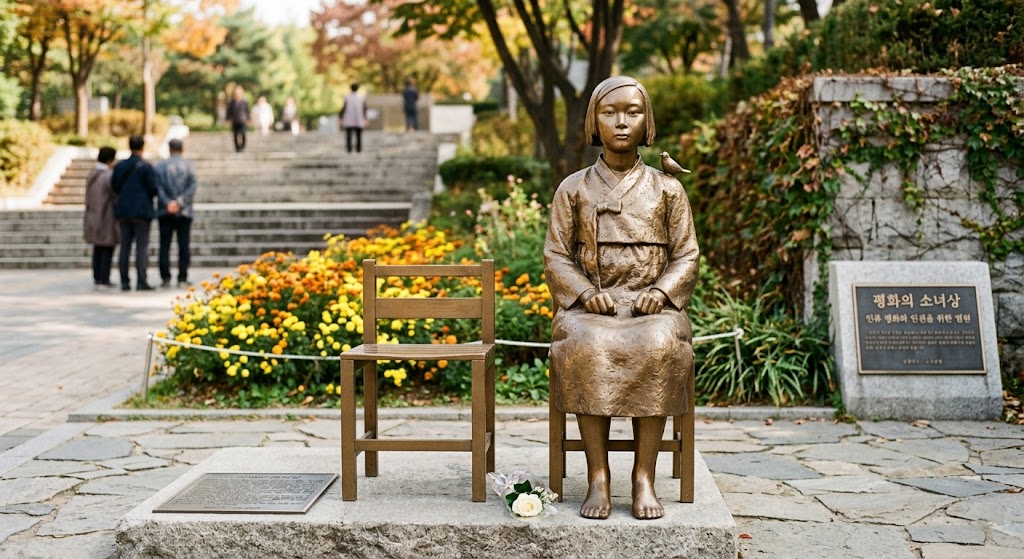
대한민국 서울 종로구 일본대사관 앞, 짧은 단발머리에 치마저고리를 입고 맨발로 앉아 있는 한 소녀가 있습니다. 2011년 12월 14일, 일본군 '위안부' 문제 해결을 위한 정기 수요시위 1,000회를 맞이하여 세워진 '평화의 소녀상'입니다. 이 동상은 단순한 조형물을 넘어 우리 민족의 아픈 현대사를 상징하며, 동시에 전 세계에 인권과 평화의 메시지를 던지는 강력한 매개체가 되었습니다. 본 글에서는 소녀상이 품고 있는 구체적인 상징적 의미를 분석하고, 이를 통해 우리가 나아가야 할 미래 사회의 가치를 고찰해 보고자 합니다.
2. 소녀상의 조형적 요소와 그 의미
소녀상의 각 부분에는 제작자인 김서경·김운성 작가의 세심한 의도와 역사의 아픔이 고스란히 담겨 있습니다. 이는 시각적 기록물이자 무언의 증언입니다.
구분
상징 요소
담긴 의미
머리카락
거칠게 뜯겨진 짧은 머리
부모와 고향으로부터의 강제적 단절과 억압적인 압수
어깨 위 새
작은 새 한 마리
자유와 평화, 그리고 세상을 떠난 피해자들과 산 자를 이어주는 영매
꼭 쥔 주머니
무릎 위 꽉 쥔 두 손
사과받지 못한 세월에 대한 분노와 반드시 사과받겠다는 굳은 의지
들린 뒤꿈치
땅에 닿지 못한 맨발
조국에 돌아와서도 환영받지 못하고 떠돌아야 했던 불안과 소외
빈 의자
소녀 옆의 빈 자리
이미 세상을 떠난 할머니들의 빈자리이자, 미래 세대가 함께 앉아 공감해야 할 공간
특히 그림자 부분에 새겨진 하얀 나비는 환생을 의미합니다. 고통스러운 삶을 살다 가신 할머니들이 다음 생에는 부디 나비처럼 자유롭게 날아오르기를 바라는 염원이 담겨 있습니다.
3. 소녀상이 미래 사회에 던지는 화두
역사는 단순히 과거에 머물러 있는 기록이 아닙니다. 소녀상이 미래 사회에 시사하는 바는 다음과 같은 세 가지 핵심 가치로 요약될 수 있습니다.
첫째, 보편적 여성 인권의 확립
소녀상은 특정 국가 간의 갈등을 넘어, 전쟁이라는 극단적인 상황에서 발생하는 여성에 대한 성폭력과 인권 유린에 대한 강력한 경고입니다. 미래 사회에서는 어떠한 명분으로도 신체적 자유와 존엄성이 훼손되어서는 안 된다는 '불가침의 인권' 가치를 공고히 하는 역할을 합니다.
둘째, '기억의 연대'를 통한 정의 실현
미래 사회는 정보의 홍수 속에서 과거를 쉽게 망각하기 쉽습니다. 소녀상은 우리에게 "기억하지 않는 역사는 되풀이된다"는 교훈을 줍니다. 피해자의 목소리에 귀를 기울이고 그들의 고통을 공동체의 기억으로 공유하는 '공감의 연대'는 미래의 갈등을 해결하는 중요한 열쇠가 될 것입니다.
셋째, 능동적 평화 구축의 주체성
소녀상은 가해자의 반성을 기다리는 수동적 존재가 아닙니다. 당당히 눈을 뜨고 정면을 응시하는 모습은, 미래 세대가 평화를 지키기 위해 역사에 대해 목소리를 내고 행동해야 함을 시사합니다. 이는 전쟁 없는 세상을 만들기 위한 시민 의식의 성장을 독려합니다.
4. 미래 사회에서의 소녀상의 역할
인공지능과 디지털 문명이 지배할 미래 사회일수록 휴머니즘(Humanism)의 가치는 더욱 중요해집니다. 소녀상은 기술이 해결할 수 없는 '인간 존엄'의 영역을 상기시키는 상징물이 될 것입니다.
"역사는 과거와 현재의 끊임없는 대화이다." - E.H. 카
미래의 아이들은 메타버스나 가상 현실을 통해 소녀상을 만나고, 그 시대의 아픔을 체험하며 평화의 소중함을 배울 것입니다. 소녀상은 단순한 동상이 아니라, 인류가 다시는 같은 실수를 반복하지 않도록 깨우쳐 주는 '살아있는 교육의 장'으로서 기능해야 합니다.
5. 결론: 우리가 앉아야 할 빈 의자
소녀상 옆의 빈 의자는 우리에게 묻습니다. "당신은 이 아픔에 공감하며, 더 나은 미래를 위해 무엇을 할 것인가?" 소녀상의 의미를 되새기는 것은 과거의 원한을 되풀이하는 것이 아니라, 다시는 그런 비극이 일어나지 않는 세상을 만들겠다는 다짐입니다.
미래 사회는 국경과 인종을 초월하여 '인권'이라는 가치 아래 하나로 연결되는 사회여야 합니다. 소녀상이 전 세계 곳곳에 세워지는 이유는 그것이 한국만의 역사가 아니라 전 인류가 공유해야 할 평화의 이정표이기 때문입니다. 우리는 그 곁을 지키며, 소녀의 차가운 손을 잡고 온기를 나누는 미래 세대가 되어야 할 것입니다.
Present Achievements and Future Horizons of the Korean Defense Industry
The South Korean defense industry, popularly known as "K-Defense," has undergone a radical transformation from a heavy reliance on foreign imports to becoming a major global exporter. In an era of shifting geopolitical alliances and supply chain vulnerabilities, South Korea has emerged as a "Strategic Partner for Global Security," offering reliable, high-performance military solutions to nations across Europe, the Middle East, and Southeast Asia.
1. Current Landscape: The Era of K-Defense Renaissance
South Korea currently ranks among the top defense exporters globally, with an ambitious goal to become one of the "Global Top 4" by 2027. This rapid ascent is not merely a result of market opportunity but is built upon decades of rigorous testing, mass production efficiency, and technological maturity.
The Three Pillars of Global Success
Unrivaled Delivery Speed: While traditional Western suppliers often face long backlogs, South Korea’s highly active production lines allow for remarkably fast delivery schedules, meeting urgent security needs in record time.
Exceptional Cost-Performance: K-Defense platforms offer high-tier technological capabilities—often fully compatible with NATO standards—at a more competitive price point and with higher operational availability than many alternatives.
Total Lifecycle Support: Korea offers "Total Solutions," which include local manufacturing hubs, extensive technology transfer, and robust Maintenance, Repair, and Overhaul (MRO) packages to ensure long-term sovereignty for the purchasing nation.
Iconic Defense Platforms
The success of K-Defense is anchored by a few "Best-in-Class" systems. The K9 Thunder Self-Propelled Howitzer currently dominates over 50% of the global tracked howitzer market. The K2 Black Panther Main Battle Tank is widely regarded as one of the most advanced tanks in production today, offering superior mobility and firepower. In the air, the FA-50 Fighting Eagle has proven itself as a versatile and reliable light combat aircraft, while the Cheongung-II (M-SAM) missile system has secured massive contracts in the Middle East, showcasing Korea's prowess in precision interceptor technology.
2. Future Horizons: "Defense 4.0" and the Tech Revolution
The future of K-Defense lies in the integration of Artificial Intelligence, robotics, and aerospace technology. As the nature of warfare shifts toward data-driven and unmanned operations, Korea is pivoting toward a "Defense 4.0" strategy.
Manned-Unmanned Teaming (MUM-T)
Addressing the challenge of shrinking demographics and the need for zero-casualty operations, Korea is prioritizing MUM-T. This involves the KF-21 Boramae fighter jet operating in conjunction with autonomous "Loyal Wingman" drones, and K2 tanks coordinating with unmanned ground vehicles (UGVs) for reconnaissance and fire support. This synergy maximizes combat effectiveness while significantly reducing risks to human personnel.
Expansion into Space and Cyber Domains
The battlefield is expanding into the final frontier. South Korea is aggressively developing its own low-earth orbit (LEO) reconnaissance satellite constellations to provide real-time intelligence. Furthermore, the development of Directed Energy Weapons (DEW), such as anti-drone laser systems, is positioning Korea at the forefront of neutralizing low-cost threats like UAV swarms with high precision and minimal cost-per-shot.
3. Strategic Challenges and Global Integration
To maintain this momentum and reach the "Top 4" status, several strategic hurdles must be overcome. The industry is currently focusing on "True Independence" and "Global Cooperation."
Focus Area
Strategy & Objectives
Core Component Localization
Indigenizing high-tech components like aircraft engines and semiconductors to eliminate Export License (E/L) risks.
Global MRO Hubs
Establishing maintenance hubs in Europe (Poland), Australia, and the Middle East to provide real-time support.
U.S. Market Entry
Collaborating with U.S. prime contractors for major programs like the T-7 Replacement or naval MRO services.
AI & Quantum Integration
Investing in 8 core strategic technologies, including Quantum sensing and AI-based autonomous command and control.
Conclusion: A Shield for Freedom
The future of K-Defense is not just about selling equipment; it is about building a collective shield for democratic values. By providing reliable and advanced technology to partners worldwide, South Korea is contributing to a more stable global security architecture.
From the historic legacy of the "Turtle Ships" to the modern marvel of the KF-21, the Korean defense industry remains committed to the principle of "Peace through Strength." As 2027 approaches, K-Defense stands ready to define the next generation of global military standards.