청계천: 서울의 푸른 혈관, 세계를 매료시키다

대한민국 도심 재생의 상징이자 글로벌 여행의 핵심 코스로의 진화

대한민국의 수도 서울, 그 역동적인 변화의 중심에는 언제나 청계천(Cheonggyecheon)이 흐르고 있습니다. 2000년대 초반, 차가운 콘크리트 고가도로 아래 갇혀 있던 이 물길이 다시 햇빛을 본 이후로 청계천은 단순한 하천 복원을 넘어 서울이라는 도시의 정체성을 재정의했습니다. 2026년 현재, 청계천은 내국인뿐만 아니라 전 세계 여행객들이 가장 사랑하는 '서울의 거실'이자 필수 여행 코스로 확고히 자리 잡았습니다.


1. 회색 도시에서 푸른 오아시스로: 복원의 역사적 의미

청계천의 역사는 곧 대한민국 근현대사의 굴곡을 그대로 담고 있습니다. 일제강점기와 한국전쟁을 거치며 빈민가와 오염의 상징이었던 이곳은 1960년대 '근대화'라는 명목하에 콘크리트로 복개되었습니다. 그 위로 웅장하게 솟았던 청계고가도로는 산업화의 긍지였으나, 시간이 흐르며 노후화와 환경 오염의 주범이 되었습니다.

2005년 완료된 복원 사업은 도시 패러다임의 거대한 전환을 의미했습니다. 경제 성장을 위해 자연을 희생시키던 시대를 지나, 시민의 삶의 질과 생태 가치를 우선시하는 시대로 나아가는 신호탄이었기 때문입니다. 오늘날 청계천은 도심 열섬 현상을 완화하고, 왜가리와 청둥오리가 노니는 생태 통로로서 서울의 숨통을 틔워주는 '도심의 폐' 역할을 수행하고 있습니다.


2. 외국인 관광객들이 청계천에 열광하는 3가지 이유

최근 구글 트렌드와 SNS 분석에 따르면, 외국인 관광객들이 서울 방문 시 경복궁, 명동과 더불어 반드시 찾는 장소로 청계천이 꼽힙니다. 그들이 청계천에 매료되는 이유는 매우 다각적입니다.

① 'K-힐링'과 물소리의 미학

뉴욕이나 런던, 도쿄 등 대도시를 여행하는 이들에게 서울의 속도는 매우 빠릅니다. 하지만 청계천 산책로로 내려가는 순간, 지상의 자동차 경적 소리와 소음은 놀라울 정도로 차단됩니다. 외국인들은 이를 'Urban Sanctuary(도심 속 안식처)'라고 부릅니다. 하천을 따라 흐르는 물소리를 들으며 걷는 행위, 일명 '물멍'은 바쁜 여행 일정 속에서 얻는 최고의 휴식으로 평가받습니다.

② 과거와 미래가 공존하는 시각적 경이로움

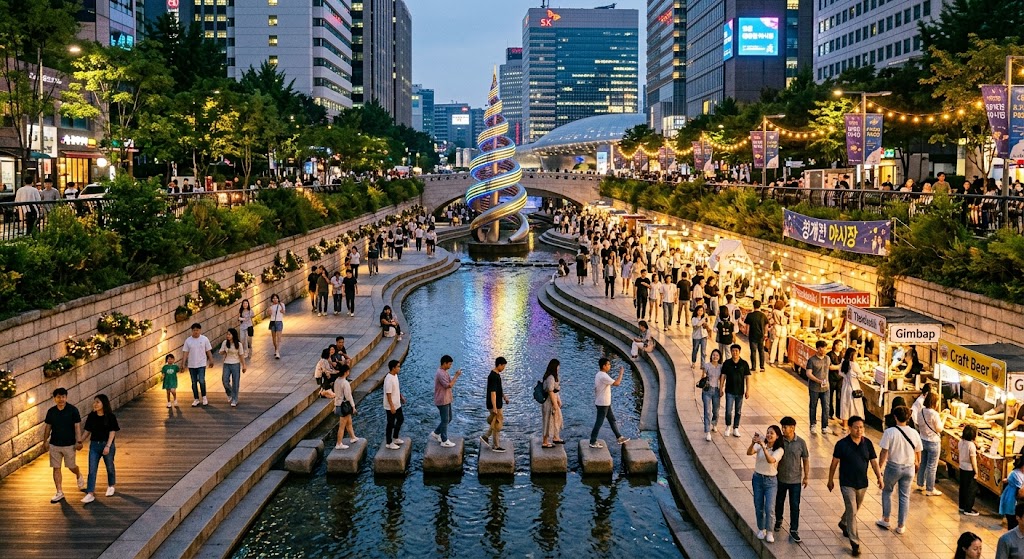
청계천 산책로를 걷다 보면 조선 시대의 돌다리인 '광통교'와 현대적인 초고층 빌딩 숲이 한 화면에 담깁니다. 이러한 시각적 대조는 외국인들에게 한국이 가진 특유의 '전통과 현대의 조화'를 직관적으로 이해시켜 줍니다. 특히 밤이 되면 빌딩의 화려한 불빛이 수면 위로 반사되어 만드는 야경은 마치 SF 영화 속 한 장면 같은 분위기를 자아내어 사진 명소로 각광받고 있습니다.

③ 독특한 보행자 중심 문화: 징검다리 체험

서구권 국가의 도심 하천에서는 보기 힘든 '징검다리(Stepping stones)'는 외국인들에게 매우 신선한 체험 요소입니다. 물 위를 가로지르는 돌을 하나씩 밟으며 건너는 행위는 인스타그램이나 틱톡 등 SNS에서 '한국 여행 인증샷'으로 큰 인기를 끌고 있습니다. 이는 단순한 관찰을 넘어 자연과 직접 교감하는 한국적 정서를 전달합니다.


3. 2026년 청계천 투어의 새로운 트렌드

단순히 걷는 것에 그쳤던 청계천 여행은 이제 주변 상권 및 기술과 결합하여 더욱 풍성해졌습니다.

  • 하이커 그라운드(HiKR Ground)와의 시너지: 청계천 시작점에 위치한 한국 관광 홍보관은 K-팝과 미디어 아트를 접목하여 젊은 외국인 관광객들을 청계천으로 유인하는 허브 역할을 하고 있습니다.
  • '힙지로'와의 연결: 청계천 하류와 맞닿은 을지로(일명 힙지로)의 노포 문화는 외국인 MZ세대에게 '로컬 감성'을 자극합니다. 낮에는 청계천을 산책하고 밤에는 을지로 골목에서 만선호프나 트렌디한 바를 방문하는 코스가 표준이 되었습니다.
  • 스마트 관광 테크: 청계천 곳곳에 설치된 AR(증강현실) 가이드를 통해 과거 청계천의 모습이나 복개 전의 풍경을 스마트폰으로 감상하는 외국인들을 쉽게 볼 수 있습니다.

4. 글로벌 도시 재생의 롤모델로서의 위상

"청계천은 전 세계 도시 설계자들에게 자연과 인간이 어떻게 공존해야 하는지를 보여주는 가장 강력한 메시지다."
- 해외 도시공학 전문가들의 공통된 평가

이제 청계천은 관광지를 넘어 학습의 장이 되었습니다. 기후 위기 시대에 도시 온도를 낮추고 시민들에게 녹지를 제공하는 성공적인 사례로 전 세계 도시 정부의 벤치마킹 대상이 되고 있습니다. 파리의 세느강 프로젝트나 뉴욕의 하이라인 파크와 비교되며, 아시아를 대표하는 혁신적 공간으로 우뚝 섰습니다.

💡 외국인 친구를 위한 추천 코스 (The Perfect Course)

서울의 매력을 100% 느낄 수 있는 청계천 반나절 코스를 소개합니다.

  • Start: 오후 4시, 청계광장(Cheonggye Plaza)의 소라탑 앞에서 시작.
  • Experience: 광통교를 지나며 역사적인 석축을 구경하고, 중간에 위치한 징검다리를 건너며 사진 찍기.
  • Break: 청계천변이 내려다보이는 테라스 카페에서 'K-디저트' 즐기기.
  • Finish: 해 질 녘 동대문 디자인 플라자(DDP)까지 걸어가 야경과 쇼핑으로 마무리.

결론: 서울의 심장을 흐르는 공존의 메아리

청계천은 이제 서울의 지도를 바꾸는 것을 넘어, 한국을 방문하는 전 세계인의 마음속에 깊은 인상을 남기는 브랜드가 되었습니다. 이곳은 낡은 것을 부수고 새로 짓는 개발 논리에서 벗어나, '지속 가능성''사람 중심'의 가치가 얼마나 아름다운지를 증명하고 있습니다.

2026년의 청계천은 여전히 흐르고 있습니다. 그리고 그 물길 위에는 한국의 역사와 외국인의 호기심, 그리고 대도시 서울의 여유가 한데 어우러져 흐릅니다. 대한민국의 중심 시가에서 세계인의 여행지로 각광받는 청계천의 인기는 앞으로도 더욱 깊고 넓게 흐를 것입니다.

© 2026 Seoul Travel Insight. All Rights Reserved.

The Grand Return: BTS 'ARIRANG' 2026

Domestic and International Reaction Analysis

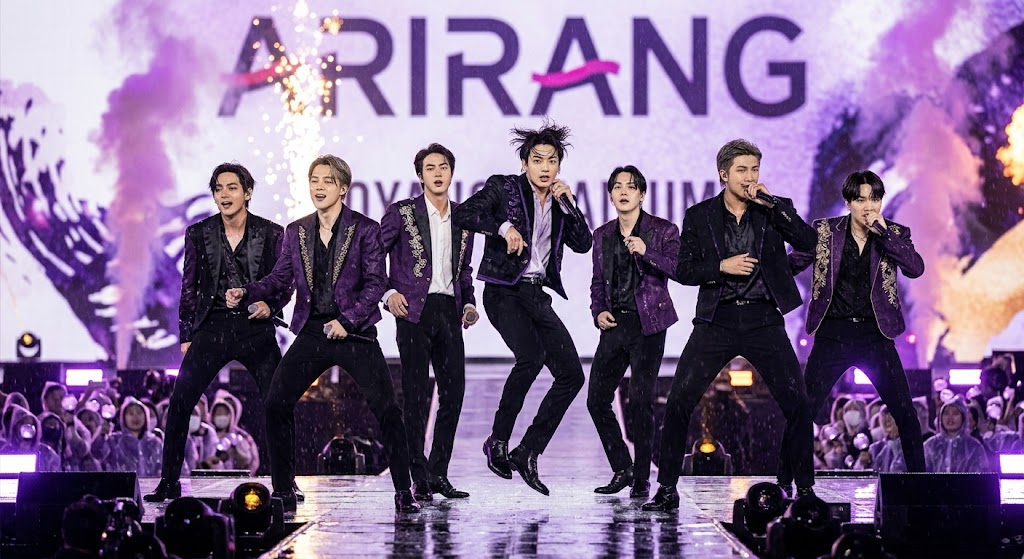
As of April 2026, BTS has officially returned as a full group (OT7). The historic performances held at Goyang Stadium and Gocheok Sky Dome have sent shockwaves through the global music industry, marking the end of their military hiatus and the beginning of a new chapter.

1. Domestic Reaction: "The Reunion of the Century"

  • Emotional Catharsis: Korean fans (K-ARMY) expressed overwhelming emotion at seeing all seven members on stage together. The "fanchants" in Goyang were reported to be heard kilometers away, symbolizing a deep national pride.
  • Economic "Purple" Surge: Goyang City transformed into a "Purple Zone." Local businesses, hotels, and transportation services saw a 400% increase in revenue during the concert week, proving the "BTS Effect" remains as potent as ever.
  • Media Acclaim: Major Korean broadcasters (KBS, SBS, MBC) led their evening news with the concert, describing it as a "cultural landmark" that reaffirms K-Pop's global dominance.

2. International Reaction: "The Kings are Back"

  • Global Digital Explosion: Within hours of the first show, hashtags like #BTSisBack and #ARIRANG_Goyang trended #1 in over 120 countries on X (formerly Twitter) and TikTok.
  • Overseas Pilgrimage: Despite the travel distance, tens of thousands of international fans (I-ARMY) flew into Incheon International Airport. Global media noted that the "Goyang Stadium" looked like a mini United Nations, with fans from every continent represented.
  • Critical Recognition: Western outlets like The Rolling Stone and The Guardian praised the members' vocal growth and the high-tech production, calling the show "a masterclass in stadium performance that no other act can replicate."

3. Comparative Summary

Aspect Domestic (South Korea) International (Global)
Primary Sentiment Nostalgia, Deep Pride, Healing Excitement, Cultural Phenomenon, Awe
Focus Point The members' healthy return and bonding Setlist, production scale, and tour dates
Key Media Quote "The heart of K-Culture beats again." "The undisputed Kings of Pop have returned."
"Seeing the seven purple lights move in unison under the rainy Goyang sky was not just a concert—it was a declaration that BTS remains the most influential musical force of the 21st century."

— Global Music Critic Analysis, 2026

© 2026 BTS Global Media Insights | Prepared for the Global ARMY Community

비운의 왕, 단종의 숨결: 단종문화제의 역사와 스토리

조선 역사상 가장 비극적인 서사를 간직한 왕을 꼽으라면 단연 제6대 왕 단종(端宗)일 것입니다. 강원도 영월에서 매년 열리는 단종문화제는 단순한 지역 축제를 넘어, 500년 전 어린 왕의 넋을 달래고 그의 충신들을 기리는 거대한 역사적 기록물입니다.


1. 단종의 비극: 열일곱 소년 왕의 눈물

단종의 삶은 '비극'이라는 단어로도 다 설명하기 부족합니다. 1452년, 12살의 어린 나이에 왕위에 올랐으나, 야심가였던 숙부 수양대군(세조)에 의해 왕위를 찬탈당하고 '노산군'으로 강등되어 영월 청령포로 유배되었습니다.

  • 천혜의 감옥, 청령포: 삼면이 강으로 둘러싸이고 뒤편은 절벽인 이곳에서 단종은 홀로 한양을 그리워했습니다.
  • 짧은 생의 마감: 1457년, 단종은 결국 17세의 꽃다운 나이에 사약을 받고 세상을 떠났습니다. 그의 시신은 강물에 버려졌고, 누구든 시신을 거두는 자는 삼족을 멸한다는 서슬 퍼런 어명이 내려졌습니다.

2. 단종문화제의 기원: 엄흥도의 충절

모두가 두려움에 떨 때, 영월의 호장 엄흥도(嚴興道)는 목숨을 걸고 나섰습니다. 그는 "충(忠)을 행하다 화를 입는 것은 달게 받겠다"며 밤을 틈타 단종의 시신을 거두어 현재의 장릉(莊陵) 자리에 암장했습니다.

이후 숙종 대에 이르러 단종이 왕으로 복위되면서 영월 백성들은 자발적으로 제사를 지내기 시작했습니다. 이것이 현대적 의미의 축제로 승화된 것이 1967년 시작된 '단종제'이며, 1990년에 '단종문화제'로 명칭을 바꾸어 오늘에 이르고 있습니다.


3. 문화제의 핵심 콘텐츠: 역사적 재현

단종문화제는 다른 축제와 달리 엄숙함과 화려함이 공존합니다. 특히 다음의 행사들은 축제의 정수로 꼽힙니다.

👑 국장(國葬) 재현

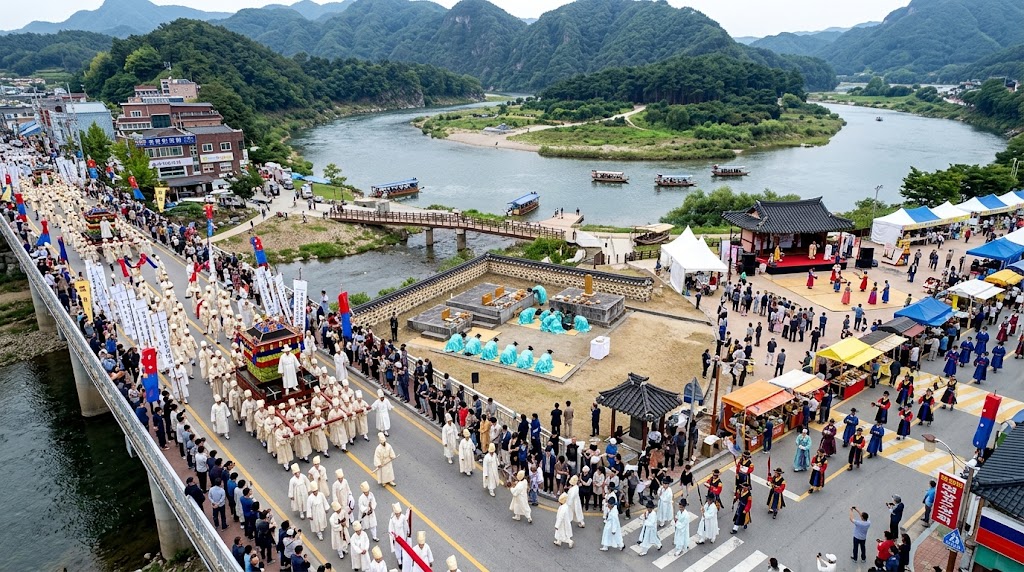
단종은 죽어서도 왕으로서의 마지막 예우인 국장을 치르지 못했습니다. 영월군은 이를 안타깝게 여겨, 철저한 고증을 거쳐 '500년 만의 국장'을 재현합니다. 수천 명의 인원이 참여하는 거대한 운구 행렬은 조선 시대 왕실 의례의 정수를 보여줍니다.

🏹 칡줄다리기

영월 백성들의 단합을 상징하는 민속놀이입니다. 숙종 때부터 시작되었다고 전해지며, 단종의 영혼을 위로하고 마을의 풍요와 안녕을 기원하는 의미를 담고 있습니다.

📜 단종제례와 헌다례

조선 시대 국가 제례 의식을 그대로 복원하여 장릉에서 봉행합니다. 이는 유네스코 세계문화유산인 '조선왕릉'에서 거행되는 가장 권위 있는 제례 중 하나입니다.


"어린 왕의 넋은 영월의 산천이 되었고, 그를 향한 백성들의 마음은 500년의 시간을 견뎌 문화라는 이름으로 꽃피었습니다."

4. 우리가 단종을 기억하는 이유

단종문화제는 단순히 슬픈 역사를 추억하는 자리가 아닙니다. 권력의 비정함 속에서도 끝까지 지켜냈던 신의와 충절, 그리고 억울한 죽음을 외면하지 않았던 민초들의 따뜻한 인류애를 되새기는 시간입니다. 매년 4월, 영월의 진달래가 붉게 피어날 때 우리는 그 속에서 소년 왕의 못다 한 이야기를 만납니다.

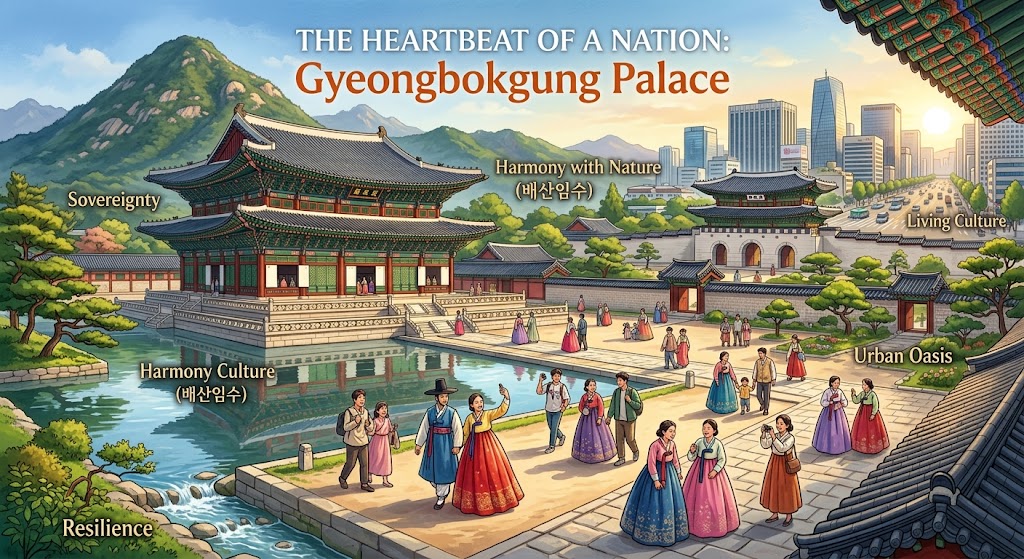
The Heartbeat of a Nation

Understanding why Gyeongbokgung Palace is the most cherished landmark in Korea.

To a casual observer, Gyeongbokgung Palace is a stunning collection of traditional wooden architecture. But to the Korean people, it is much more—it is a physical manifestation of their history, a symbol of their resilience, and the spiritual "Soul of Seoul." Here is why this palace holds such a special place in the hearts of Koreans.


1. The Ultimate Symbol of Sovereignty

Built in 1395, Gyeongbokgung was the main royal palace of the Joseon Dynasty. It wasn't just where the King lived; it was the center of the universe for Korean politics, culture, and science for centuries. For many Koreans, the palace represents the very foundation of their national identity. Loving Gyeongbokgung is an act of honoring the ancestors who built the nation.

2. Architectural Harmony with Nature

Koreans have a unique aesthetic philosophy called "Baesanimsu" (배산임수), which dictates that buildings should be positioned with mountains at the back and water in front. Gyeongbokgung is the gold standard of this harmony. Framed by the majestic Bugaksan Mountain, the palace feels as though it grew out of the earth rather than being built upon it. Key features include:

  • Dancheong: The vibrant, multicolored patterns on the eaves that symbolize protection and cosmic balance.
  • Geunjeongjeon: The throne hall where the "Great Blessing" (the meaning of Gyeongbok) was meant to emanate to the entire country.

3. A Living Cultural Playground

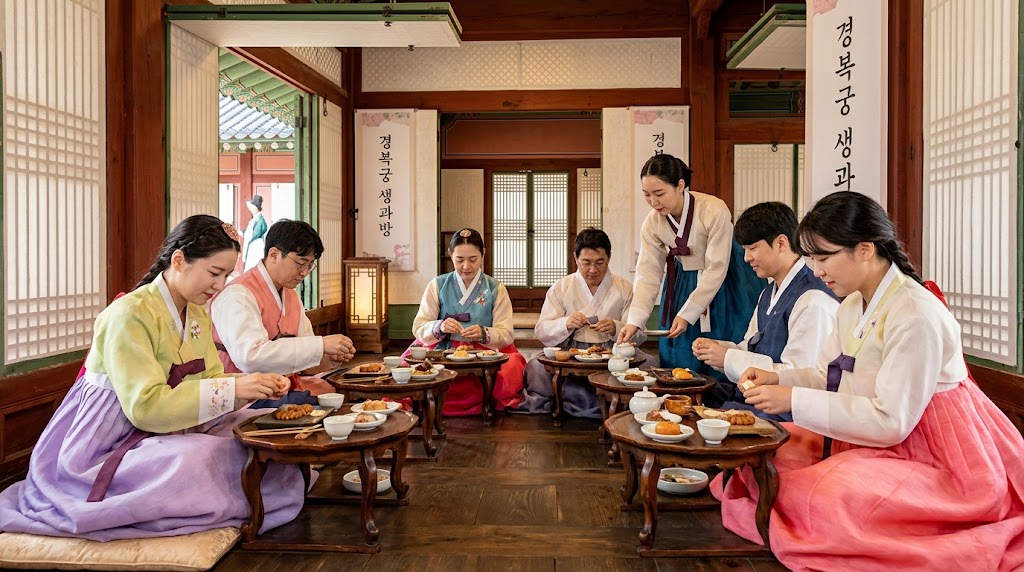
One of the most beautiful sights in modern Seoul is seeing thousands of young people and tourists dressed in Hanbok (traditional clothing) walking through the palace gates. Gyeongbokgung has successfully transitioned from a static museum to a living cultural space. By offering free admission to those in traditional dress, the palace has sparked a cultural revival, making history feel trendy and accessible to the younger generation.

4. An Oasis Amidst the Concrete

Seoul is one of the fastest, most high-tech cities on the planet. In the middle of this forest of glass and steel, Gyeongbokgung offers a moment of profound silence. Stepping through the Gwanghwamun Gate feels like a time-traveling escape. For busy Seoulites, the palace grounds serve as a vital "urban lung" where they can reconnect with a slower, more contemplative pace of life.

5. A Testament to Resilience

Gyeongbokgung has a tragic history—it was destroyed during invasions and partially dismantled during the colonial era. However, the Korean government and people have spent decades meticulously restoring it to its former glory. This refusal to let history be erased makes the palace a symbol of the "indomitable spirit" of the Korean people. It is a reminder that no matter the hardship, beauty and tradition can always be reclaimed.

"Gyeongbokgung is not just a relic of the past; it is the mirror in which Koreans see their past, present, and future reflected all at once."

© 2026 Cultural Insights into Korea

Strategic Analysis: Guyana’s Oil Blocks and South Korea

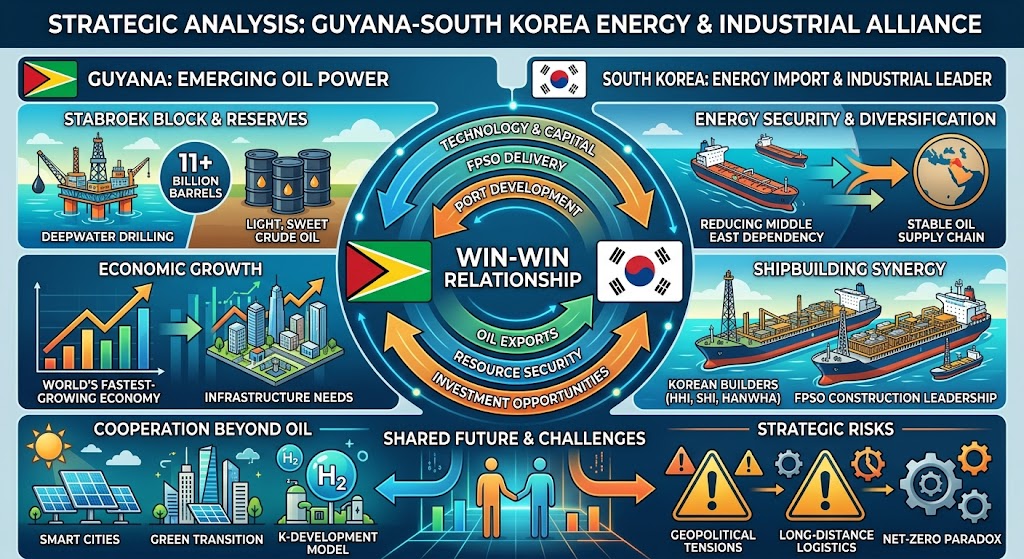
The rapid development of Guyana’s offshore oil reserves, particularly within the Stabroek Block, has shifted the tectonic plates of global energy geopolitics. For South Korea, a nation that imports nearly all of its energy, Guyana represents more than just a new source of crude; it is a critical node in a broader strategy involving energy security, industrial synergy, and technological diplomacy.


1. Energy Security: Diversification Beyond the Strait of Hormuz

South Korea’s energy strategy has long been haunted by its 70% plus dependency on Middle Eastern oil. Geopolitical volatility in the Persian Gulf makes the Korean economy vulnerable to supply shocks.

  • Quality and Compatibility: Guyana’s light, sweet crude is highly compatible with South Korea’s sophisticated refining infrastructure, which is optimized for high-value product yield.
  • Supply Chain Hedge: Establishing long-term off-take agreements or equity stakes in Guyana-Suriname basin blocks provides a vital geographic hedge against disruptions in traditional supply routes.

2. Industrial Synergy: The "Big Three" Shipbuilders

While the oil flows from Guyana, the technology to extract it often flows from Korea. The relationship is a symbiotic industrial loop.

"South Korea does not just buy the oil; it builds the factories that extract it."
  • FPSO Dominance: The development of Guyana’s deepwater assets relies on Floating Production, Storage, and Offloading (FPSO) units. South Korean giants—HD Hyundai Heavy Industries, Samsung Heavy Industries, and Hanwha Ocean—are the global leaders in this sector.
  • Infrastructure Export: As Guyana seeks to build out its domestic energy infrastructure, including gas-to-energy pipelines and refineries, Korean EPC (Engineering, Procurement, and Construction) firms are uniquely positioned to win high-value contracts.

3. Comparative Strategic Alignment

Factor South Korea's Interest Guyana's Benefit
Capital & Investment Securing direct equity in oil blocks. Stable FDI for long-term development projects.
Technology Exporting FPSO and smart-port tech. Access to world-class maritime and energy tech.
Geopolitics Reducing Middle East dependency. Diversifying international partners beyond the West.

4. Strategic Risks and Challenges

Despite the optimism, the partnership faces significant headwind factors that require careful management:

  • Geopolitical Friction: The ongoing territorial dispute between Venezuela and Guyana over the Essequibo region introduces a layer of risk for Korean investments.
  • Logistics: The sheer distance between the Caribbean and East Asia increases transportation costs, though this is mitigated by the sheer volume and quality of the crude.
  • Energy Transition: South Korea’s 2050 Carbon Neutrality goal creates a paradox: the need for fossil fuel security today versus the long-term shift toward green hydrogen and renewables.

Conclusion: A Multi-Dimensional Partnership

The relationship between South Korea and Guyana is evolving into a strategic alliance of necessity. Guyana provides the raw energy resources South Korea lacks, while South Korea provides the industrial and technological muscle Guyana needs to modernize its economy. In the coming decade, we should expect to see increased diplomatic engagement and a surge in joint ventures between Korean state-run energy companies and the Guyanese government.

Wang Geon: King Taejo

The Visionary Founder of the Goryeo Dynasty

1. The Rise in a Time of Chaos

In the late 9th century, the Unified Silla Dynasty was crumbling. Corruption among the nobility and heavy taxation led to widespread peasant revolts. This period, known as the Later Three Kingdoms, saw the emergence of regional leaders: Gyeon Hwon of Later Baekje and Gung Ye of Later Goguryeo (Taebong).

Wang Geon was born in 877 AD into a powerful merchant family in Songak (modern-day Kaesong). His family was famous for their naval prowess and maritime trade, which gave Wang Geon a strategic advantage that would eventually help him unite a divided nation.

2. From General to Sovereign

Wang Geon initially served as a general under the eccentric monk-king, Gung Ye. He quickly became a hero by winning vital naval battles and expanding the kingdom's territory. However, Gung Ye’s mental state deteriorated; he claimed to be a living Buddha and executed anyone he suspected of betrayal, including his own wife and children.

In 918 AD, four top generals approached Wang Geon, urging him to take the throne. Following a successful coup, Wang Geon was proclaimed King. He renamed the kingdom Goryeo, a shortened version of "Goguryeo," signaling his intent to reclaim the glory of the ancient northern empire.

3. The Art of Diplomacy and Unification

Unlike many founders who relied solely on military might, Wang Geon was a master of inclusion and reconciliation. His path to unification followed two distinct strategies:

  • Embracing Silla: Instead of destroying the dying Silla Dynasty, he treated them with respect. When King Gyeongsun of Silla surrendered in 935, Wang Geon welcomed him warmly and integrated the Silla aristocracy into his own government.
  • Defeating Later Baekje: After a long and fierce conflict, Wang Geon finally defeated the forces of Later Baekje in 936, officially ending the civil war and reunifying the Korean Peninsula.

4. Maintaining Stability: 29 Marriages

The biggest threat to the new dynasty was the power of local lords (Ho-jok). To prevent civil war and ensure loyalty, Wang Geon utilized a unique political strategy: arranged marriages. He married 29 women from the most influential families across the country. By becoming the "son-in-law" of these powerful clans, he effectively turned potential enemies into family members.

5. The Ten Injunctions (Hunyo Sipjo)

Before his death in 943 AD, King Taejo left behind the Ten Injunctions for his descendants. These rules served as a political compass for the dynasty, emphasizing the protection of Buddhism, the importance of the northern border, and the need for wise governance based on traditional values.


"The key to governing a country lies in winning the hearts of the people."
— A philosophy attributed to King Taejo’s legacy.

고구려의 기상: 을지문덕 장군과 무적의 군사 과학

고구려는 700년 동안 동북아시아의 패자로 군림하며 중국의 거대 왕조들과 맞서 싸웠습니다. 그 저력의 중심에는 천재적인 전략가 을지문덕 장군과 당대 최첨단 기술이 집약된 군사력이 있었습니다.


1. 살수대첩의 영웅, 을지문덕(乙支文德)

을지문덕 장군은 고구려-수 전쟁의 영웅으로, 수나라의 113만 대군 중 별동대 30만 명을 살수(청천강)에서 섬멸하며 역사의 물줄기를 바꿨습니다.

전략적 정수: 청야 전술과 심리전

  • 청야 전술(淸野戰術): 적이 점령지에 들어와도 식량과 자원을 얻지 못하도록 모두 불태우거나 치우는 전략으로, 수나라 군대의 보급망을 무너뜨렸습니다.
  • 여수장우중문시: 적장 우중문에게 보낸 조롱 섞인 시 한 편은 적의 판단력을 흐리게 하고 퇴각을 유도하는 고도의 심리전이었습니다.
"귀신같은 책략은 하늘의 이치를 다했고, 오묘한 계산은 땅의 이치를 꿰뚫었구나. 전쟁에 이겨 공이 이미 높으니, 만족함을 알고 그만두길 바란다."

2. 철갑 기병의 시초, 개마무사(鎧馬武士)

오늘날의 주력 전차(Tank)와 같은 역할을 수행했던 고구려의 핵심 타격 부대입니다.

구분 특징 군사적 기능
장비 말과 병사 모두에게 찰갑(철 조각을 엮은 갑옷) 착용 화살과 창으로부터 완벽에 가까운 방어력 제공
전술 중앙 돌파 및 충격 전술 공포심 유발 및 적의 대열을 한순간에 붕괴
기반 우수한 제철 기술 대량의 철을 생산하고 가공할 수 있는 국력의 증거

3. 비밀 병기와 방어 기술

맥궁(貊弓) - 동방의 강력한 화궁

고구려의 활인 맥궁은 단단한 물소 뿔과 나무, 힘줄을 결합한 복합궁입니다. 크기가 작아 말 위에서 쏘기 적합하면서도, 일반 활보다 사거리가 훨씬 길고 관통력이 강력하여 적의 갑옷을 뚫는 데 탁월했습니다.

철옹성: 고구려 성곽 기술

고구려의 성은 지형지물을 완벽히 활용하여 적이 공략하기 거의 불가능한 구조를 가졌습니다.

  • 치(雉): 성벽 일부를 돌출시켜 기어오르는 적의 측면을 공격하는 구조.
  • 옹성(甕城): 성문 밖에 항아리 모양으로 성벽을 한 겹 더 쌓아 적을 가두고 섬멸하는 공간.
  • 그랭이 공법: 자연석과 가공석을 맞물리게 쌓아 지진이나 충격에도 무너지지 않는 견고함을 유지.

4. 역사적 의의

고구려의 승리는 단순히 운이 좋아서 얻어진 결과가 아닙니다. 을지문덕의 지략, 개마무사의 파괴력, 그리고 과학적인 성곽 설계가 유기적으로 결합된 결과였습니다. 이러한 강인한 국방 정신은 이후 한국 역사 속에서 외세의 침략을 막아내는 정신적 근간이 되었습니다.

The Spirit of Goguryeo: General Eulji Mundeok and Invincible Military Science

The history of Goguryeo (37 BC – 668 AD) is a testament to the indomitable spirit of a kingdom that dominated Northeast Asia for over seven centuries. This "Spirit of Goguryeo" was characterized by a fierce sense of independence, unparalleled bravery, and a sophisticated application of military science that allowed it to repel even the largest imperial forces of the time.


1. The Tactical Genius: General Eulji Mundeok

At the pinnacle of Goguryeo’s military history stands General Eulji Mundeok. He is celebrated for his role in the Battle of Salsu (612 AD), where he faced the Sui Dynasty’s massive invasion force of 1.13 million soldiers.

Psychological Warfare

Eulji Mundeok did not rely solely on steel. He utilized psychological exhaustion, luring the Sui vanguard deep into Goguryeo territory while cutting off their supply lines. To mock the invading general, he sent a famous poem that demonstrated his confidence and strategic superiority:

"Your divine calculations have plumbed the heavens,
Your subtle plans have spanned the earth.
You have already won the battle and gained fame,
So I suggest you be content and depart."

The Salsu Ambush

As the Sui troops retreated across the Salsu River (modern-day Chongchon River), Eulji Mundeok ordered the destruction of a temporary dam he had built upstream. The resulting wall of water decimated the enemy ranks, leading to one of the most lopsided victories in world military history.


2. Invincible Military Science

Goguryeo’s victories were supported by advanced technology and engineering that were centuries ahead of their time.

A. Gaemamusa: The Iron-Clad Cavalry

The Gaemamusa were the elite heavy cavalry of Goguryeo. They represent a peak in ancient metallurgy:

  • Full Body Protection: Both the rider and the horse were covered in lamellar armor consisting of thousands of small, overlapping iron plates.
  • Mobility and Defense: Unlike solid plate armor, lamellar armor provided the flexibility needed for horseback combat while remaining virtually impenetrable to arrows and spears.

B. Advanced Fortress Engineering

Goguryeo was known as a "Kingdom of Fortresses." Their defensive structures were masterpieces of civil engineering:

  • Interlocking Stone Masonry: Stones were carved into specific shapes to lock together without mortar, making the walls resistant to tremors and battering rams.
  • Chi (Bastions): Protruding wall sections that allowed defenders to attack the enemy’s flanks as they approached the gate.
  • Ongseong: Semi-circular secondary walls built around the main gate to trap attackers in a "kill zone."

C. The Macgung (Composite Bow)

Goguryeo archers were feared for their accuracy and power. They utilized a reflex composite bow made from wood, horn, and sinew. This design allowed for a compact bow that could be easily handled on horseback but possessed a much longer effective range and higher piercing power than the straight bows used by their rivals.


3. The Scorched Earth Policy (Cheong-ya Strategy)

Goguryeo’s military science extended to grand strategy. When faced with a numerically superior foe, they employed the Scorched Earth Policy. They would transport all food, livestock, and people into their impregnable mountain fortresses, leaving the invading army with nothing to forage in the harsh Manchurian and Korean landscape. This "starve and strike" tactic turned the environment itself into a weapon.


Conclusion

The legacy of General Eulji Mundeok and the military innovations of Goguryeo serve as a reminder that strength is born from a combination of unwavering spirit and scientific intelligence. By mastering the terrain, perfecting metallurgy, and outthinking their opponents, the people of Goguryeo ensured that their kingdom would be remembered as the "Grip of the East" for all time.

+ Recent posts