The Diplomacy of Taste: K-Chicken and the Strategic Partnership with Europe
As of 2026, South Korea's global presence is defined by a unique blend of cultural soft power and industrial hard power. While the aroma of spicy-sweet Yangnyeom chicken fills the streets of London, Paris, and Berlin, Korean technology is simultaneously reshaping the security and economic landscape of the European continent.
1. K-Chicken: Why the World is Obsessed with Korean Fried Chicken
In the West, fried chicken was traditionally viewed as a simple fast food. However, South Korean "K-Chicken" has elevated it to a culinary art form. The secret to its global craze lies in three main pillars:
① Masterful Texture: The 'Double-Frying' Technique
Unlike American-style chicken with its thick, bready crust, K-Chicken uses a thin, starch-based batter. The double-frying method—frying once at a lower temperature to render fat and a second time at a higher temperature—ensures that the skin remains incredibly crispy even when tossed in heavy sauces. This creates the signature "crunch" that maintains its integrity during delivery.
② The "Dan-Jjan-Mae" Harmony: A Symphony of Flavors
The sauce is not just about heat; it is a complex layer of sweet, salty, and spicy flavors.
Gochujang Base: Provides a deep, fermented umami and a mild kick.
Garlic & Ginger: Essential aromatics that add a sophisticated savory profile.
Syrup/Honey: Creates a glossy sheen and a addictive sweetness that balances the spice.
③ The 'Chimaek' Lifestyle: Exporting Experience
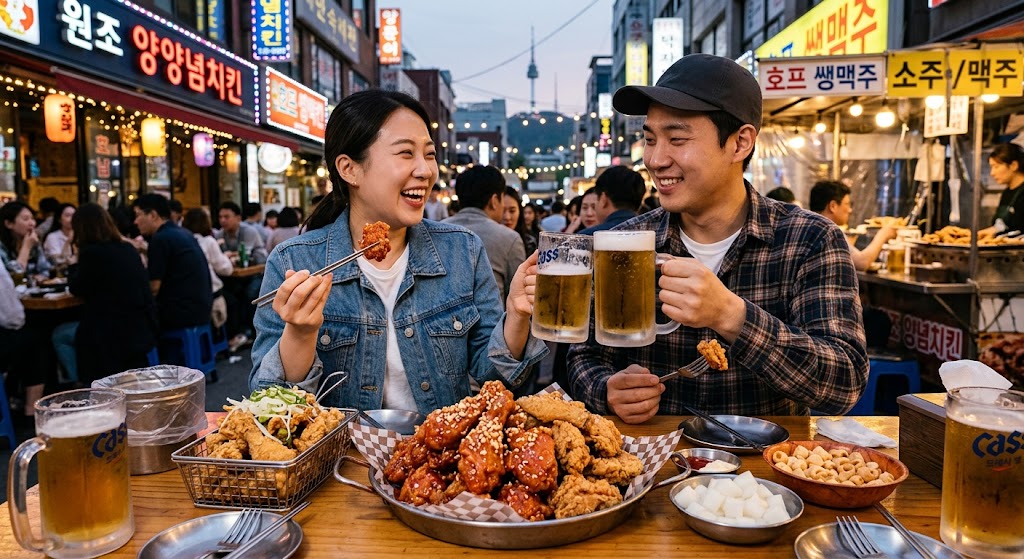
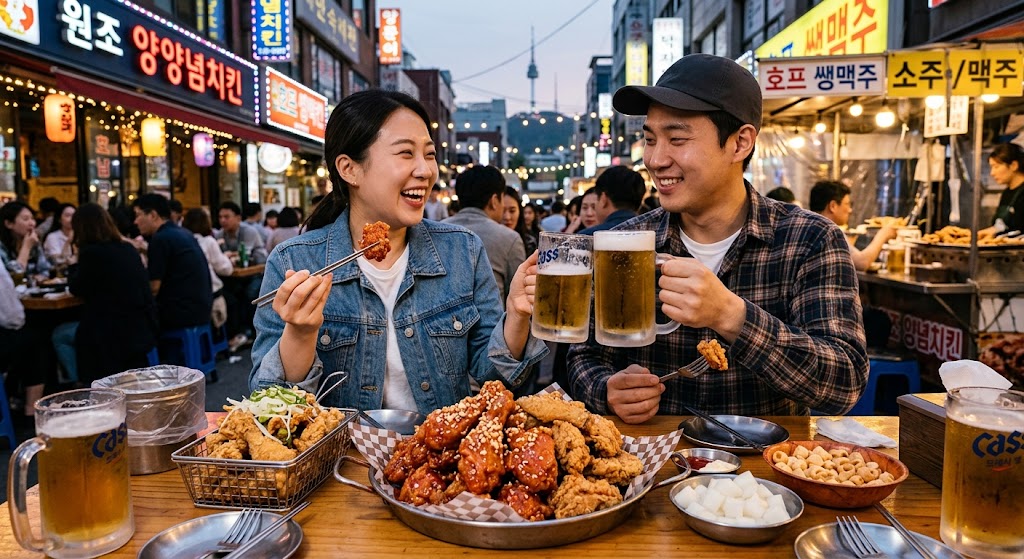
K-Dramas and Mukbang (eating shows) have turned chicken into a cultural ritual. The concept of 'Chimaek' (Chicken + Maekju/Beer) represents a lifestyle of social bonding and stress relief, making the food an aspirational experience for global fans of Hallyu.
2. South Korea and Europe: A Strategic Future in 2026
Beyond the dinner table, the relationship between South Korea and the European Union (EU) has evolved into an indispensable partnership based on economic security and shared values.
① Economic Security and Supply Chain Synergy
Europe’s push for "Strategic Autonomy" in semiconductors and green energy finds a perfect partner in South Korea.
Semiconductors: Collaboration between Dutch lithography giant ASML and Korean chipmakers like Samsung and SK Hynix has moved toward joint R&D centers.
Electric Vehicle Batteries: Korean battery plants in Poland and Hungary serve as the "beating heart" of Europe's transition to a carbon-neutral automotive industry.
② K-Defense: Securing the European Frontier
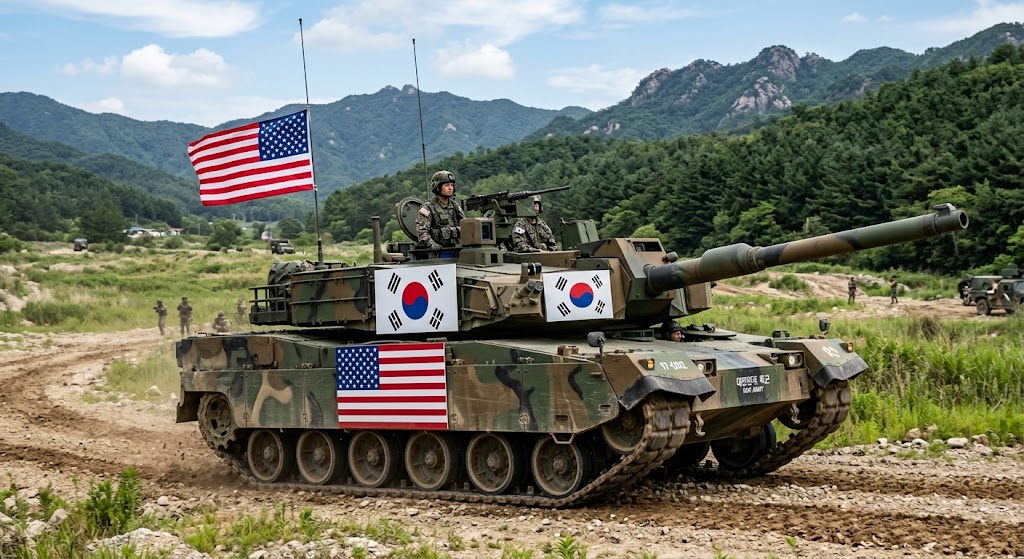
Following the geopolitical shifts in Eastern Europe, Korean defense technology has become a cornerstone of European security. With rapid delivery times, proven performance, and cost-efficiency, K-9 Howitzers and K-2 Tanks are becoming the new standard for nations like Poland and Romania, fostering a long-term defense ecosystem between the two regions.
③ Digital Norms and Values
Korea and the EU are leading the world in establishing ethical standards for Artificial Intelligence and data sovereignty. As democracies, they share a common goal of maintaining a rules-based international order against digital authoritarianism.
3. Conclusion: A Multi-Layered Connection
The future of Korea-Europe relations is defined by a complementary synergy. Europe provides the foundational technology and a massive single market, while Korea offers world-class manufacturing prowess and rapid innovation cycles.
"Yesterday, K-Chicken brought joy to European tables. Today, Korean batteries power European roads. Tomorrow, our shared values will ensure global stability and sustainable growth."
In essence, the same innovation that allowed Korea to reinvent fried chicken into a global phenomenon is now being applied to the most critical industries of the 21st century, ensuring that the Korea-Europe bond remains as vibrant and resilient as ever.
2026년 현재, 대한민국은 전 세계에 두 가지 강렬한 인상을 심어주고 있습니다. 하나는 런던, 파리, 베를린의 거리 어디에서나 풍겨오는 매콤달콤한 양념치킨의 향기이며, 다른 하나는 유럽의 안보와 첨단 산업 지도를 새로 그리고 있는 강력한 기술력입니다. 이 두 요소는 각각 한국의 '소프트파워'와 '하드파워'를 상징하며 서로 긴밀하게 얽혀 있습니다.
1. K-치킨: 왜 전 세계는 한국식 양념에 열광하는가?
서구권에서 치킨은 본래 단순한 '패스트푸드'였습니다. 그러나 한국의 양념치킨은 이를 '요리'의 영역으로 끌어올렸다는 평가를 받습니다. 외국인들이 K-치킨에 매료된 이유는 크게 세 가지 과학적, 문화적 비결로 분석됩니다.
① 조리 방식의 차별화: '더블 프라이'의 마법
미국식 프라이드치킨이 두꺼운 밀가루 반죽을 통해 투박한 바삭함을 강조한다면, 한국식 치킨은 전분 위주의 얇은 반죽을 입힙니다. 특히 낮은 온도에서 수분을 빼고, 높은 온도에서 다시 한번 튀겨내는 '더블 프라이' 기법은 튀김옷과 껍질 사이의 수분을 완전히 제거합니다. 이 과정 덕분에 소스를 듬뿍 발라도 눅눅해지지 않고, 한 입 베었을 때 '파삭' 하는 경쾌한 소리와 함께 촉촉한 육즙을 유지하는 독보적인 식감을 선사합니다.
② 미각의 입체적 구성: 단짠매(Sweet, Salty, Spicy)
한국 양념치킨의 소스는 단순히 맵기만 한 것이 아닙니다. 고추장의 깊은 감칠맛, 물엿의 투명한 달콤함, 간장의 짭짤함, 그리고 한국 요리의 영혼이라 불리는 마늘의 풍미가 조화를 이룹니다. 서양인들에게 마늘 향이 가득한 매콤한 소스는 처음에는 낯설지만, 한 번 경험하면 멈출 수 없는 중독성을 유발합니다. 최근에는 '뿌링클'과 같은 치즈 시즈닝이나 간장 마늘 등 메뉴가 세분화되며 개인의 취향을 세밀하게 공략하고 있습니다.
③ 콘텐츠의 힘: '치맥'이라는 라이프스타일 수출
K-팝과 드라마는 치킨을 '음식'이 아닌 '경험'으로 만들었습니다. 드라마 속 주인공들이 고단한 하루를 마치고 시원한 맥주와 함께 치킨을 즐기는 모습은 전 세계 시청자들에게 강렬한 대리 만족을 주었습니다. 또한 유튜브의 '먹방' 트렌드는 치킨의 바삭한 소리와 양념의 시각적 자극을 전 세계 거실로 전달하며, 한국 치킨을 반드시 먹어봐야 할 '힙(Hip)한 문화 상품'으로 등극시켰습니다.
2. 한국과 유럽: 2026년, 경제와 안보의 운명 공동체
미각을 통한 친밀감이 형성된 바탕 위에서, 한국과 유럽의 미래 관계는 더욱 단단한 전략적 파트너십으로 진화하고 있습니다. 2020년대 중반을 넘어서며 양측의 관계는 단순한 교역 상대국을 넘어선 '전략적 생존 파트너'로 정의됩니다.
① 첨단 산업의 핵심 공급망 동맹
유럽연합(EU)은 '전략적 자율성'을 확보하기 위해 반도체와 배터리 공급망의 다변화를 꾀하고 있으며, 한국은 그 과정에서 가장 신뢰할 수 있는 협력자입니다.
반도체: 네덜란드의 ASML과 한국의 삼성전자/SK하이닉스 간의 협력은 이제 설계와 장비를 넘어 공동 R&D 센터 운영으로 확대되었습니다.
이차전지: 폴란드, 헝가리 등지에 구축된 한국 기업들의 거대 배터리 공장은 유럽 자동차 산업의 전기차 전환을 이끄는 심장 역할을 하고 있습니다.
② K-방산과 유럽 안보의 재편
우크라이나 전쟁 이후 안보 지형이 급변한 유럽에서 한국 방위산업은 구세주와 같은 역할을 하고 있습니다. 독일이나 미국산 무기체계에 비해 압도적으로 빠른 인도 시점과 검증된 성능, 그리고 합리적인 가격은 폴란드, 루마니아, 에스토니아 등 유럽 국가들이 K-9 자주포와 K-2 전차를 선택하게 만든 결정적 요인이었습니다. 이는 단순한 무기 판매를 넘어, 유럽 대륙 내에서 한국 무기 체계의 '표준화'가 이루어지는 계기가 되고 있습니다.
③ 디지털 규범과 가치의 공유
2026년 현재, 인공지능(AI)과 데이터 주권에 대한 국제적 규범 마련이 화두입니다. 한국과 유럽은 거대 빅테크 기업들의 독주를 견제하고, 인간 중심의 기술 윤리를 수립하는 데 있어 가장 목소리가 일치하는 파트너입니다. 양측은 '디지털 파트너십'을 강화하여 자유민주주의 가치를 지키는 디지털 질서를 구축하는 데 앞장서고 있습니다.
3. 결론 및 향후 전망
한국과 유럽의 미래는 '상호 보완적인 시너지'에 달려 있습니다. 유럽은 원천 기술과 거대한 단일 시장, 규범 수립 능력을 갖추고 있으며, 한국은 이를 실현할 수 있는 세계 최고의 제조 역량과 혁신 속도를 보유하고 있습니다. 탄소중립(RE100)과 탄소국경조정제도(CBAM)와 같은 규제가 단기적인 도전이 될 수 있으나, 오히려 이를 공동의 기술 혁신으로 돌파하려는 움직임이 활발합니다.
"어제는 한국의 치킨이 유럽인들의 식탁을 즐겁게 했다면, 오늘은 한국의 반도체와 배터리가 유럽의 도로를 달리고 있으며, 내일은 한국과 유럽의 연대가 세계 질서의 평화와 지속 가능성을 담보할 것입니다."
결국 K-치킨이 보여준 '기존의 것을 재해석해 더 나은 가치를 만드는 혁신성'은 한-유럽 관계 전반을 관통하는 핵심 키워드입니다. 맛있는 소스가 튀김과 조화를 이루듯, 양 지역의 협력은 더욱 고소하고 매콤한 미래를 만들어갈 것으로 기대됩니다.
대한민국 현대 안보사에서 **전시작전통제권(이하 전작권) 환수**는 단순히 군사적 지휘권의 명의를 변경하는 절차 그 이상의 의미를 갖습니다. 이는 1950년 6·25 전쟁이라는 민족적 비극 속에서 생존을 위해 위임했던 권한을, 세계 6위권의 강군으로 성장한 대한민국이 스스로 되찾아오는 '안보 주권의 완성'이자, 한반도의 운명을 우리 스스로 결정하겠다는 의지의 표명입니다.
1. 전작권 환수가 갖는 역사적·헌법적 가치
① 군사 주권의 실질적 확립
주권 국가에 있어 자국 군대를 스스로 지휘하는 것은 헌법이 부여한 통수권자의 가장 기본적이고도 막중한 권리이자 의무입니다. 역사적으로 을지문덕, 강감찬, 이순신 장군 등 국난을 극복했던 위대한 선조들은 독자적인 전략과 지휘 체계로 나라를 지켰습니다. 전작권 환수는 이러한 우리 민족의 자강(自强) 역사를 현대적으로 계승하여, 타국에 의존하지 않는 독립된 군사 강국으로서의 면모를 갖추는 과정입니다.
② 능동적 안보 주체로서의 전환
과거의 한미 관계가 미국이 일방적으로 안보를 제공하고 한국이 이를 수용하는 형태였다면, 전작권 환수 이후에는 한국군이 작전을 주도(Lead)하고 미군이 이를 지원(Support)하는 체제로 변모합니다. 이는 한반도에서 발생할 수 있는 잠재적 위기 상황에 대해 우리가 주도적인 목소리를 낼 수 있는 전략적 자율성을 보장합니다.
※ 참고: 전작권 환수 이후에도 한미 연합 방위 체제는 유지됩니다. 다만 사령관을 한국군 대장이 맡고, 부사령관을 미군 대장이 맡는 수평적·실무적 구조로 진화하게 됩니다.
2. 군사·전략적 의미와 K-방산의 역할
① 첨단 과학기술군으로의 체질 개선
전작권 환수를 위해서는 우리 군이 독자적으로 전장을 감시하고 정보를 분석하며, 정밀하게 타격할 수 있는 능력이 필수적입니다. 이를 위해 군사 정찰 위성 확보, 고고도 무인정찰기(ISR) 도입 등 '눈'을 확보하고, 한국형 3축 체계(Kill Chain, KAMD, KMPR)를 고도화하는 작업이 병행되고 있습니다. 이는 우리 군이 양적 위주의 군대에서 질적 위주의 첨단 과학기술군으로 탈바꿈하는 강력한 동력이 됩니다.
② K-방위산업의 국제적 위상 강화
전작권 행사를 뒷받침하는 핵심 하드웨어는 바로 우리 손으로 만든 무기 체계입니다. **KF-21 보라매**, **K2 흑표 전차**, **K9 자주포** 등으로 상징되는 대한민국의 방위산업 역량은 전 세계가 주목하고 있습니다. 독자적인 작전 수행 능력을 증명하는 국산 무기 체계의 보급은, 전작권 환수의 실질적인 기반이 됨과 동시에 국가 경제의 새로운 성장 동력으로서 '안보와 경제의 선순환'을 이끌어냅니다.
3. 한미 미래관계의 진화: 글로벌 포괄적 전략 동맹
전작권 환수 이후의 한미 관계는 한반도라는 지리적 국한을 넘어, 전 세계적인 가치와 이익을 공유하는 성숙한 동맹으로 나아갑니다.
① 글로벌 안보 파트너십의 확장
미래의 한미 동맹은 북한의 위협에 대응하는 수준을 넘어 인도-태평양 지역의 평화 유지, 사이버 안보, 우주 작전 등 현대전의 다변화된 영역에서 공조를 강화할 것입니다. 대한민국은 이제 미국의 일방적인 보호를 받는 국가가 아니라, 미국의 전략적 파트너로서 지역 안보의 '린치핀(Linchpin, 핵심축)' 역할을 수행하게 됩니다.
② 기술 및 경제 안보 동맹으로의 전이
첨단 기술 협력: 반도체, 인공지능(AI), 양자 컴퓨팅 등 핵심 기술 분야에서의 상호 의존성을 높여 기술 동맹을 견고히 합니다.
방산 공급망 공유: 미국의 원천 기술과 한국의 우수한 제조·공급 능력을 결합하여 글로벌 방산 시장에서 공동의 이익을 창출합니다.
에너지 안보: 소형모듈원자로(SMR) 및 지속 가능한 에너지(SAF) 기술 협력을 통해 미래 에너지 안보 체제를 구축합니다.
③ 수평적·가치 중심의 동맹
전작권 환수는 양국 간의 관계를 보다 대등한 관계로 정립시킵니다. 이는 서로에 대한 상호 존중을 바탕으로, 자유 민주주의와 인권이라는 공동의 가치를 수호하는 '가치 동맹'으로서의 결속력을 더욱 강화할 것입니다. 전 세계적으로 사랑받는 K-컬처와 BTS 등의 영향력은 이러한 동맹 관계를 국민적·문화적 정서로까지 확장시키는 소프트 파워의 힘이 됩니다.
맺음말: 당당한 일류 국가로의 도약
전작권 환수는 단순히 지휘권의 이양을 넘어, 대한민국이 과거의 수혜국에서 벗어나 스스로의 안보를 책임지고 나아가 세계 평화에 기여하는 **'글로벌 중추 국가(GPS)'**로 거듭나는 역사적 관문입니다.
철저한 준비와 검증을 통한 전작권 환수는 우리 군의 현대화를 완성시키고, 한미 동맹을 더욱 강력하고 성숙한 관계로 진화시킬 것입니다. 우리는 이제 스스로를 지키는 힘과 타국을 도울 수 있는 여유를 동시에 지닌, 진정한 의미의 자주국방 강국으로 나아가고 있습니다.
Strategic Sovereignty: The OPCON Transfer and the Future of the ROK-US Alliance
The transfer of Wartime Operational Control (OPCON) represents a historic milestone in the Republic of Korea’s (ROK) modern history. It is more than a mere administrative shift in military command; it is a profound restoration of military sovereignty and a catalyst for redefining the ROK-US partnership into a more mature, symmetrical, and global alliance. In the context of 2026, where regional tensions and technological shifts are accelerating, understanding this transition is crucial for grasping the future of Northeast Asian security.
1. The Philosophical and Sovereign Weight of OPCON Transfer
Restoration of the Constitutional Principle
Since the delegation of command to the UN Command in 1950 during the Korean War, the ROK has entrusted its wartime command to a foreign general. While this was a strategic necessity for survival at the time, the transfer signifies the return to the constitutional norm where the President, as Commander-in-Chief, exercises full authority over the nation's military during both peace and war. It marks the "normalization" of South Korea as a top-tier global power capable of defending its own soil.
Strategic Autonomy and National Identity
The ability to lead combined operations allows South Korea to have a louder voice in determining its fate. This "strategic autonomy" ensures that South Korean interests are prioritized in any contingency on the peninsula. It is a transition from being a security recipient to a security provider, aligning with the national pride of a people who have built a world-class economy and military from the ashes of war.
"The OPCON transfer is not about the withdrawal of US forces, but about the evolution of the alliance into a 'Korean-Led, US-Supported' framework, ensuring stability through local leadership and global cooperation."
2. Military Metamorphosis: From Quantity to Quality
Establishing the 'Eyes' and 'Fists'
To fulfill the conditions for OPCON transfer, the ROK military has undergone a massive modernization effort. This includes the development of independent Intelligence, Surveillance, and Reconnaissance (ISR) capabilities, such as military spy satellites and high-altitude UAVs like the Global Hawk.
The 3-Axis System and K-Defense
South Korea's defense strategy now centers on the 3-Axis System: Kill Chain, Korea Missile Defense (KAMD), and Korea Massive Punishment and Retaliation (KMPR). Supported by cutting-edge indigenous platforms like the KF-21 Boramae fighter, K2 Black Panther tanks, and K9 Thunder howitzers, the ROK military has demonstrated that it possesses the technological "fists" to lead a multi-domain theater of war.
3. A New Paradigm: The Global Comprehensive Strategic Alliance
The future of the ROK-US relationship is no longer confined to the Demilitarized Zone (DMZ). It has evolved into a Global Comprehensive Strategic Alliance that addresses the challenges of the 21st century.
① The Tech and Economic Security Nexus
Semiconductor & Battery Alliance: As global supply chains become weaponized, the synergy between US design/software and South Korean manufacturing excellence in high-tech sectors has become a pillar of mutual security.
Space and Cyber Cooperation: The alliance is expanding into new frontiers, collaborating on lunar exploration, satellite technology, and defending against state-sponsored cyber threats.
② Regional Stability and the 'Linchpin' Role
South Korea is increasingly acting as a Global Pivotal State (GPS). By taking the lead in its own defense, South Korea allows the US to share the burden of regional stability more effectively. This creates a more sustainable alliance that can address broader Indo-Pacific challenges, from maritime security to humanitarian assistance and disaster relief.
4. Soft Power and the National Brand
The synergy between South Korea's Hard Power (K-Defense) and Soft Power (K-Culture) enhances its standing in the ROK-US alliance. The global influence of K-Pop, Cinema, and Food creates a favorable environment for diplomatic maneuvers. When the world views South Korea as a cultural leader, its sovereign military decisions gain greater international legitimacy and support, further solidifying the alliance as one built on shared values rather than just shared threats.
Strategic Implications and Future Outlook of UAE's Withdrawal from OPEC
Executive Summary: The United Arab Emirates' (UAE) departure from the Organization of the Petroleum Exporting Countries (OPEC) marks a historic decoupling from a nearly 60-year-old alliance. Driven by the collision between massive domestic production investments and restrictive collective quotas, this move signals the UAE's transition toward an "Energy First" strategy, prioritizing national economic diversification over traditional cartel-driven price stability.
1. The Rationale: Why the UAE Chose Independence
1.1 Investment vs. Restriction
Over the past decade, the UAE, through the Abu Dhabi National Oil Company (ADNOC), has invested over $150 billion to ramp up its crude oil production capacity to 5 million barrels per day (mbpd). However, under the OPEC+ agreement led by Saudi Arabia and Russia, the UAE's production was often capped at significantly lower levels (approximately 3.5 mbpd). This created a massive gap between potential revenue and actual output, making it difficult to achieve the desired Return on Investment (ROI) for its state-of-the-art infrastructure.
1.2 Economic Diversification and Vision 2031
The "UAE Vision 2031" aims to double the nation’s GDP and requires immense capital for non-oil sectors such as Artificial Intelligence, Aerospace, and Renewable Energy. To fund this transition, the UAE needs to maximize its oil revenues now—while global demand remains robust—rather than holding reserves for a future where the world may have shifted entirely to green energy. This is a strategy of "aggressive monetization" of fossil fuels to build a post-oil economy.
2. Strategic Implications for the Global Oil Market
2.1 The Erosion of the OPEC+ Cartel
The UAE was not just another member; it was the third-largest producer in OPEC and one of the few nations with significant "spare capacity." Its exit fundamentally weakens the group's ability to influence global supply. Without the UAE’s cooperation, OPEC’s efforts to defend oil prices through production cuts become less effective, as the UAE can now act as a "swing producer" that prioritizes market share over price floors.
2.2 Intensifying Competition with Saudi Arabia
The withdrawal highlights a growing divergence in the economic philosophies of the two Gulf giants. While Saudi Arabia (under Vision 2030) often seeks higher oil prices to fund its giga-projects, the UAE focuses on efficiency, low-cost production, and trade volume. This shift transforms a cooperative relationship into a competitive one, potentially leading to "price wars" as both nations vie for dominance in Asian and Western markets.
Strategic Metric
Under OPEC Framework
Post-OPEC Independence
Production Control
Limited by collective quotas
Maximum capacity utilization
Pricing Strategy
Price support via artificial scarcity
Competitive pricing for market share
Foreign Policy
Aligned with the Riyadh-Moscow axis
Independent, pragmatic bilateralism
Revenue Focus
Stability and long-term protection
Immediate liquidity for diversification
3. Future Outlook: What Lies Ahead?
3.1 Market Volatility and "Lower for Longer" Prices
As the UAE unleashes its full production potential, the global supply curve will shift. In the absence of a major geopolitical supply disruption, this move exerts downward pressure on long-term oil prices. The UAE’s oil is among the least carbon-intensive and cheapest to extract globally ($10-$15 per barrel), giving it a massive competitive edge in a "race to the bottom" scenario.
3.2 Strengthening Bilateral Energy Alliances
Free from OPEC's constraints, the UAE is likely to forge direct, long-term supply agreements with major importers like South Korea, India, and China. We can expect more "oil-for-technology" deals, where the UAE provides stable energy in exchange for partnerships in nuclear energy (SMRs), hydrogen technology, and defense systems. This strengthens the UAE’s role as a global logistics and energy hub.
3.3 Accelerating the Transition to Clean Energy
"The UAE's strategy is not about clinging to oil; it is about using oil as a bridge to a carbon-neutral future."
By maximizing current oil revenues, the UAE is positioning itself to lead the Hydrogen economy and the nuclear sector (Barakah Nuclear Plant). The withdrawal allows the UAE to brand itself as a "Responsible Energy Supplier" that operates on market principles rather than geopolitical manipulation, aligning its image more closely with global ESG standards.
4. Conclusion: A Masterstroke of Pragmatism
The UAE’s withdrawal from OPEC is a calculated masterstroke that reflects the realities of the 21st-century energy landscape. It prioritizes national survival and economic transformation over an aging cartel structure that no longer serves its interests. While this move introduces new risks of market volatility and regional friction, it ultimately grants the UAE the flexibility needed to navigate the complex transition from a petro-state to a diversified global powerhouse.
For global stakeholders, including Korea's energy and construction sectors, this represents an opportunity to engage with a more autonomous and market-driven UAE, potentially leading to more stable and diversified energy partnerships outside the traditional OPEC framework.
[서언] 2026년 5월 1일, 아랍에미리트(UAE)의 석유수출국기구(OPEC) 공식 탈퇴는 지난 반세기 동안 유지되어 온 중동 에너지 질서의 종말을 고하는 사건입니다. 1967년 가입 이후 약 60년 만에 단행된 이 결정은 단순한 원유 생산 쿼터의 불만을 넘어, 국가 경제 구조의 전면적 개편과 지정학적 자율성 확보라는 거대한 전략적 포석을 담고 있습니다.
1. 탈퇴의 배경: 누적된 불만과 경제적 필연성
1.1 막대한 투자의 회수 기회 확보
UAE 국영 석유회사인 아부다비 국가석유공사(ADNOC)는 지난 수년간 약 1,500억 달러(한화 약 200조 원) 규모의 자금을 투입하여 원유 생산 능력을 하루 500만 배럴 수준으로 끌어올렸습니다. 그러나 사우디아라비아가 주도하는 OPEC의 감산 정책은 UAE의 생산량을 300만 배럴 중반대에 묶어두었습니다. UAE 입장에서는 '천문학적 투자를 하고도 물건을 팔지 못하는' 기회비용 상실의 한계점에 도달한 것입니다.
1.2 'UAE 퍼스트'와 경제 다각화(Vision 2031)
UAE는 더 이상 석유에만 의존하는 국가가 아닙니다. 이들은 수소 경제, 원자력 발전, AI 인프라 구축 등 비석유 부문으로의 체질 개선을 서두르고 있습니다. 이를 위한 막대한 재원을 마련하기 위해서는 유가 조절을 위한 감산보다는, 보유한 자원을 최대한 빠르게 현금화(Monetization)하는 것이 국익에 부합한다는 판단을 내린 것입니다.
2. 탈퇴가 지니는 전략적 의미
2.1 OPEC 카르텔의 영향력 상실과 지배구조 변화
UAE는 OPEC 내에서 사우디, 이라크에 이은 3위 생산국이자, 시장에 즉각 투입 가능한 '유휴 생산 능력(Spare Capacity)'을 보유한 핵심 국가였습니다. UAE의 이탈은 OPEC이 더 이상 국제 유가를 통제하는 강력한 카르텔이 아님을 전 세계에 선포하는 계기가 되었습니다. 이는 2019년 카타르, 2024년 앙골라의 탈퇴와는 비교할 수 없는 무게감을 지닙니다.
2.2 사우디아라비아와의 라이벌 관계 본격화
전통적으로 사우디와 UAE는 긴밀한 동맹이었으나, 최근 경제 개방과 관광 산업, 에너지 정책 등 모든 분야에서 경쟁 관계로 돌아섰습니다. UAE의 탈퇴는 "중동의 패권은 더 이상 사우디 1인 체제가 아니다"라는 정치적 선언이기도 합니다. 사우디의 '고유가 전략'과 UAE의 '판매량 확대 전략'은 향후 시장에서 정면충돌할 수밖에 없습니다.
구분
OPEC 체제 하 (과거)
탈퇴 후 (현재/미래)
의사 결정
집단 합의 및 사우디 주도
국익 우선의 독자 결정
생산 정책
가격 방어를 위한 감산 순응
시장 점유율 확보를 위한 증산
외교 노선
중동 산유국 블록화
실용주의 기반 서방 및 아시아 협력 강화
에너지 비중
화석 연료 중심
신재생·원자력·수소로의 급격한 전환
3. 미래 시장 전망 및 지정학적 파급 효과
3.1 국제 유가의 변동성 심화 및 가격 하향 압력
단기적으로는 현재 진행 중인 중동의 지정학적 리스크(호르무즈 해협 긴장 등)가 유가를 지지하고 있으나, 장기적으로 UAE가 생산량을 500만 배럴까지 늘릴 경우 유가는 구조적인 하방 압력을 받게 됩니다. 특히 UAE는 전 세계에서 가장 낮은 생산 단가와 탄소 집약도를 가진 원유를 보유하고 있어, 가격 경쟁이 본격화될 경우 저효율 산유국들은 심각한 타격을 입을 전망입니다.
3.2 에너지 동맹의 재편: 미·UAE 및 한·UAE 밀착
OPEC이라는 족쇄에서 벗어난 UAE는 이제 개별 국가들과의 전략적 파트너십을 강화할 것입니다. 특히 미국과는 에너지 안보 차원에서 더욱 긴밀해질 것이며, 한국과는 원자력 발전(SMR 포함) 및 담수화 기술, 방산 협력 분야에서 더욱 속도감 있는 사업 추진이 가능해질 것으로 보입니다. 이는 한국 기업들에게는 중동 진출의 새로운 '기회의 창'이 열리는 것을 의미합니다.
3.3 포스트 오일 시대를 향한 '탈출 속도' 가속화
UAE는 석유 자원의 가치가 하락하기 전에 이를 모두 소진하려는 'Last Man Standing' 전략을 취하고 있습니다. 이렇게 확보된 자본은 바라카 원전 이후의 차세대 에너지 원천으로 투입될 것입니다. 이는 단순히 기름을 파는 국가에서 '글로벌 에너지 솔루션 제공자'로 거듭나겠다는 의지의 표현입니다.
4. 종합적 결론: 새로운 에너지 질서의 시작
아랍에미리트의 OPEC 탈퇴는 에너지 시장의 중력이 '생산자 카르텔'에서 '개별 국가의 기술과 시장성'으로 이동하고 있음을 보여주는 상징적 사건입니다. 이제 산유국들은 더 이상 가격을 담합할 수 없으며, 누가 더 깨끗하고 저렴한 에너지를 안정적으로 공급하느냐의 무한 경쟁 시대에 돌입했습니다.
이러한 변화는 에너지 수입 의존도가 높은 한국 경제에 긍정적인 신호(수입원 다변화 및 비용 절감 가능성)인 동시에, 중동 내 지정학적 불안정성 증대라는 양날의 검이 될 것입니다. 특히 기술 집약적 산업을 운영하는 경영인들에게는 UAE와의 개별적 파트너십 강화가 향후 10년의 성패를 좌우할 핵심 변수가 될 것으로 확신합니다.
South Korea's Tungsten Reserves and Strategic Resource Diplomacy for the 21st Century
Introduction: The Strategic Importance of Tungsten
Tungsten ($W$), often referred to as "White Gold" or the "Industrial Vitamin," is a critical mineral characterized by its extreme hardness and the highest melting point of all metals. In the modern era, it is indispensable for high-tech industries including semiconductors, aerospace, defense (kinetic energy penetrators), and electric vehicle batteries. For South Korea, a global leader in high-tech manufacturing, securing a stable supply of tungsten is no longer just an economic issue—it is a matter of national security.
1. The Sleeping Giant: South Korea's Tungsten Reserves
Historically, South Korea was a major tungsten exporter. The Sangdong Mine in Gangwon Province was once the pillar of the national economy during the 1950s and 60s, accounting for over 50% of the country's export revenue. Although it closed in 1994 due to a collapse in global prices driven by cheap Chinese supply, the mine is currently undergoing a massive revival.
Key Facts of the Sangdong Mine (As of 2026)
Estimated Reserves: Approximately 58 million tons of ore.
Ore Grade: Average 0.45% $WO_3$ (Tungsten Trioxide), which is roughly 3 to 4 times higher than the global average.
Global Impact: Upon reaching full production capacity, it is expected to produce 10% of the world's tungsten supply, making it the largest single producer outside of China.
The reopening of the Sangdong Mine, led by Almonty Industries, represents a seismic shift in the global supply chain. It provides a non-Chinese source of high-purity tungsten, which is vital for Western allies seeking to reduce their "China risk."
2. The Geopolitical Landscape and Resource Nationalism
Currently, China controls more than 80% of the world's tungsten production and reserves. This monopoly gives China significant leverage in trade disputes. As the U.S.-China rivalry intensifies, the "weaponization of resources" has become a reality. The U.S. and the EU have both labeled tungsten as a Critical Raw Material.
South Korea finds itself in a unique position. While it has traditionally relied on China for tungsten intermediates (such as APT - Ammonium Paratungstate), the revitalization of domestic mines allows Korea to position itself as a "Supply Chain Hub" for the democratic bloc. This domestic production serves as a "physical hedge" against potential export bans or tariffs from other nations.
3. Future Resource Diplomacy Strategies
The Korean government is moving beyond a simple "buying" strategy toward a sophisticated "diplomatic partnership" model. The future of Korean resource diplomacy is built on three pillars:
A. The Mineral Security Partnership (MSP)
South Korea is an active member of the U.S.-led MSP. This multilateral framework aims to ensure that critical minerals are produced, processed, and recycled in a manner that supports the ability of countries to realize the full economic development benefit of their geological endowments. Through MSP, Korea is diversifying its partnerships to include Canada, Australia, and African nations.
B. Technology-for-Resources Swap
Korea possesses world-class smelting and refining technologies. Future diplomacy involves offering these technical capabilities to resource-rich but technologically developing nations (such as Kazakhstan or Vietnam) in exchange for long-term off-take agreements. This creates a Value-Added Partnership rather than a mere transactional relationship.
C. The "K-Resource Trinity" Strategy
Phase
Strategic Focus
Target Goals
Upstream
Exploration & Mining
Revitalizing domestic mines (Sangdong) and securing mining rights in Mongolia/SE Asia.
Midstream
Refining & Processing
Building domestic APT and tungsten powder plants to end reliance on foreign processing.
Downstream
Recycling (Urban Mining)
Establishing a "Circular Economy" where 30% of tungsten is reclaimed from industrial scrap.
4. Environmental and Social Governance (ESG) in Mining
Modern resource diplomacy also requires meeting high ESG standards. The European Union's Critical Raw Materials Act (CRMA) mandates strict environmental footprints for imported minerals. South Korea is investing in "Green Mining" technologies—using automated electric mining equipment and chemical-free processing—to ensure that its tungsten is "ESG-compliant," making it more attractive to global buyers like Tesla, Apple, and Lockheed Martin.
Conclusion: A New Era of Resource Sovereignty
For decades, South Korea was viewed as a resource-poor nation. However, the combination of rich tungsten deposits in the Gangwon region and strategic diplomatic maneuvering is changing that narrative. By 2030, Korea aims to be not just a consumer, but a strategic guarantor of the global tungsten supply chain.
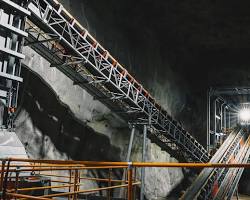
Resource diplomacy is no longer just about securing the cheapest price; it is about securing the certainty of supply. The grit and determination shown in the tunnels of the Sangdong Mine are a testament to Korea's resolve to remain a global industrial powerhouse in the face of shifting geopolitical tides.